

Buying Property in Dubai is becoming increasingly important for international investors. More and more buyers from Germany, Austria and Switzerland are turning their attention to the emirate – whether as a high-yield investment, a second home, or a long-term residence in one of the world’s most dynamic cities.
In recent years, Dubai has evolved into one of the most international and investor-friendly real estate markets worldwide. Foreign buyers can acquire full ownership of properties in designated freehold areas, while modern developments, world-class infrastructure and a steadily growing population continue to drive strong and sustainable demand.
At the same time, properties in many prime locations offer attractive rental yields of approximately 5 – 8 % per year, making Dubai particularly appealing for investors seeking both income and long-term value appreciation.
This comprehensive guide walks you step by step through the process of buying property in Dubai – from ownership regulations and purchase costs to financing options, the buying process and key legal considerations. Its goal is to provide buyers from the DACH region with clear guidance and the confidence to make well-informed investment decisions.
All Euro values are calculated using an indicative exchange rate of 1 AED ~ 0,237 € (as of March 2026). Figures are for illustrative purposes and may vary depending on market fluctuations.
For more detailed information about houses and villas, please refer to our article “Buy House in Dubai.” For insights on apartments and penthouses, see our guide “Buy Apartment in Dubai.”
Table of Contents
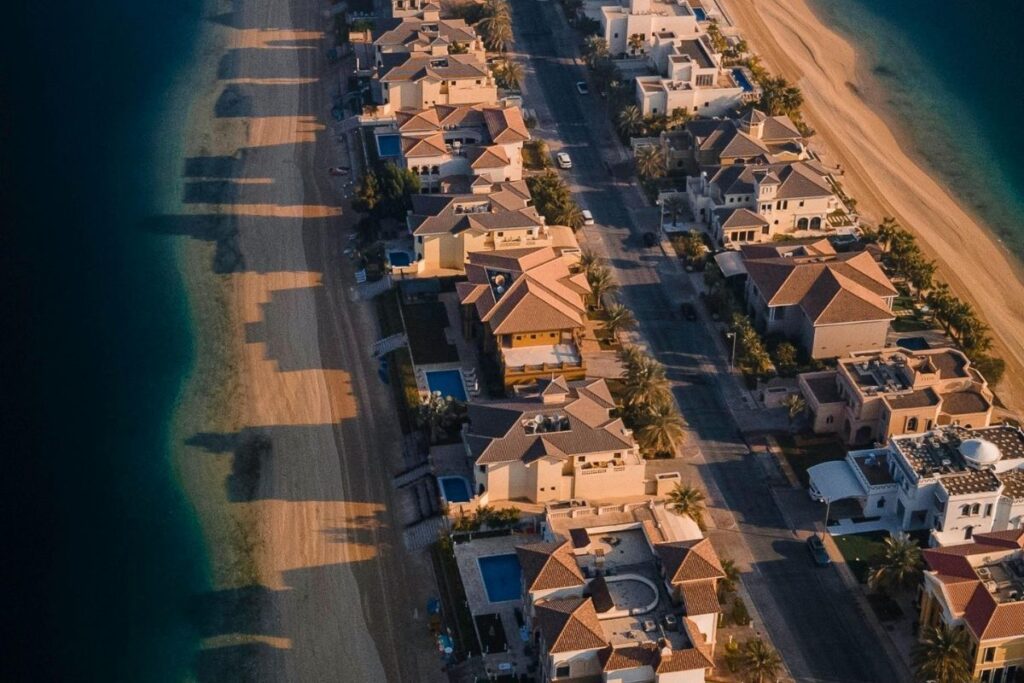
Buy property in Dubai 2026: Short overview
Dubai has become one of the leading destinations for international real estate investments, particularly for buyers from Germany, Austria and Switzerland. The market offers clear ownership rights for foreigners, attractive rental yields and consistently strong demand for housing.
The following overview highlights the most important key facts about buying property in Dubai:
| Factor | Buy Property in Dubai 2026 |
| Ownership | 100 % ownership for foreigners in designated freehold zones |
| Property Types | Apartments, townhouses, villas and penthouses |
| Entry Prices | Apartments from approx. 200.000 € villas from approx. 500.000 € |
| Additional Purchase Costs | Around 6 – 8 % of the purchase price |
| Taxes | No property tax and no income tax on rental income |
| Rental Yields | Typically 5 – 8 % per year |
| Visa Options | Investor visa from 750.000 AED (~ 177.750 €); Golden Visa from 2.000.000 AED (~ 474.000 €) |
| Financing | Mortgages are also available for non-residents |
| Purchase Timeline | Usually 4 – 8 weeks |
This overview serves as an initial guide. In the following article, all key aspects of buying property in Dubai are explained in detail – from costs and financing options to the full purchase process and legal considerations.
Why buy property in Dubai? Key advantages for international buyers
Choosing to buy property in Dubai offers a range of structural advantages that make the market particularly attractive for investors from Germany, Austria and Switzerland. With its investor-friendly regulations, strong economic growth and international appeal, Dubai has positioned itself as one of the most compelling real estate markets globally.
Tax benefits when you buy property in Dubai
One of the most significant reasons to buy property in Dubai is the highly favorable tax environment in the United Arab Emirates. Unlike many European countries, Dubai does not impose traditional real estate taxes, making it especially appealing for international investors.
Currently, this means:
For buyers from the DACH region, this can result in substantially higher net returns compared to real estate investments in Europe. However, it is important to note that the actual tax situation always depends on your individual tax residency and personal circumstances.
Rental yields in Dubai compared to international markets
When you buy property in Dubai, the potential rental yields are often higher than in many established European real estate markets. While cities like Munich, Vienna or Zurich typically generate gross returns of around 2 – 3 %, properties in Dubai frequently offer yields of 5 – 8 % per year, depending on the location and type of property.
This makes Dubai an attractive opportunity for investors looking to expand their real estate portfolio internationally, particularly for buyers from Germany, Austria and Switzerland. Strong rental returns combined with a growing population and sustained demand make Dubai a market worth considering for both income and long-term capital growth.
Dubai real estate and residence visa opportunities
When you buy property in Dubai, your investment can also serve as a pathway to a residence visa, offering additional benefits beyond financial returns.
| Real Estate Value | Visa Type |
| From 750.000 AED (~ 177.750 €) | Investor Visa (2 years) |
| From 2.000.000 AED (~ 474.000 €) | Golden Visa (10 years) |
The UAE’s Golden Visa allows long-term residency and is not tied to employment, making it an appealing option for buyers from Germany, Austria and Switzerland. For international investors, this provides the opportunity to spend extended periods in Dubai or establish a second home in one of the world’s most dynamic cities.
International demand for real estate in Dubai
Dubai is one of the most international real estate markets in the world. Buyers, investors and tenants come from numerous countries, creating a dynamic, diverse and competitive market.
For those looking to buy property in Dubai, this means access to a truly global real estate hub with a broad international buyer and tenant base – an advantage for both long-term investment and rental potential.
Infrastructure and quality of life in Dubai
Dubai combines modern infrastructure with a high standard of living. The city offers international schools, top-quality healthcare, world-class transport connections and a lifestyle that attracts global talent.
These factors make Dubai especially appealing for international professionals, entrepreneurs and families. They also help ensure that the demand for real estate remains strong, making it an attractive choice for buyers who wish to invest in or reside in Dubai.
Can foreigners buy property in Dubai?
Yes. International buyers can buy property in Dubai with full ownership, provided the property is located in a designated Freehold Zone. These officially defined areas allow foreigners to legally purchase and fully own real estate.
This legal framework makes buying property in Dubai particularly attractive for buyers from Germany, Austria and Switzerland. Properties can be registered with full legal certainty, giving investors the confidence to hold their assets long term and benefit from Dubai’s strong real estate market.
Freehold vs. Leasehold
When you buy property in Dubai, there are two primary ownership models to consider:
| Model | What It Means |
| Freehold | Full ownership of the property and the land with no time limit. The property can be freely sold, rented or inherited. |
| Leasehold | Right of use for a limited period, typically up to 99 years. After this period, ownership reverts to the original owner. |
For international buyers, freehold ownership is generally recommended when purchasing real estate in Dubai. It provides complete ownership rights, legal certainty and long-term planning security – making it the preferred choice for investors who wish to buy property in Dubai with confidence.
Where foreigners are allowed to buy real estate in Dubai
For international buyers, the option to buy property in Dubai is limited to officially designated Freehold Zones. These areas, established by the Emirate of Dubai, allow foreign investors to hold full ownership of their property.
Some of the most well-known Freehold Zones include:
These communities differ in price range, infrastructure and target audience. Central locations are often popular with international investors and expatriates, while other areas may be more suitable for families or long-term residential ownership.
Overall, there are now more than 60 Freehold Zones in which international buyers can legally buy property in Dubai. Choosing the right location depends largely on individual goals – whether it’s capital investment, personal use or long-term wealth growth.
Ownership and legal protection when you buy property in Dubai
The property system in Dubai is internationally recognized for its transparency and clear regulations. All property transactions are officially registered and monitored by state institutions, ensuring that ownership rights are well-documented and legally protected.
Key legal elements to consider when buying property in Dubai include:
| Legal Aspect | Importance |
| Title Deed | Official ownership document issued by the Dubai Land Department |
| No Objection Certificate (NOC) | Confirmation from the developer before ownership transfer |
| OQOOD Registration | Mandatory registration for off-plan properties |
| RERA | Dubai’s Real Estate Regulatory Authority, supervising real estate transactions |
| Inheritance Law | Without a will, Islamic inheritance law may apply |
For buyers from the DACH region, inheritance law is an important consideration when purchasing property in Dubai. Many international owners mitigate risks by registering a will – for example, through the DIFC Courts – to clearly define asset succession and ensure legal clarity.
Practical tip: Before you buy property in Dubai, it is highly recommended to conduct a thorough legal due diligence check. Engaging an independent real estate attorney can help verify the property’s status, identify any existing charges and ensure there are no outstanding fees.
Buy property in Dubai: Costs 2026 – Purchase price, additional fees and charges
When planning to buy property in Dubai, it’s important not to focus solely on the purchase price. For a realistic assessment, several cost factors should be considered, including the property price, statutory additional fees and ongoing costs after the transfer of ownership.
Compared internationally, Dubai’s real estate market is regarded as transparent and well-regulated. The most significant fees are processed through the Dubai Land Department (DLD) and are structured clearly, making them easy for buyers to understand and plan for.
Purchase prices by location and property type
The cost when you buy property in Dubai is mainly influenced by two key factors:
Premium areas such as Downtown Dubai or Palm Jumeirah command significantly higher prices, while communities like Jumeirah Village Circle or Dubai South often offer more affordable entry points.
Typical Purchase Prices in 2026:
| Property Type | Entry Price | Realistic Market Range (Approx.) |
| Apartment | From approx. 200.000 € | 250.000 – 500.000 € |
| Townhouse | From approx. 500.000 € | 550.000 – 900.000 € |
| Villa | From approx. 700.000 € | 900.000 – 2.500.000 € |
| Luxury Villa | From approx. 3.000.000 € | 3.000.000 – 20.000.000+ € |
Actual prices depend heavily on factors such as the community, construction quality, infrastructure and demand.
For detailed analyses of specific property types, see our dedicated guides:
- Buy Apartment Dubai – Apartments and Penthouses
- Buy House Dubai – Villas and Townhouses
Purchase costs when buying property in Dubai
In addition to the property’s purchase price, there are several ancillary costs to consider when you buy property in Dubai. These costs are mostly standardized and, by international comparison, relatively moderate. Overall, buyers should budget around 6 % – 8 % of the purchase price for additional fees.
Key Ancillary Costs:
| Cost Item | Amount / Fee |
| Dubai Land Department Transfer Fee | 4 % of the purchase price |
| Broker Commission | Approx. 2 % + 5 % VAT |
| Trustee / Registration | Approx. 2.000 – 4.000 AED (~ 475 – 950 €) |
| Title Deed | 580 AED (~ 137 €) |
| No Objection Certificate (NOC) | Approx. 500 – 5.000 AED (~ 120 – 1.185 €) |
These fees are typically paid during the transfer of ownership at the Dubai Land Department, ensuring that the purchase process is transparent and legally secure for international buyers.
Financing costs for buying property in Dubai
If you plan to buy property in Dubai with bank financing, additional costs should be taken into account. These costs are typically separate from the property price and cannot usually be included in the mortgage.
| Cost Item | Typical height |
| Mortgage Registration | 0,25 % of the loan + 290 AED (~ 69 €) |
| Bank Processing Fee | Bank-dependent |
| Property Valuation | Bank-dependent |
Important: These additional financing costs generally cannot be financed through the mortgage and must be covered with your own equity. Planning for these expenses is essential to avoid surprises during the purchase process.
Ongoing costs after buying property in Dubai
One of the advantages when you buy property in Dubai is that there is no annual property tax. However, property ownership does involve certain ongoing costs, primarily for maintenance, security and community facilities.
Typical running costs:
The exact amount of running costs depends on factors such as the community, building quality and available infrastructure. Proper planning for these expenses ensures that your investment in Dubai remains financially sustainable over the long term.
Realistic total costs when buying property in Dubai
When you buy property in Dubai, it’s important to consider the entire investment, not just the purchase price. This ensures a realistic understanding of total costs, including ancillary fees.
Exemplary total budget 2026:
| Buyer Profile | Purchase Price (Approx.) | Realistic Overall Budget |
| Entry-Level Apartment | 200.000 € | Approx. 214.000 € |
| Family Townhouse | 750.000 € | Approx. 800.000 € |
| Premium Villa | 5.000.000 € | Approx. 5.350.000 € |
This calculation assumes a conservative ancillary cost ratio of around 7 %, providing a practical estimate for international buyers planning to buy property in Dubai.
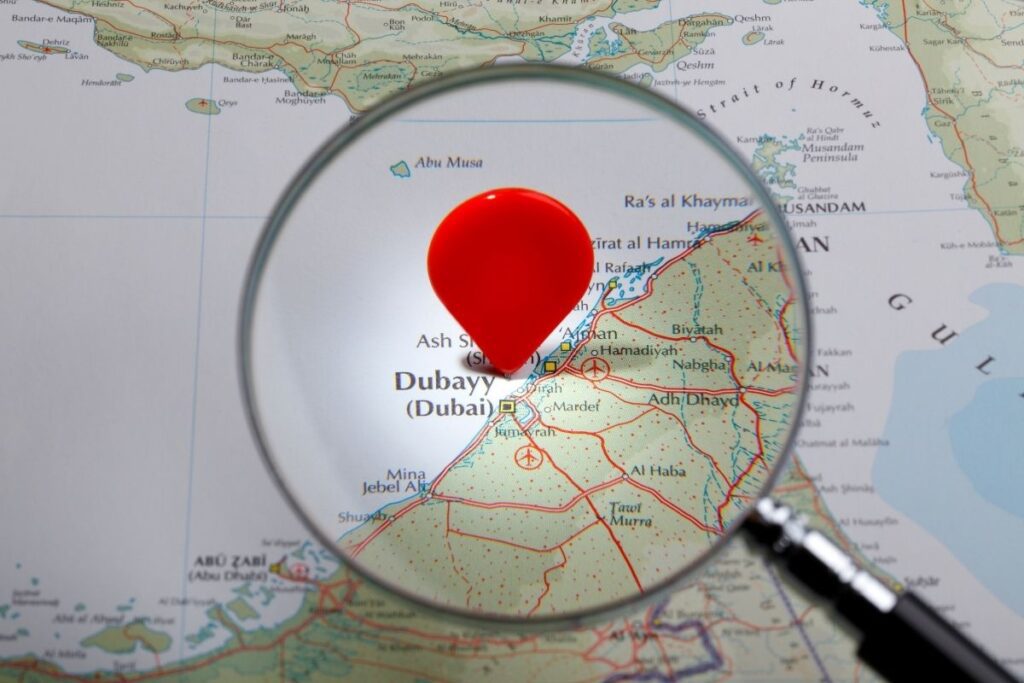
Locations and property types when buying property in Dubai
When you buy property in Dubai, two factors are particularly important: The location of the property and the type of property chosen. Both significantly affect the purchase price, potential rental returns and long-term value appreciation.
Dubai is divided into numerous master-planned communities, each with its own infrastructure, price levels and target buyer groups. The market also offers a wide variety of property types, ranging from compact apartments ideal for investors to spacious villas in family-friendly residential complexes.
The following overview highlights some of the key combinations of location and property type to help international buyers make informed decisions when they buy property in Dubai.
Important residential areas at a glance
When you buy property in Dubai, understanding the key residential areas can help you choose the right location for your investment or home.
| Location | Typical Property Types | Particularities |
| Dubai Marina | Apartments, Penthouses | International lifestyle location |
| Palm Jumeirah | Villas, Luxury Apartments | Exclusive luxury segment |
| Downtown Dubai | Apartments | Central premium location |
| Jumeirah Village Circle (JVC) | Apartments, Townhouses | Comparatively high rental yields |
| Business Bay | Apartments | Urban business district |
| Dubai Hills Estate | Villas, Townhouses | Modern family community |
Real estate types when buying property in Dubai
The type of property has a major impact on who the property is suitable for and its intended use. When you buy property in Dubai, understanding the differences between property types helps determine whether the investment is best for rental income, personal use or long-term residence.
| Property Type | Typical Use | Typical Typical Buyers |
| Apartment | Investment, rental | Investors, expats |
| Townhouse | Family housing | Families, owners |
| Villa | Spacious living space | Families, long-term residents |
| Penthouse | Luxury property | Wealthy investors |
While apartments are typically purchased as investment properties, townhouses and villas are usually intended for personal use or long-term residency.
Choose location and property type strategically
The optimal combination of location and property type depends largely on your personal strategy when you buy property in Dubai. Some buyers prioritize high rental yields, while others focus on long-term capital appreciation or plan to use the property as their own residence.
Careful consideration of both factors ensures that your investment aligns with your financial goals and lifestyle preferences.
For a detailed analysis of the key communities and property types, please refer to our specialized guides:
- Buy Apartment Dubai – Apartments and Penthouses
- Buy House Dubai – Villas and Townhouses

Buy property in Dubai: Step by step guide
The process to buy property in Dubai is clearly structured and internationally recognized for its transparency and efficiency. Compared to many European real estate markets, transactions in Dubai are often faster, with the purchase of an existing property typically taking four to eight weeks.
All ownership transfers are officially registered with the Dubai Land Department (DLD), ensuring that the transaction is legally secure and fully documented for international buyers.
The following steps outline the typical process when buying a property in Dubai:
Financing for buying property in Dubai: Mortgages for foreigners
Many international buyers assume that financing property in the United Arab Emirates is only available to residents. In fact, non-resident foreigners can also obtain a mortgage, provided certain requirements are met.
Today, financing a property when you buy property in Dubai is much easier for buyers from Germany, Austria and Switzerland than it was a few years ago. Several local and international banks now offer special mortgage programs tailored for expatriates and international investors.
All financing is subject to the guidelines of the Central Bank of the United Arab Emirates as well as the credit policies of the respective bank. Proper planning and consultation with a bank or mortgage advisor ensures that buyers can secure financing that aligns with their investment goals.
Typical key data for real estate financing in Dubai
When you buy property in Dubai and plan to use a mortgage, it’s important to understand the typical financing conditions for non-resident buyers.
| Factor | Typical Value |
| Equity (non-resident) | Approx. 25 – 40 % of the property price |
| Maximum Financing | Approx. 60 – 75 % of the property price |
| Term / Duration | Mostly 15 – 25 years |
| Currency | AED (UAE Dirham) |
Important: Additional purchase costs of around 6 – 8 % – such as transfer fees, broker commissions and registration – usually must be covered from own funds and cannot typically be financed through the mortgage.
Requirements for financing property in Dubai
When you buy property in Dubai using a mortgage, banks carefully assess several factors to ensure that buyers can service the loan over the long term.
Typical requirements for mortgage approval:
| Requirement | Details |
| Minimum Age | Mostly 21 years |
| Maximum Age at End of Credit | Mostly 65 – 70 years |
| Proof of Income | Payroll or business documents |
| Bank Statements | Usually 3 – 6 months |
| Passport | Valid international passport |
| Credit Check | Conducted by the bank |
Employees are generally required to provide an employment contract and salary statements, while self-employed buyers must submit company documents or business transaction records. Many banks also stipulate a minimum monthly income of around 15.000 – 25.000 AED (~ 3.555 – 5.925 €) to qualify for a mortgage.
Capital requirements for international buyers
When you buy property in Dubai, financing conditions for international buyers without UAE residency are generally stricter than for residents. Understanding the required equity and maximum loan amounts is essential for planning your investment.
| Buyer Status | Maximum Financing | Required Equity |
| Resident | Up to approx. 80 % | From about 20 % |
| Non-Resident | Approx. 60 – 75 % | Approx. 25 – 40 % |
Real estate financing banks in Dubai
Several banks in Dubai offer mortgage programs specifically for international buyers. When you buy property in Dubai, these institutions are among the best-known options for financing:
Interest rates can be variable or fixed for a set period, typically between 1 and 5 years. In addition, a mortgage registration fee of 0,25 % of the loan amount plus 290 AED (~ 69 €) applies.
Mortgage or cash payment when buying property in Dubai
When you buy property in Dubai, buyers typically decide between using a mortgage or paying the full amount in cash.
A mortgage lowers the upfront capital requirement and allows investors to spread their assets across multiple properties or investments. Paying in cash, on the other hand, simplifies the purchase process and can strengthen your negotiating position with the seller.
Many investors opt for a mixed approach, financing around 50 – 70 % of the purchase price while using cash for the remainder. This strategy retains liquidity for further investments while still benefiting from financing advantages.

Taxes and legal aspects when buying property in Dubai
The real estate market in Dubai is internationally attractive for tax purposes, making it a popular destination for investors. However, buyers from the DACH region should carefully consider their personal tax situation, with tax residency being the key factor.
Even though real estate income in the United Arab Emirates is generally not taxed, rental income or capital gains from selling the property may be relevant for taxation in the buyer’s home country.
If you plan to buy property in Dubai, it is essential to understand both the local tax and legal framework in addition to the purchase process. The following points summarize the most important considerations for international buyers from the DACH region:
Tax situation for property owners in Dubai
The United Arab Emirates is one of the few major real estate markets in the world where classic property taxes are not levied, making it especially attractive for international investors.
| Type of Tax | Situation in Dubai |
| Property Tax | None |
| Capital Gains Tax on Real Estate Sale | None |
| Income Tax on Rental Income | None |
For investors, this means that rental income and increases in property value are generally tax-free within the UAE. This favorable tax environment is one of the main reasons why international buyers choose to buy property in Dubai.
Tax residency considerations for international buyers
For buyers from Germany, Austria and Switzerland, tax residency plays a crucial role when you buy property in Dubai. It determines in which country rental income or capital gains from the property may be subject to taxation.
| Situation | Possible tax consequence |
| Residence remains in Germany, Austria or Switzerland | Rental income may be taxable in the home country |
| Tax residence in the UAE | Often no taxation of real estate income |
Even though Dubai does not levy income tax on rental income, earnings from a property can still be relevant for taxation in the buyer’s home country as long as tax residency there is maintained.
In cases of permanent departure from the home country, taxation issues usually affect company assets rather than private real estate. Therefore, a purely private real estate investment generally does not trigger exit taxation.
Nevertheless, it is strongly recommended to consult a tax advisor to clarify your individual tax situation before you buy property in Dubai.
Inheritance law and transfer of ownership
An important, often overlooked aspect when you buy property in Dubai is inheritance law. In the absence of specific arrangements, the UAE may apply Islamic inheritance law (Sharia), which can divide assets, including real estate, among multiple family members according to statutory shares. This distribution may differ significantly from inheritance regulations in Germany, Austria or Switzerland.
International property owners can avoid these complications by creating a registered will, often through the DIFC Courts Wills Service. This allows assets to be distributed according to the inheritance laws of the home country rather than local Sharia rules.
For buyers from the DACH region, considering estate planning when purchasing property in Dubai is highly recommended. A clearly regulated will ensures that real estate and other assets are transferred according to the owner’s wishes, providing legal certainty and peace of mind.
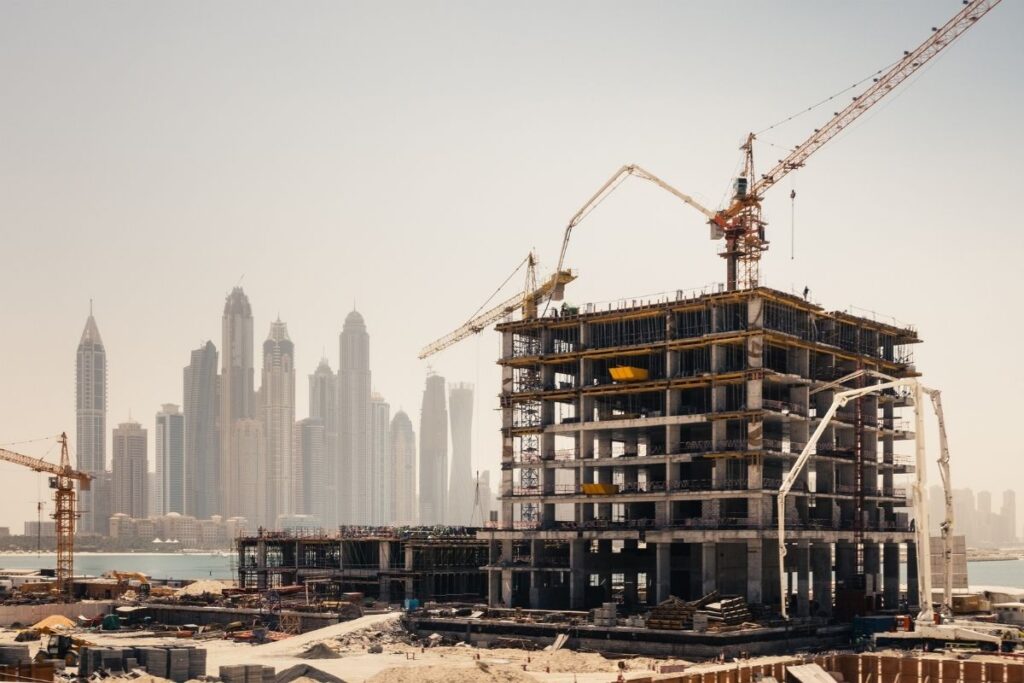
Off-Plan vs. Existing Property
When you buy property in Dubai, one of the first strategic decisions is whether to purchase off-plan (during the construction phase) or an existing property.
Both options are widely used in Dubai’s real estate market and differ mainly in terms of purchase price, payment structure, risk and timing of returns.
Off-plan properties often attract buyers with lower entry prices and flexible payment plans, while existing properties allow for immediate use or rental income. Which option is best depends largely on the individual investment strategy, whether the focus is on capital growth, rental yields or personal use.
Off-Plan Real Estate when buying property Dubai
When you buy property in Dubai off-plan, you purchase the property directly from the developer before construction is completed. This model is widely used to develop new residential complexes and entire communities across the city.
Many developers offer flexible payment plans, allowing the purchase price to be paid gradually over the construction period. Payments are usually made via an escrow account, monitored by the Dubai Land Department, ensuring that the funds are used exclusively for the intended construction project.
Typical advantages of Off-Plan Real Estate:
| Advantage | Importance |
| Low Entry Price | Projects are often offered below the expected market value upon completion |
| Flexible Payment Plans | Payments are made in several stages during construction |
| Value Enhancement Potential | Property prices can increase until project completion |
| Modern Construction Quality | New buildings with up-to-date infrastructure and amenities |
Possible risks of Off-Plan Real Estate:
| Risk | Description |
| Construction Delays | Completion timelines may shift, delaying possession and potential rental income |
| Market Changes | Property prices can fluctuate during the construction period |
| Developer Dependency | The success of the investment depends heavily on the developer’s reliability |
| Quality Uncertainty | Final construction quality may vary based on the developer’s standards |
Because of these risks, it is essential to thoroughly review the reputation of the developer and their previous projects before committing to an off-plan purchase. Proper due diligence helps ensure a secure and profitable investment when you buy property in Dubai.
Existing real estate when buying property in Dubai
Existing properties are fully completed homes that are purchased directly from the current owner. When you buy property in Dubai as an existing property, buyers benefit from greater planning security, as the location, construction quality and market price are already known.
A major advantage is that the property can be used or rented out immediately, providing instant value and potential income.
Typical advantages of existing properties:
| Advantage | Importance |
| Immediate Rental | Rental income can start right away |
| No Construction Time | Property is ready for use immediately |
| Realistic Market Price | Based on existing sales data |
| Lower Development Risk | Construction quality is already visible |
For existing properties, the purchase process is often very efficient, typically taking 4 – 8 weeks, since the property is already registered in the Dubai Land Department registry.
Off-Plan vs. Existing Property: Direct comparison
When you buy property in Dubai, understanding the differences between off-plan and existing properties helps investors and owner-occupiers make informed decisions.
| Factor | Off-Plan | Existing Property |
| Time of Purchase | During the construction phase | After completion |
| Entry Price | Mostly lower | Mostly higher |
| Payment Structure | Flexible rates over construction phases | Frequently one-off payment |
| Rental Yield | Only after completion | Immediately possible |
| Risk | Construction and market risk | Low |
Which property type is right when buying in Dubai?
There is no single “best” option when you buy property in Dubai. The choice depends primarily on your investment strategy.
Off-plan properties are particularly suitable for investors seeking capital growth during the construction phase, while existing properties are ideal for buyers who want immediate rental income or quick personal use.
Many experienced investors adopt a combined approach, using off-plan purchases for long-term value appreciation and existing properties to generate ongoing returns, balancing growth and liquidity effectively.
The 7 most common mistakes when buying real estate in Dubai
While the real estate market in Dubai is internationally recognized as transparent and well-regulated, first-time buyers from Germany, Austria and Switzerland often make typical mistakes.
Being aware of these risks can help investors buy property in Dubai more confidently, avoid unnecessary costs and ensure that their investment is successful in the long term.
Conclusion: Is buying property in Dubai worth it in 2026?
In 2026, buying property in Dubai remains one of the most attractive international real estate investments for buyers from Germany, Austria and Switzerland. The market combines several structural advantages: A favorable tax framework with no classic property taxes, legally secure ownership rights for foreigners and a steadily growing international demand for housing.
A decisive factor is the tax environment of the United Arab Emirates. When you buy property in Dubai, there is currently no property tax, no income tax on rental income and no capital gains tax on real estate sales. As a result, net returns on real estate investments can be significantly higher than in many European markets.
The real estate market in Dubai has also become highly professional in recent years. The Dubai Land Department (DLD) ensures transparent property registration, while regulated developers, modern master-planned communities and digital land registry systems make the buying process clear and secure for international investors.
Economic dynamics further strengthen the market: A growing population, an influx of international specialists, increasing tourism and ongoing infrastructure investments ensure long-term demand for housing. In many prime locations, gross rental yields still range from 5 – 8 % per year, an attractive level in global comparison.
Whether buying property in Dubai is worthwhile ultimately depends on your individual strategy – whether for capital investment, personal use, long-term value appreciation or a combination of these goals.
Buyers who carefully select the location, property type and budget, verify the developer’s credibility and consider the tax and legal framework can build a secure, long-term investment while benefiting from the economic potential of one of the most dynamic cities in the world.
If you are also interested in emigration, company formation, taxes, living costs or life in Dubai, you will find all the essential information in our Dubai Premium-Guide.
FAQ: Key questions about buying property in Dubai
Can foreigners buy property in Dubai?
Yes. Foreigners can buy property in Dubai in designated freehold zones. Properties can be fully owned, sold, rented or inherited and are registered with the Dubai Land Department.
How much equity is needed to buy property in Dubai?
International buyers usually need around 20 – 25 % equity for financing. Additionally, about 6 – 8 % of the purchase price should be planned for ancillary costs.
What are the ancillary costs when buying property in Dubai?
Ancillary costs include the Dubai Land Department transfer fee of around 4 %, broker commission of about 2 % and other registration or administrative fees. Overall, costs typically range from 6 – 8 % of the purchase price.
How high are rental yields when buying property in Dubai?
Gross rental yields in many Dubai neighborhoods range from 5 – 8 % per year. Apartments in central locations or growing communities often provide stable rental income.
Can I get a visa by buying property in Dubai?
Yes. Property buyers can obtain a residence visa under certain conditions. An investor visa may be possible for properties worth around 750.000 AED (~ 177.750 €), while properties valued at approximately 2.000.000 AED(~ 474.000 €) may qualify for a 10-year Golden Visa under specific requirements.
How long does it take to buy property in Dubai?
The purchase process in Dubai is relatively fast by international standards. For an existing property, the process usually takes around 4 – 8 weeks until the ownership transfer is officially registered with the Dubai Land Department.
Is buying property in Dubai tax-free?
In the United Arab Emirates, there is currently no annual property tax, no income tax on rental income and no capital gains tax on real estate sales. However, buyers from Germany, Austria or Switzerland may still be liable for taxes in their home country, depending on their individual tax residency.
Data Accuracy & Topicality
The information in this article is based on publicly available market data, current real estate listings in Dubai, industry analyses and official fee structures from the Dubai Land Department (DLD) as of 2026.
All figures are intended for general guidance. Actual purchase prices, ancillary costs and returns when buying real estate in Dubai may vary depending on factors such as location, property type, developer, financing, exchange rates and current market conditions.
Before making any investment decision, buyers should always verify the current project and contract details and, if applicable, consider the relevant legal and tax framework.