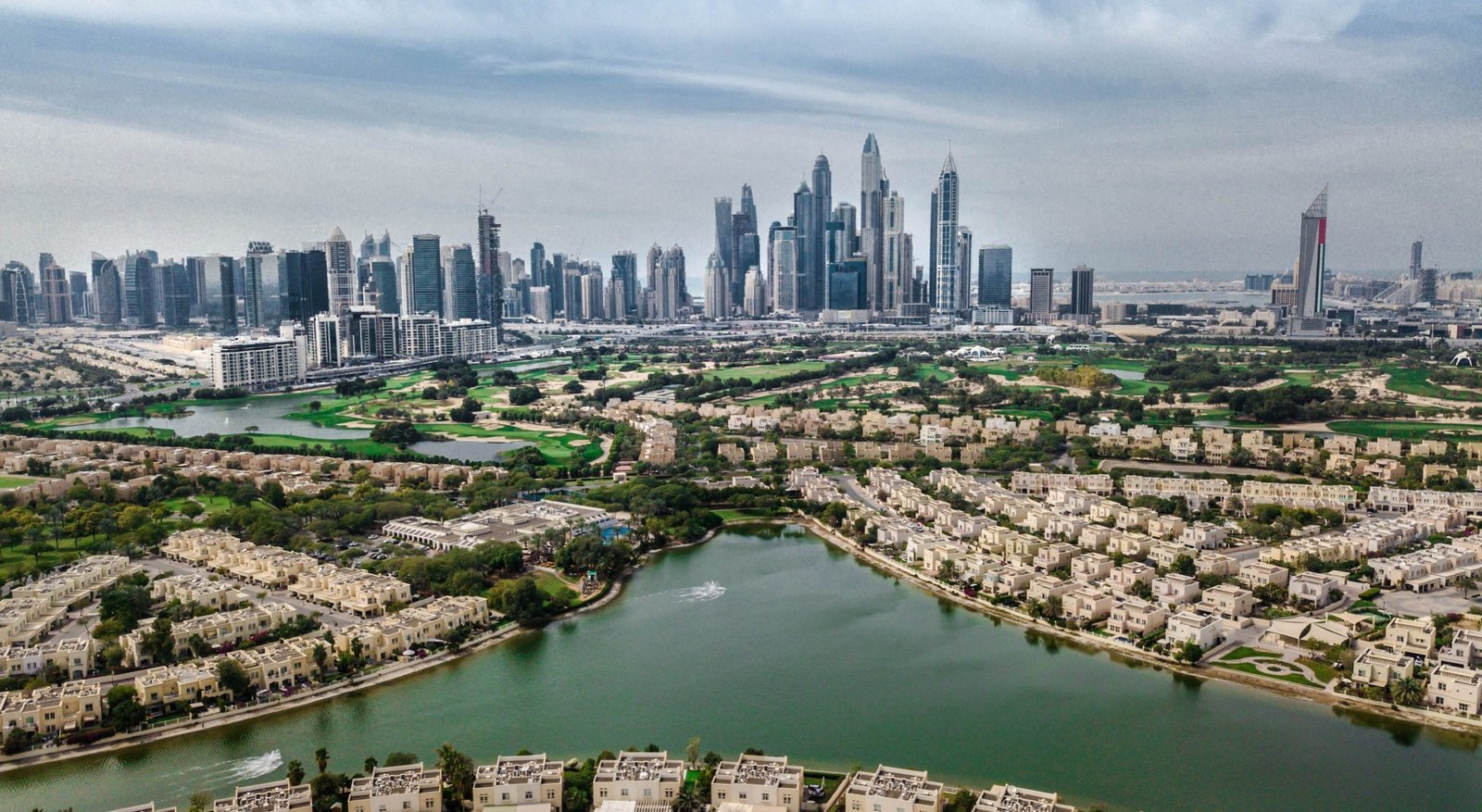
The Dubai investor visa is one of the key residence models for entrepreneurs, shareholders and self-employed people who want to build their own business structure in the United Arab Emirates or invest in a company.
Unlike the work visa, this model is not based on employment, but on entrepreneurial activity and economic participation. This creates a greater degree of independence, but also more responsibility in terms of structure, costs and implementation.
In practice, the investor visa is often also called a “business visa”. However, this is not an official visa category, but a colloquial term for company-based residence models such as the investor or partner visa.
This guide gives you a structured overview of the requirements, costs, benefits and process of the Dubai investor visa.
For a general overview of all residence options in Dubai, we recommend our Dubai visa guide.
Table of contents
Key facts in brief
- A residence permit for shareholders and entrepreneurs with a stake in a UAE company, on the mainland or in a free zone.
- Usually valid for two years (free zone) or two to three years (mainland).
- No fixed minimum amount: what counts is a registered company and your entry as a shareholder.
- Offshore companies generally do not qualify for residence.
What is the Dubai investor visa?

The Dubai investor visa is a UAE residence permit based on entrepreneurial participation. It is granted to people who hold shares in a company in the UAE or set up and actively run their own company.
In legal terms, it is a residency visa linked to an existing company structure. The basis is usually a registered company within the UAE, either on the mainland (under a government licence) or in a free zone with its own administrative authority.
The visa is typically referred to as an investor visa or partner visa. Both terms refer to the same basic mechanism: the residence permit for people registered as shareholders, owners or economic stakeholders in a company.
In practice, the validity is usually 2 years (free zone) or 2 to 3 years (mainland), depending on the company structure and licence.
It is important to classify it correctly: the investor visa is not a stand-alone immigration programme with fixed entry criteria, but a derived residence status. This means the visa is not applied for in isolation, but results directly from setting up or investing in a company.
What matters for it to be granted is therefore not a standardised minimum amount or a points system, but a legally recognised company structure, registration as a shareholder and compliance with regulatory requirements.
Not every company form automatically leads to a residence visa. Offshore structures in particular usually do not entitle you to residency, as they are not designed for operational activities within the UAE.
The Dubai investor visa should therefore be classified as a company-linked residence model that is closely tied to economic activity within the UAE and based on a formally registered shareholding.
Benefits of the Dubai investor visa
The Dubai investor visa offers a residence solution based on entrepreneurial activity that differs significantly from employment-linked visa models. Its key advantage lies in the combination of entrepreneurial control, structural flexibility and a direct link between business activity and residence status.
Entrepreneurial independence
A key advantage is that your residence status is not tied to an employer. Instead, the visa is based on your own company structure or shareholding.
This gives you a high degree of control over your professional activity and the ability to make business decisions independently.
A direct link between company and residency
The investor visa is directly linked to your own company. The residence permit results from the entrepreneurial activity itself.
In practice, this means: anyone who builds and maintains a functioning company structure also secures their residence status in the UAE.
Flexibility in business structure
Depending on your goals, different company models can be used, such as mainland or free zone structures.
These allow you to adapt your business focus, location and organisational structure individually to your own requirements.
Access to economic infrastructure
With the investor visa, you gain access to the key economic structures in Dubai. These include:
- A company licence and operational business activity
- Bank accounts and financial systems
- Contracts and business relationships locally
These are prerequisites for active participation in economic life in the UAE.
Family reunification
The investor visa usually allows you to sponsor close family members. These include in particular spouses and children, provided the relevant requirements are met. This makes it possible to build a stable life in Dubai.
International flexibility
As with other UAE residency models, your residence status generally remains in place as long as the underlying structure is active.
This is particularly relevant for entrepreneurs who work internationally and organise their business activities across several locations.
Scalability and development
Another advantage is the ability to develop the existing structure further. Companies can be expanded, adapted or repositioned without having to rebuild your residence status from scratch.
This flexibility creates a long-term basis for entrepreneurial growth.
Practical context
The biggest advantage of the Dubai investor visa lies not in a single aspect, but in the overall structure.
It is a residence model designed specifically for entrepreneurial activity that systematically links economic activity and residency. This makes it particularly suitable for people who want to manage their residence in Dubai actively through their own business structure.
Requirements for the Dubai investor visa

The requirements for the Dubai investor visa differ fundamentally from classic residence models. What matters is not a single figure such as income or investment amount, but a formally recognised business structure within the United Arab Emirates from which your residence status is derived.
The rule is: the visa is not applied for in isolation, but arises as a result of a registered shareholding in a company. Accordingly, the requirements result from a combination of company law, regulatory and residence law requirements.
Shareholding in a registered company structure
The key requirement is a legally proven shareholding in a company in the UAE.
This can be achieved by:
- Setting up your own company
- Investing as a shareholder or owner
- Being registered as a partner in an existing company structure
The shareholding must be officially registered and clearly provable in the relevant company documents (e.g. trade licence, shareholder agreement).
Valid company licence
The company must have an active and valid licence issued by the relevant authority.
Depending on the structure, this is issued by:
- Mainland authorities (e.g. the Department of Economy and Tourism, formerly DED)
- Free zone authorities with their own regulation
The licence defines the permitted business activities and forms the legal basis for operations and for the visa process.
Operational or structural business activity
In practice, the company structure is expected not just to exist formally, but to actually be used.
This means:
- The company must be active or actively managed
- Business activities must be possible within the scope of the licence
- The structure must meet regulatory requirements
A purely formal existence without a recognisable economic function can, in individual cases, lead to problems when the visa is issued or renewed.
Company premises or registered address
Most company forms require proof of business premises. Depending on the model, this can be provided through:
- Physical office space (especially on the mainland)
- Flexi-desk or shared office solutions (common in free zones)
The business address is part of the licence structure and a prerequisite for registering and maintaining the company.
Compliance with regulatory requirements
The company and the applicant must meet the applicable legal and administrative requirements.
These include:
- Compliance with licence conditions
- Timely renewal of licence and visa
- Compliance with reporting and documentation obligations
- Industry-specific requirements where applicable
These requirements may vary depending on the activity, location and company form.
Formal requirements for residency
Regardless of the company structure, the general requirements for a residence permit must also be met.
These include:
- Valid passport
- Medical test
- Biometric registration for the Emirates ID
- Complete and correctly submitted documents
These steps are standardised and apply to all long-term residence visas in the UAE.
Important distinction: offshore structures
Not every company form automatically entitles you to an investor visa. Offshore companies in particular are usually not suitable for residency, as they do not allow operational business activity within the UAE.
The investor visa therefore requires a structure that is genuinely anchored in the UAE economic system.
The decisive factor in practice
The formal requirements are the foundation, but what matters is the proper implementation of the entire structure.
In practice, a successful visa application depends largely on:
- How clearly the shareholding is documented
- How consistently the company structure has been set up
- Whether all regulatory requirements are fully met
Even with comparable starting points, differences in implementation can lead to different results.
Who can get a Dubai investor visa?
The Dubai investor visa is aimed at people who build their residence in the United Arab Emirates not through employment, but through their own business structure. The focus is not on a particular profession, but on the role as an economic stakeholder in a company.
In principle, the investor visa is open to anyone willing to set up a company in the UAE or invest in an existing one and actively maintain this structure. What matters is not origin, professional
background or a set income level, but actual involvement in a legally recognised company structure.
In practice, however, there is a clear profile of the typical target groups.
Entrepreneurs and founders
The investor visa is particularly relevant for people who want to build their own company in Dubai. These include founders who want to realise their business idea in the UAE, as well as entrepreneurs who want to expand existing business models internationally or restructure them.
For this group, the visa offers the opportunity to link residence directly to their own entrepreneurial activity and act independently of an employer.
Shareholders and company stakeholders
People who invest in an existing company can also receive an investor visa. It is not essential that operational management is the main focus. What matters is the formal shareholding as an owner or partner, which is documented and registered accordingly.
This constellation is particularly relevant for investors who want to take strategic stakes in companies or use existing structures.
Self-employed people and international entrepreneurs
The investor visa is also suitable for self-employed people who want to run their activity through their own company structure in Dubai. This applies in particular to people who work internationally and need a flexible, location-independent business structure.
Linking company and residency creates a stable basis for organising business activities centrally from the UAE.
International investors
For international investors, the model offers the opportunity to link capital, shareholdings or business interests with a residence status. The focus is not necessarily on operational activity, but on economic participation within a recognised structure.
This target group often uses the investor visa as strategic access to the UAE market.
Practical context
The investor visa is not a classic “entry visa”, but a structure-based residence model. It is not aimed at a clearly defined group of people, but at anyone who takes on an entrepreneurial role within the UAE system.
In practice, this means: anyone who builds a viable company structure and meets the relevant regulatory requirements can obtain an investor visa regardless of industry or background.
The decisive factor is therefore not the person, but the quality and substance of the underlying company structure.
Dubai investor visa costs at a glance

| Cost area | Typical range (approx.) | Context |
| Company licence (annual) | AED 10,000 – 30,000 (~ €2,370 – 7,110) | Core basis; depends on free zone or mainland, activity and licence type |
| Office / flexi-desk | Often included or an additional approx. AED 2,000 – 15,000 (~ €470 – 3,560) | Part of the licence requirements depending on the structure |
| Residency (visa & Emirates ID) | AED 3,000 – 7,000 (~ €710 – 1,660) | Residence permit incl. medical, ID and official fees |
| Health insurance | Variable (often from approx. AED 1,000/year upwards) (~ €240) | Prerequisite for residency |
| Documents & attestation | Variable | Translations, attestation and legalisation |
| Set-up / services | Variable (often approx. AED 1,000 – 5,000+) (~ €240 – 1,190+) | Optional, depending on provider and complexity |
Company structure as the main cost factor
The main cost basis of the Dubai investor visa lies not in the visa itself, but in the underlying company structure. The company licence is the prerequisite for your residence status and also accounts for most of the ongoing costs.
Depending on the chosen model, especially the difference between mainland and free zone, there are different price structures, service scopes and regulatory requirements. In practice, annual licence costs are often in the range of about AED 10,000 to 30,000 (~ €2,370 – 7,110) or more.
Residency and visa fees
The actual costs of the investor visa arise as part of the residence process and are significantly lower than those of the company structure. They include the issue of residency, the Emirates ID and the mandatory medical and administrative steps.
In practice, these costs typically range from about AED 3,000 to 7,000 (~ €710 – 1,660) per visa. Differences may occur depending on the provider, process and scope.
Additional costs in practice
In addition to the clearly defined fees, other costs often arise that are not standardised but should be realistically budgeted for. These include in particular health insurance, document attestation and administrative or advisory services.
These items vary greatly depending on the individual situation and chosen set-up.
Factors affecting the total costs
The actual cost structure depends largely on several factors, in particular the company form, the number of visas included, the chosen licence and the specific business activity.
The quality of implementation also plays a role: standardised solutions are usually more cost-efficient, while individually structured set-ups can involve higher expenses.
Placing the costs in the overall model
For a realistic assessment, it is essential to clearly separate visa costs from structural costs. The investor visa is not an isolated product, but an integral part of an overall business structure.
The actual financial basis therefore does not come from the visa itself, but from the economic structure from which it arises. Anyone who understands this system logic can classify the costs correctly and make informed decisions.
Applying for a Dubai investor visa: step by step

The application for a Dubai investor visa does not follow a classic visa logic, but results consistently from the underlying company structure. This is the key difference from employment-based residence models: it does not start with the visa, but with properly setting up or investing in a company within the United Arab Emirates.
The entire process should therefore be understood as one connected process in which business structure and residence status interlock.
1. Strategic choice of company structure
It starts with the fundamental decision of which structure your residence will be based on. In practice, this mainly concerns the choice between a mainland company and a free zone structure.
This decision has far-reaching consequences, as it not only defines the business activity, but also affects responsibilities, regulatory requirements and the later visa process. The foundation for everything that follows is laid at this point.
You can find all the details in our article on company formation in Dubai.
2. Implementing the formation or shareholding legally
The next step is to formally implement the chosen structure. This is done either by setting up a new company or by joining an existing company as a shareholder.
What matters is that the shareholding is clearly documented and anchored in the official company documents. Only this legal anchoring creates the basis for your later residence status.
3. Issuing and activating the company licence
After the structural implementation, the company licence is applied for and issued. It is the central building block of the entire model, as it defines the permitted business activity and officially integrates the company into the UAE economic system.
Without an active and valid licence, neither operational activity nor an investor visa based on it is possible. The licence is therefore the direct link between economic activity and right of residence.
4. Starting the residency process
As soon as the company structure is fully registered, the actual residence process begins. This runs through the relevant immigration authorities and is closely linked to the existing company structure.
Depending on your situation, the process can be started within the UAE or from abroad. In both cases, the existing shareholding forms the basis of the application.
5. Medical test and official checks
A mandatory part of the process is the medical test, which is required for all long-term residence visas in the UAE. At the same time, the usual official checks take place, in which the submitted documents are reviewed and assessed.
This phase is standardised and ensures that all formal requirements for residency are met.
6. Emirates ID and biometrics
Next, the Emirates ID is applied for, which serves as the official identity card for residence. The biometric registration required for this is an integral part of the entire residency process.
The Emirates ID is not just an identity document, but a prerequisite for almost all administrative and economic activities in everyday life.
7. Issue of residency and activation of residence status
Once all steps are complete, the residency is officially granted. From this point, your residence status is active and legally effective.
What remains crucial, however, is that the underlying company structure must continue to exist and meet regulatory requirements. The investor visa is directly linked to this structure and remains valid only as long as the economic basis is maintained.
Classifying the processing time
The processing time for the Dubai investor visa results from the interplay between company formation and the subsequent residency process and therefore cannot be stated as a fixed period.
While setting up the company structure can take anything from a few days to several weeks, depending on the model and complexity, the actual residence process is usually standardised and much faster. Under normal conditions, residency is often completed within about 5 – 15 working days after the visa procedure has started.
Overall, this results in many cases in a realistic time frame of about 2 – 6 weeks for a fully implemented investor visa.
What matters in practice
The process looks structured, but in practice depends heavily on the quality of preparation. What matters is that the company structure is set up properly, the shareholding is clearly documented and all regulatory requirements are consistently met.
The Dubai investor visa is not an isolated application, but the result of a correctly implemented business presence. Anyone who understands and properly implements this system creates the basis for a stable and legally secure residence status in the United Arab Emirates.
Dubai investor visa vs. Golden Visa: the differences
| Criterion | Dubai investor visa | Golden Visa |
| System logic | Residence status arises from an active company structure | Stand-alone residence model based on defined criteria |
| Basis | Company shareholding or company formation | Qualifications, income or investment |
| Dependency | Tied directly to the company | Independent of employer or company |
| Duration | Usually 2 – 3 years | 5 or 10 years |
| Renewal | Only with an active, valid company structure | If qualification continues |
| Stability | Structurally dependent (company = visa) | High stability independent of structure |
| Flexibility | Entrepreneurially flexible, but tied | Maximum flexibility of residence |
| Objective | Building and running a business presence | Long-term residence without structural obligations |
The decisive difference lies not in individual benefits, but in the basic logic of the residence model.
The Dubai investor visa is an operational residency model. It links residence status directly to entrepreneurial activity. Anyone who uses this visa actively builds their presence in the UAE through a company, with all the associated opportunities and obligations.
The Golden Visa follows a different principle. It is a qualification-based long-term model that works independently of a specific company structure and therefore offers a much more stable and flexible basis for residence.
In practice, this means:
The investor visa is the right choice for people who want to do business in Dubai and manage their residency through their own structure.
The Golden Visa, on the other hand, is suitable for people who already meet the relevant requirements and want to arrange their residence on a long-term, independent and structurally stable basis.
Anyone who understands these system differences not only makes the right visa decision, but also lays the foundation for a consistent and sustainable position in the United Arab Emirates.
You can find more about the Golden Visa in Dubai in our detailed guide.
Conclusion: Dubai investor visa

The Dubai investor visa is a company-based residence model that directly links economic activity and residency. Residence status arises directly from an existing company structure and is permanently tied to its continued existence and proper management.
This sets the model apart fundamentally from other residence solutions: the focus is not on employment or formal qualifications, but on active involvement in an economic structure within the United Arab Emirates.
In practice, the investor visa is aimed mainly at entrepreneurs, shareholders and self-employed people who want to build their own business presence in Dubai or use existing structures. It offers a high degree of control over your own activity and a direct link between business decisions and residence status.
At the same time, this model requires a clear strategic direction. Your residence status is only as stable as the underlying company structure. Proper implementation, compliance with all regulatory requirements and continuous maintenance of the licence are therefore crucial.
Correctly understood, the Dubai investor visa is not an isolated residence permit, but part of an overall business strategy. Anyone who understands this connection and implements it consistently creates a sustainable basis for business activities and residence in the United Arab Emirates.
You can find all further topics, from working and company formation to property, in our Dubai Premium Guide.
Matching tools
FAQ: frequently asked questions about the Dubai investor visa
What is the difference between an investor visa and a partner visa in Dubai?
In practice, there is no significant difference in substance. Both terms are used for residence visas based on a shareholding in a company.
“Partner visa” is used more often in a mainland context, while “investor visa” has become established as the umbrella term. What always matters is the officially registered shareholder position.
Is there an official “business visa” in Dubai?
No, a “business visa” is not an official visa category for long-term residence in the UAE. The term is often used colloquially for investor or partner visas. In addition, there are only short-term business visas (visit visas), which do not constitute residency.
How much do you have to invest to get an investor visa?
There is no uniform minimum amount at federal level. What matters is the shareholding in an approved company structure. The actual costs depend on the chosen company form, licence, free zone or mainland and the requirements of the responsible authority.
Can you get an investor visa without your own company?
A shareholding in a company is a mandatory requirement. This can be achieved either by setting up your own company or by joining an existing company as a shareholder in a legally documented way.
How long is a Dubai investor visa valid?
In practice, the validity is usually 2 years (free zone) or 2 to 3 years (mainland). Renewal is possible as long as the underlying company structure remains active and valid.
Do you lose the visa if the company is closed?
Yes, as the investor visa is directly tied to the company structure. If the company is closed or the licence is not renewed, the basis for your residence status no longer exists.
Can you work in Dubai on an investor visa?
Yes, but within your own company structure. The visa entitles you to self-employed work or to run your own company. Separate employment and licensing rules apply to activities outside this structure.
Is an investor visa better than a Golden Visa?
They are two different residence models with different objectives. The investor visa is tied to an active company structure, while the Golden Visa is based independently on qualifications or investment and offers a longer validity.
Can you sponsor family members on an investor visa?
Yes, spouses and children can usually be sponsored. This requires sufficient financial means and an active and valid residence status of the main applicant in accordance with the applicable requirements.
Data basis & currency
The content of this article is based on the current legal and administrative framework of the United Arab Emirates and on publicly available information from the relevant authorities, in particular the immigration authorities (ICP – Federal Authority for Identity, Citizenship, Customs and Port Security) and the respective local bodies such as the GDRFA in Dubai.
As the Dubai investor visa is not a uniformly standardised single product, but is implemented within different company structures (mainland and free zones), practical experience has also been taken into account. This reflects the actual procedures and requirements as they arise in practice.
The costs, time frames and requirements shown are intended as a realistic guide, but may vary depending on your individual situation, chosen structure, the responsible authority and the regulatory environment.
Legal requirements, processes and conditions can change at any time. In the areas of company formation and residence law in particular, adjustments by the authorities are regularly possible.
This article does not constitute legal, tax or business advice and is for general information only. For binding decisions, we recommend checking the current official requirements and seeking qualified advice where appropriate.
All euro amounts are based on an approximate exchange rate of AED 1 ≈ €0.237 (as of April 2026) and are for guidance only. Actual amounts may differ depending on the exchange rate, provider and individual situation.