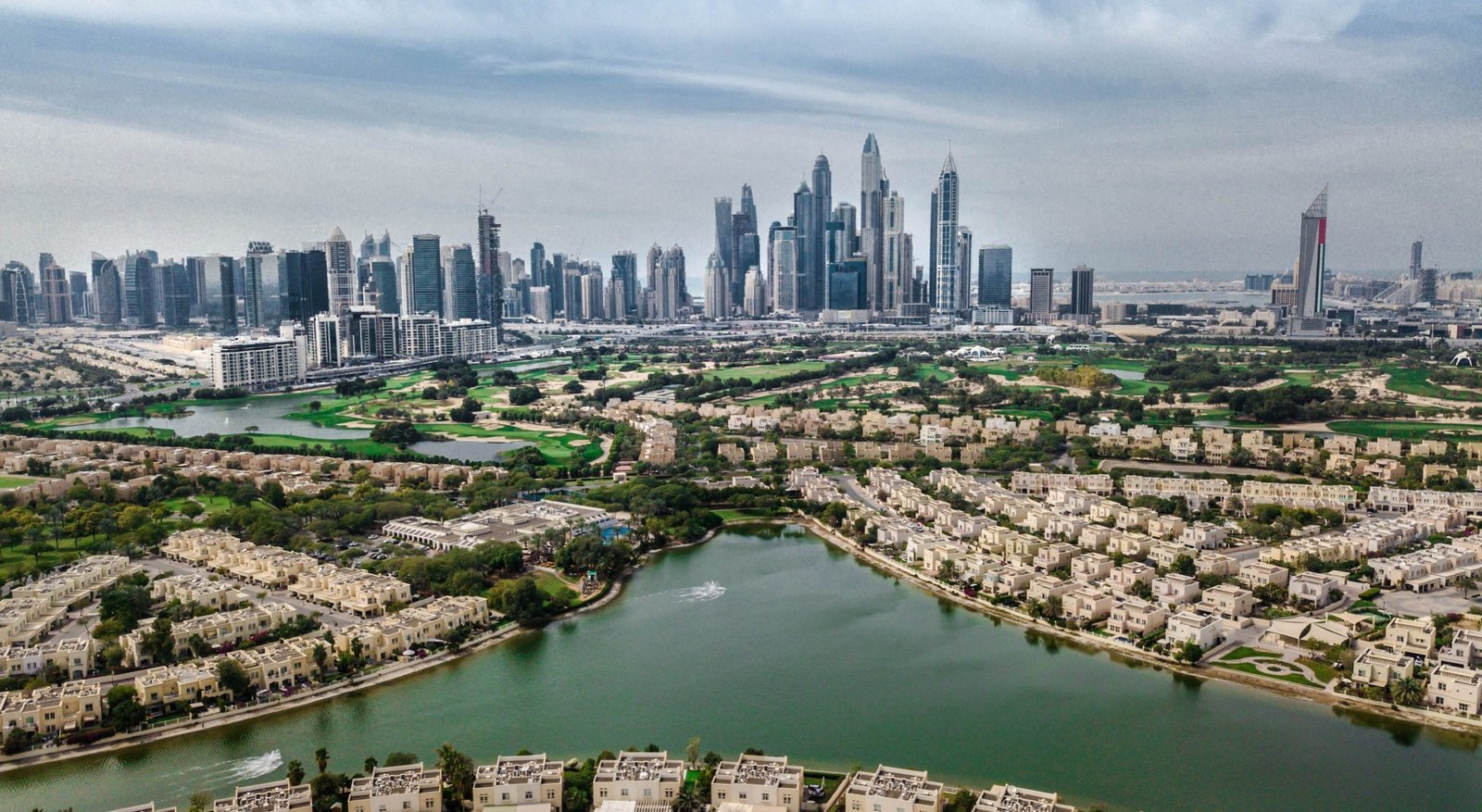
A Dubai visa is the key requirement that determines whether and how you can live, work or invest in the United Arab Emirates. It decides not only whether you can enter the country, but above all under which legal conditions you can stay in Dubai.
There is no single “Dubai visa”. Instead, the system is based on different residence models that vary considerably depending on your situation. Whether you are employed, self-employed, setting up a company or want to move your residence to Dubai for the long term – each of these options leads to its own visa arrangement with specific conditions.
Typical questions in this context are:
- Which types of visa are there in Dubai?
- What is the difference between an entry permit, a visa and residency?
- Which model fits my personal situation?
This guide gives you a clear and understandable overview of the Dubai visa system (as of 2026). You will learn how the different residence models are structured, how they relate to each other and what matters when choosing the right visa.
The focus is deliberately on understanding the system as a whole. Detailed requirements, costs and specific processes for individual visa types can be found in the specialist articles in the “Visa & Residency” section.
For every step from your decision to everyday life in Dubai, see our guide Moving to Dubai.
Table of contents
Dubai visa 2026: overview

The Dubai visa system basically distinguishes between short-term entry and long-term residence with residency. What matters is not only the name of the visa, but above all the legal basis on which your stay in Dubai rests.
In simple terms, the system can be divided into three models:
| Visa type | Meaning | Typical examples |
| Short-term entry visas | For temporary stays without residency | Visit visa, transit visa |
| Conventional residency | Residence based on a specific sponsor or a fixed legal basis | Work visa, family visa, investor visa |
| Flexible residency models | Longer-term stays with more independence | Golden Visa, Green Visa, Virtual Work Residence Visa |
Important: it is not the name of a Dubai visa alone that determines your residence status, but the model on which your stay is based. This may be, for example, employment, self-employment, setting up a company, an investment or a qualifying special model.
Anyone who wants to understand the system should therefore not only look at individual visa types, but above all ask: what should my stay in Dubai be based on, legally and practically?
Next, we look at what exactly a Dubai visa is and how a visa, an entry permit and residency differ from each other.
All visa guides in detail
What is a Dubai visa?
A Dubai visa is the legal basis for your stay in the United Arab Emirates. It determines whether, for how long and for what purpose you may stay in the country.
In everyday language, people often speak of the “Dubai visa”. Formally, however, it is a visa of the United Arab Emirates (UAE), administered by the responsible authorities depending on the emirate – such as Dubai.
A Dubai visa defines several key aspects of your stay:
- Length of stay: how long you may stay in the UAE
- Purpose of stay: for example work, self-employment, study, visiting or investment
- Legal framework: which activities are permitted and under which conditions
Important to understand: a Dubai visa is more than just an entry permit. It sets the legal framework for your stay – and therefore also which opportunities you actually have in Dubai.
Depending on the visa model, your stay may be tied to employment, your own business activity, an investment or a family connection.
Dubai visa, entry permit and residency: the difference
The terms entry permit, visa and residency are often used in connection with living in Dubai. Although they are often treated as the same, they describe different steps within the same system.
The three terms explained simply:
| Term | Meaning | Function |
| Entry permit | Permission to enter | Allows you to enter the UAE |
| Visa | Purpose of stay | Defines the reason for your stay (e.g. work, self-employment) |
| Residency | Residence status | Gives you the right to live in Dubai long term |
How the terms are connected
In practice, a stay in Dubai usually follows a clear sequence:
- Entry permit: you receive permission to enter the UAE
- Visa: the purpose of your stay is defined
- Residency: for longer stays, this becomes your official residence status
Important to understand: not every Dubai visa automatically leads to residency.
Short-term visas – such as tourist or visit visas – usually consist of an entry permit combined with a limited stay, without creating long-term residence status.
Benefits of a long-term Dubai visa with residency
A Dubai or UAE visa is not just an entry permit; it determines how much access you have to one of the world’s most efficient systems for living, working and investing.
The key difference lies between short-term stays and residency. Only with long-term residence status does your position change fundamentally: you are no longer treated as a visitor, but as part of a structured system with clearly defined rights, processes and opportunities.
The Emirates ID as the key basis for everyday life
With residency, you receive the Emirates ID – the most important identity document in the UAE. It is the prerequisite for almost all key everyday processes and connects authorities, companies and services.
The practical difference is immediately apparent: without an Emirates ID, many processes are only possible to a limited extent – with it, key steps can be completed quickly and easily.
These include:
- Opening a bank account
- Signing tenancy contracts
- Access to mobile contracts and internet
- Using government online services
- Identification with authorities and for contracts
In short: the Emirates ID turns a stay into a functioning everyday life.
More planning security through long-term residence models
Long-term visas offer much more stability, as they require less frequent changes of status and in some cases work independently of conventional employer structures.
The advantage lies in continuity: less administrative uncertainty, more control over your own residence status and better predictability for professional and personal decisions.
Clear and reliable legal framework
A Dubai visa creates clear conditions. Each category defines precisely which activities are permitted and under which conditions they may be carried out.
This reduces uncertainty and creates a stable basis for professional and business decisions – especially in an international context.
Economic freedom and business opportunities
In Dubai, the visa is closely linked to your economic role. It determines not only whether you may stay in the country, but also how you can participate in the market.
Depending on the model, you can:
- Work as an employee or be self-employed
- Set up or run a company
- Use international income streams
- Make investments and structure your assets
This makes the visa the basis of all your economic activity.
Access to a globally oriented business location
A Dubai visa opens up access to an international environment specifically designed for growth, mobility and economic activity.
Dubai is not a local market, but a global hub. Those who live here operate in an environment that actively supports international connections, capital flows and business models.
Fast and efficient processes as a location advantage
A key advantage of Dubai lies in the speed of its administrative and business processes. Visa applications, official procedures and business steps are often handled much faster than in many other countries.
This efficiency is not just convenient, but a real advantage – especially for entrepreneurs and professionals who need to act flexibly and quickly.
A basis for long-term life and family planning
With residency, Dubai becomes a realistic place to make your home. You can not only live in the country yourself, but under certain conditions also bring your family.
This changes the perspective: a temporary stay becomes long-term life planning that combines housing, work and family.
Flexible separation of residence and income
A particular advantage of the system is the possibility of separating where you live from where your income comes from. Certain visa models allow you to live in Dubai while your income comes from abroad.
This creates a flexible lifestyle that is particularly attractive for entrepreneurs, investors and remote workers.
Conclusion: a Dubai visa is not a single benefit, but access to a system designed for efficiency, clarity and economic opportunity.
The more your status moves towards residency, the greater your actual room for manoeuvre – in everyday life, at work and in long-term planning.
The visa system in Dubai explained simply

The visa system in Dubai follows a clear principle: long-term residence with residency does not arise from a general right of residence, but from a specific, verifiable situation.
This is always tied to a real arrangement – typically employment, business activity, investment or a family connection. The residence status is derived from this and then formally issued as a visa.
How the system actually works
For residency status to arise, the relevant situation must be registered with the responsible authorities. It determines under which conditions your stay is valid.
The system is therefore dynamic: your residence status only remains valid as long as the relevant situation continues unchanged. If it changes – for example through a change of job, giving up an activity or structural changes – the status must be adjusted or re-established.
The key difference between residence models
The most important difference does not arise from the name of the visa, but from where your residence status is derived from.
If this basis lies outside your control, for example with an employer, your status is directly tied to this external relationship. If, on the other hand, it is based on your own business or professional arrangement, you usually have more control and often more stability.
The key mechanism is therefore: the origin of your residence status determines your room for manoeuvre.
Short-term stays correctly classified
Short-term visas, such as tourist or visit visas, allow a temporary stay without building long-term residency. They are therefore not an entry point into the residency system, but a separate category with a clearly limited purpose and period.
The most common misconception
Many try to choose the “right visa” straight away. In practice, this often leads to wrong decisions, because the visa is only the formal consequence.
The right order is:
- First define the right underlying situation
- Then derive the resulting residence status
In short: in Dubai, you do not simply choose a visa – you choose the right model for your stay.
Sponsorship in Dubai: how your visa is structured legally
Sponsorship is the mechanism through which your residence status in Dubai is legally assigned. It ensures that your visa is linked to a clear reference in the system. Without this assignment, no long-term residency can exist.
What sponsorship means in practice
Sponsorship means that your residence situation is officially registered with the responsible authorities.
It defines what your status is based on and through whom or what it is legally held. This assignment is necessary so that your stay remains traceable, verifiable and compliant.
How sponsorship works in practice
How sponsorship is implemented depends directly on your situation:
- In employment, the employer is the reference.
- In business activity, the assignment is based on your licence or company structure.
- For family residence, it is through an eligible family member.
Important: sponsorship is not a separate type of visa. It is the legal assignment of your actual living or working situation.
Understanding “visa without a sponsor” correctly
The term “without a sponsor” is often used, but it is not technically correct. Even in such cases, there is a clearly defined legal basis registered in the system.
The only difference is that no external party such as an employer or family member is involved. A more precise term is therefore: self-sponsored residence models.
How sponsorship affects everyday life
Sponsorship largely determines how your residence status works in practice.
In particular, it affects:
- How strongly your status is tied to external factors
- How stable your stay remains when things change
- How much effort a change or adjustment requires
Sponsorship therefore has a direct impact on your flexibility and planning security in Dubai.
Conclusion: sponsorship is not a mere formality, but the legal implementation of your residence model. Those who understand what their Dubai visa is based on and how sponsorship works can plan, secure and adapt their status to changing situations much better.
Dubai visa types 2026 at a glance
The Dubai visa system officially belongs to the United Arab Emirates (UAE) and is administered by the responsible immigration authorities. A basic distinction is made between short-term entry visas and long-term residence visas (residency).
In practice, it is also decisive how entry takes place: some nationalities can enter without applying in advance, while others have to apply for a visa beforehand.
Depending on nationality:
- Free access (for citizens of the Gulf states – Saudi Arabia, Qatar, Kuwait, Bahrain, Oman and the UAE)
- Visa on arrival (entry permission granted on arrival, usually valid for 30 or 90 days)
- Visa applied for in advance (e.g. tourist or visit visa)
Important: visa on arrival is not a separate residence category, but a form of entry processing. The actual residence status corresponds to a short-term visit or tourist stay.
For better orientation, the most important visa types can be divided into three overarching categories. This classification is not official, but it reflects the actual structure of the system in an understandable way.
1. Short-term visas (entry & temporary stay)
These visas allow entry and a limited stay without creating long-term residence status.
Typical examples are:
| Visa type | Purpose | Typical duration |
| Tourist visa | Holiday / private stay | 30 – 60 days |
| Multiple-entry visa (5 years) | Repeated entries | 90 days per stay (extendable) |
| Visit visa | Family / business | 60 – 120 days |
| Job seeker / exploration visa | Job search / market research | 60 / 90 / 120 days |
| Transit visa | Stopover | 48 or 96 hours |
Important: these visas do not automatically lead to residency.
2. Conventional residence visas (residency visa)
These visas form the basis for long-term residence in Dubai and provide access to work, housing and everyday structures.
Typical models are:
| Visa type | Basis | Typical validity |
| Work visa | Employer (sponsorship) | Usually 2 years |
| Investor / business visa | Company structure | Depending on the model |
| Freelancer / self-employed visa | Own business activity | Depending on the model |
| Family visa | Sponsored by a family member | 1 – 3 years |
| Student visa | Educational institution | Depending on the course |
| Residency through property investment | Property investment | Depending on the investment model |
| Domestic worker visa | Private household | Depending on the contract |
Characteristic: residence is always based on a specific basis.
3. Modern and long-term residence models
These visas are also part of residency, but offer more independence or longer validity.
Typical examples:
| Visa type | Special feature | |
| Golden Visa | Long-term residency for defined groups | 5 or 10 years |
| Green Visa | Self-sponsorship for skilled professionals & the self-employed | 5 years |
| Blue Visa | Special residency in the field of sustainability | 10 years |
| Virtual Work Residence Visa | Working for employers outside the UAE | 1 year |
| Retirement visa | Residence in retirement | 5 years |
The visa types listed are for orientation and show the structure of the system.
Which requirements, costs and specific processes apply depends heavily on the respective visa type and your individual situation.
Detailed information on the individual visa categories can be found in the respective specialist articles, where we cover each option comprehensively.
Which Dubai visa fits your situation?

The right Dubai visa does not result from a single visa category, but from your personal and professional situation. What matters is how you want to live and work in Dubai. Depending on your circumstances, different models may apply, each with its own requirements and conditions.
The following scenarios will help you find your bearings:
You want to work as an employee in Dubai
Work visa. If you take up employment with a company in the United Arab Emirates, your residence visa is usually arranged through the employer. The employer acts as sponsor and organises the entire process around the work permit and residence status. Your residence is directly tied to the employment relationship.
You want to be self-employed or work as a freelancer
Freelancer / self-employed visa. If you want to work independently, models for the self-employed or freelancers may apply. In practice, this is often done through a suitable licence in a free zone or through a self-sponsored residence model for professionals. This creates a more flexible solution that is not tied to a conventional employer.
You are planning to set up a company or invest
Investor / business visa. If you want to run a business, your residence status is linked to your own economic arrangement.
This may be, for example, setting up a company or holding a stake in an existing company. Your visa is directly linked to your role as a shareholder or investor.
You work for a company abroad
Virtual Work Residence Visa. If you work remotely and earn your income from abroad, a corresponding residence model may be an option. It allows you to move your residence to Dubai without working on the local job market.
You are moving to Dubai with your family
Family visa. If you already have a valid residence visa, you can sponsor family members under certain conditions. Your family’s residence permits are tied to your own status.
You meet special requirements
Golden Visa. If you have certain qualifications, a corresponding position or a qualifying investment, long-term residence models may be an option. These usually offer more stability and a more independent solution.
Note on choosing: the scenarios above are for orientation and do not replace an individual assessment. What matters is not only which Dubai visa is possible in principle, but which residence model fits your situation in the long term.
For specific requirements, costs and processes, we recommend the respective specialist articles on the individual visa models.
Validity and duration of Dubai visas

The validity of a Dubai visa depends heavily on the visa type and the underlying residence structure. It ranges from a few days to several years.
It is important to understand that validity alone says little about how your stay is structured – what always matters is the basis of your visa.
Typical durations at a glance
The following periods are for orientation and may vary from case to case:
- Short-term visas (visit visa): usually 30 or 60 days, sometimes extendable
- Conventional residency (e.g. work visa or investor visa): usually 2 to 3 years
- Green Visa: usually 5 years
- Golden Visa: usually 5 or 10 years
- Special long-term models (e.g. Blue Visa): up to 10 years
How validity is made up in practice
A long-term Dubai visa usually consists of several consecutive steps:
- Entry permit: permission to enter the UAE
- Change of status / activation: conversion into a residence status
- Residency: issuing of the actual residence visa
The actual “validity” refers to the residency – not to the entry permit.
Important principle: a Dubai visa is not a one-off status, but part of an ongoing system.
This means: as long as the basis of your stay exists – such as employment, self-employment or an investment – your residence status can usually be renewed or adjusted.
Renewing or changing a Dubai visa

A Dubai visa is not a static status, but is deliberately designed to adapt to changing life and work situations. In practice, this is not just about renewal or change, but about making the right strategic decision on how your residence status continues.
Whether an adjustment is possible always depends on what your current visa is based on and whether this basis still exists or has changed.
Renewing a Dubai visa
A renewal is possible whenever nothing significant has changed in your situation. This applies above all to stable arrangements such as continued employment, ongoing business activity or a long-term residence model whose requirements are still met.
Importantly, in most cases the visa is not simply “extended” but formally reissued on the same basis. For you, the status remains the same, but administratively a new cycle begins with clearly defined deadlines.
The advantage here is continuity – you keep your existing structure, avoid changes and can continue your stay without major disruption.
Changing the visa type
As soon as your situation changes fundamentally, a renewal is no longer enough. In this case, a change to a different visa category becomes necessary.
Typical scenarios are moving from employment to self-employment, setting up your own company or switching to a long-term residence model. In such cases, your stay is no longer based on the previous basis, but on a new legal structure.
In practice, this almost always means a two-stage process: first, the existing visa is officially ended (cancellation), then a new visa is applied for based on your current situation.
The decisive point here is not the technical process, but classifying your new situation correctly – because this determines which visa really makes sense.
Changing sponsor
A change of sponsor is a common form of adjustment and mainly affects employees or people who change their structure.
This can happen, for example, if you change employer, become self-employed or move from a dependent to an independent structure. Here too, the existing status is usually ended and replaced by a new one.
It is important to understand that the sponsor does not just play a formal role, but represents the legal basis of your stay. A change therefore always means a structural adjustment of your entire visa.
In-country vs. out-of-country processes
Depending on the visa type and individual situation, the adjustment takes place either within the UAE or through a short exit and re-entry.
In the so-called in-country process, the status is changed directly in the country without you having to leave. In many cases, this is faster and more practical.
In the out-of-country process, on the other hand, the new visa is only activated after a formal exit. This option is often used when a complete change of status takes place or certain requirements can only be met outside the country.
Which option applies depends heavily on your specific case and the respective visa category.
Expiry, deadlines and avoiding overstay
A critical point is dealing with deadlines. As soon as a visa expires and is not renewed or adjusted in time, a so-called overstay arises.
The consequences are clearly regulated: daily fines apply, administrative restrictions may also arise or, in extreme cases, a mandatory departure may be required.
In many cases, there is a so-called grace period after expiry. This transition period makes it possible to adjust your residence status or organise your departure. However, the length of this period depends on the respective visa and should not be assumed across the board.
Strategic planning instead of short-term reaction
The biggest mistake in practice is dealing with visa matters only shortly before expiry. A stable residence status in Dubai requires forward planning.
Ideally, changes should be prepared early, especially when changes in your professional or personal situation are on the horizon. This avoids unnecessary interruptions, additional costs and legal uncertainty.
A well-planned change or a renewal prepared in good time ensures that your status continues seamlessly.
Avoiding the 7 most common Dubai visa mistakes

The biggest problems with a Dubai visa rarely arise from the actual application – but from wrong assumptions about the system and how it works in everyday life.
Many challenges only become apparent later: when things change, when there are delays or when decisions are made without fully understanding the consequences.
The following mistakes are among the most common – and at the same time the decisive levers for a stable and predictable stay in Dubai:
1. Underestimating the right timing
In Dubai, a lot depends on timing. Renewals, changes or new applications must be prepared in good time.
Those who act too late quickly come under pressure or risk their residence status being interrupted.
Practical tip: always plan changes in advance – not just shortly before your visa expires.
2. Relying too much on “standard cases”
Much of the information on the internet is based on simplified standard cases. In reality, however, visa situations are often more individual. Different visa types, free zones or personal circumstances can mean that general statements do not apply to your situation.
Important: do not make decisions based on general examples alone.
3. Underestimating the role of the sponsor
The sponsor is a key basis of your stay. Whether employer, your own structure or family – it largely determines how your visa is structured. If the sponsor falls away or changes, this has a direct impact on your residence status.
Practical tip: always understand exactly what your visa is tied to.
4. Misjudging “side” activities
A common mistake is assuming that additional or parallel activities are possible without problems. In Dubai, every activity is tied to a specific permit or structure. Activities outside this basis can have legal consequences.
Important: your actual activity must match your visa structure.
5. Ignoring administrative connections
The visa does not stand alone. It is linked to many other processes – such as identity documents, contracts or organisational procedures.
Changes to the visa often affect several areas at the same time.
Practical tip: always think of your stay as an overall system.
6. Planning changes too late
Many see their stay as static – even though their situation often develops further. A change of job, the move into self-employment or an investment changes the entire basis of the stay.
Important: plan transitions early, not only when they become urgent.
7. Deciding short-term instead of strategically
Perhaps the most important point: decisions are often made based on the easiest way in – not on the structure that makes the most sense in the long term. A Dubai visa should always be considered in the context of your long-term goals.
Practical tip: do not just think about the start, but about the next steps.
Conclusion: the right Dubai visa for your situation
A Dubai visa is much more than a formal requirement for entry – it forms the legal framework for how your stay in the United Arab Emirates actually works.
The different visa models differ not only in their validity, but above all in how your stay in Dubai is organised and legally classified. This is exactly what determines how flexible you are, what opportunities you have and how your life in Dubai can develop.
The decisive question is therefore not “Which Dubai visa is best?” but “Which residence model fits my personal and professional situation?”
Those who take this perspective make better decisions – not in the short term, but with a view to stable, long-term planning.
For specific requirements, costs and step-by-step instructions, we recommend the respective specialist articles on the individual visa types, where we cover each option in detail.
You can find all further topics – from working and company setup to property – in our Dubai Premium Guide.
Matching tools
By far the most common visa for emigrants from Germany, Austria and Switzerland is the work visa – here are the details on requirements, costs and the application.
FAQ: frequently asked questions about the Dubai visa
Do I need a Dubai visa as a German, Austrian or Swiss citizen?
For short stays, citizens of Germany, Austria and Switzerland usually do not need a visa applied for in advance. On entering the United Arab Emirates, you usually receive permission to stay for a limited period (visa on arrival).
For longer stays or professional activity, however, an appropriate Dubai visa is required.
Can I get a Dubai visa without a job?
Yes, a Dubai visa is also possible without a permanent employer. Depending on your situation, options include self-employment models, setting up a company, investor visas or certain long-term residence models.
What matters is that your stay is based on a clearly verifiable basis.
What is the difference between a Dubai visa and residency?
The Dubai visa describes the legal basis of your stay, while residency is your official residence status in the country. Residency allows you to live in Dubai long term and gives you access to key services such as a bank account, tenancy contracts or mobile phone contracts.
How long is a Dubai visa valid?
Validity depends on the respective visa type and ranges from a few days to several years. Short-term visas are usually valid for 30 – 60 days, while residency models can be valid for between 1 and 10 years depending on the category.
What happens when my Dubai visa expires?
When your visa expires, your residence status ends. In many cases, however, there is a grace period within which you can renew or adjust your status or leave the country.
If this period is exceeded, daily fines apply (overstay).
Can I apply for a Dubai visa myself?
That depends on the visa type. In many cases, the application is made through a sponsor, such as an employer or a company structure. Certain visa models, however, also allow you to apply yourself.
Do I have to be in Dubai to get a Dubai visa?
Not necessarily. Some visas can partly be applied for from abroad. However, certain steps – especially for residency – often have to be completed in person in Dubai.
Can I have several visas at the same time?
As a rule, you can only have one active residence status (residency) at a time. Switching to a different model usually requires cancelling the existing visa and issuing a new one.
How much does a Dubai visa cost?
The cost of a Dubai visa varies depending on the visa type, validity and individual situation. Short-term visas are generally cheaper, while long-term residence models – for example when setting up a company or investing – can involve higher costs.
A detailed cost overview can be found in the respective specialist articles on the individual visa types.
Which types of Dubai visa are there?
Dubai basically distinguishes between short-term entry visas and long-term residence visas (residency). The most important categories include tourist visas, work visas, family visas, investor visas and modern models such as the Golden Visa or Green Visa. Which option applies depends on your personal situation and the purpose of your stay.
Data basis & timeliness
The information in this article is based on publicly available sources and the official requirements of the responsible authorities in the United Arab Emirates (in particular the immigration authorities GDRFA and ICP). Information as of 2026
The content is for general guidance and gives a structured overview of the Dubai visa system. It does not constitute individual advice.
Please note that legal requirements, processes and conditions in the UAE can change regularly. In addition, specific processes and requirements always depend on individual factors such as your occupation, your visa model, your personal situation or your nationality.
It is therefore recommended that you check the current official requirements before making a specific decision and seek professional advice if necessary.