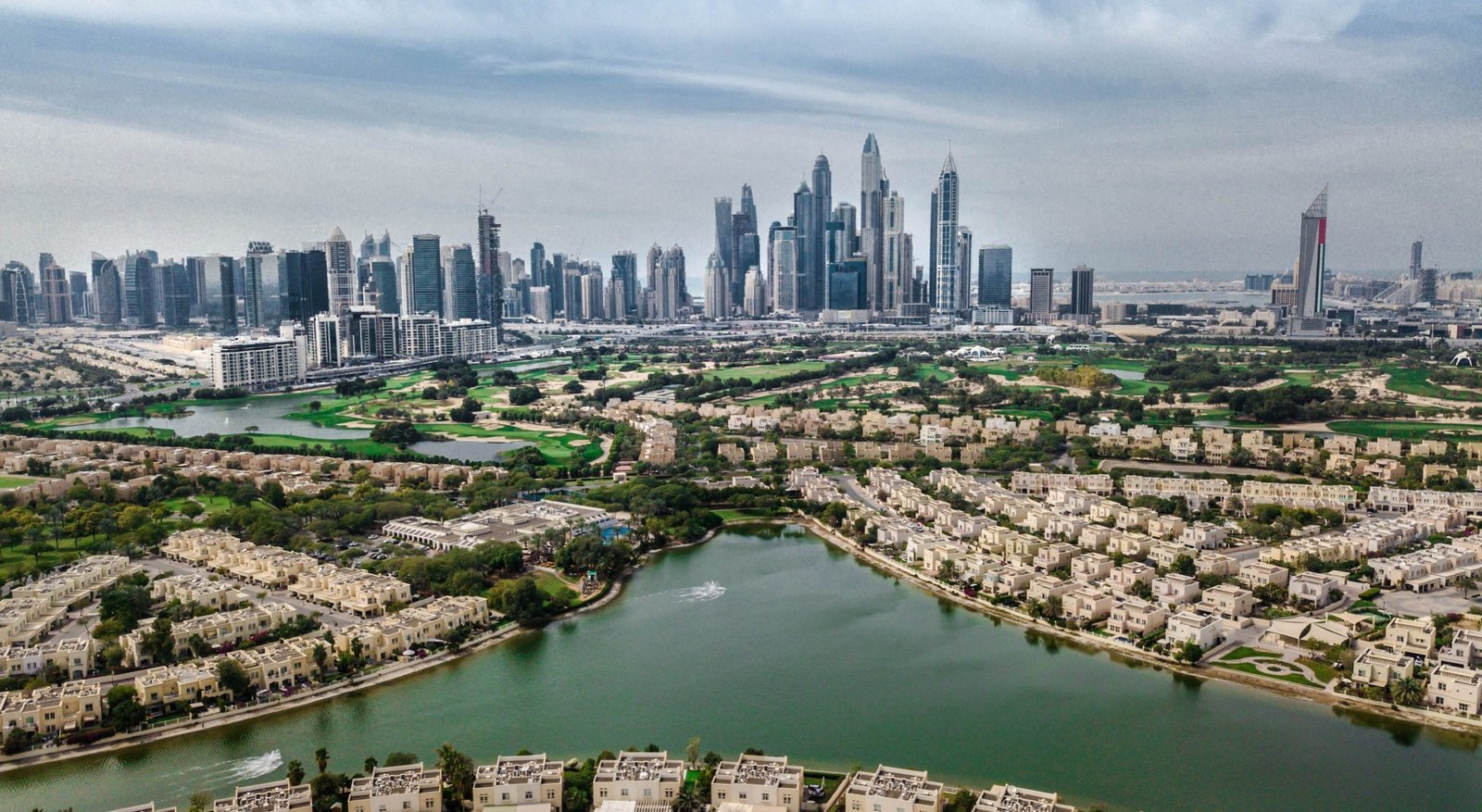
Over the past two decades, Dubai has developed into one of the most international higher education locations in the world: around 70 institutions licensed by the Ministry of Education, many of them branch campuses of renowned British, American and Australian universities, attract students from all over the world. For students and families from Germany, Austria and Switzerland, however, studying in Dubai involves some particularities that do not appear in most guides, which are often aimed at the South Asian market: from the recognition of the Abitur or Matura to the official fees for the student visa.
This guide explains the UAE higher education system, the requirements for the student visa with official fees, realistic tuition and living costs, and the rules for part-time jobs while studying.
For an overview of all residence options, see our Dubai visa guide.
Table of contents
Studying in Dubai: overview

| Criterion | Overview |
| Higher education regulator | Ministry of Higher Education and Scientific Research (MoHESR) |
| Number of licensed institutions | Approx. 70 across the UAE |
| Bachelor’s tuition fees | Approx. AED 60,000–115,000/year depending on subject and university (approx. EUR 14,600–28,000; medicine up to approx. AED 160,000 / EUR 39,000) |
| Master’s tuition fees | Approx. AED 50,000–103,000/year (approx. EUR 12,200–25,100) |
| Student visa | Via the university or, under certain conditions, via parents |
| Basic fee for the residency permit | AED 200 (approx. EUR 50) plus additional fees according to GDRFA Dubai |
| Part-time job allowed? | Yes, with a separate MOHRE work permit, max. 20 hrs/week during the semester |
| Golden Visa for top students | Possible from a GPA of 3.5 (international) or 95% (Abitur/high school) |
The UAE higher education system at a glance
Unlike in Germany, Austria or Switzerland, the higher education landscape in the UAE is highly fragmented and, according to the German Academic Exchange Service (DAAD), can be divided into five categories:
- Federal universities (state-funded): United Arab Emirates University, Zayed University, the 15 Higher Colleges of Technology.
- Universities funded by state-affiliated bodies without a foreign partner university: e.g. University of Sharjah, American University of Sharjah, Khalifa University.
- Non-state universities under national sponsorship: e.g. British University in Dubai (cooperates with several British universities per faculty).
- Foreign universities funded by state-affiliated bodies with extensive teaching autonomy: mainly in Abu Dhabi (NYU Abu Dhabi, Sorbonne Abu Dhabi).
- Non-state, commercial universities under foreign sponsorship: the most relevant category for Dubai, including the University of Wollongong in Dubai, Middlesex University Dubai, American University in Dubai and a growing number of Indian providers (e.g. Manipal University in Dubai Academic City).
The higher education system is strongly based on the Anglo-American model: the usual qualifications are the Higher Diploma, Bachelor’s and Master’s degrees, while PhD programmes have only been offered occasionally for a few years.
Source: DAAD – Country information United Arab Emirates (official German institution for study abroad).
Recognition of the Abitur and Matura for studying in Dubai
A point that is completely missing from most guides: the German, Austrian or Swiss university entrance qualification is not automatically recognised in the UAE. According to the DAAD, the German university entrance qualification generally allows access to higher education in the UAE, but requires a recognition procedure with the responsible Ministry of Education. In practice, the target university usually checks the admission requirements as part of the application process, but applicants should clarify this directly with the university early on rather than relying on automatic recognition.
Practical tip: anyone planning to return to Germany, Austria or Switzerland after studying in Dubai should also check early whether the later UAE degree is recognised as equivalent via the anabin database of the German Standing Conference of Ministers of Education (or the respective Austrian/Swiss equivalents) – not every private, commercial university in the UAE is rated the same there.
Popular universities in Dubai for international students
The best-known universities for international students in Dubai include:
- American University in Dubai (AUD): One of the oldest private US-accredited universities in Dubai (founded in 1995).
- University of Wollongong in Dubai: Australian branch campus, founded in 1993, one of the most established foreign universities in the city.
- Middlesex University Dubai: British branch campus with a wide range of subjects, founded in 2005.
- Heriot-Watt University Dubai: Scottish branch campus focusing on business, engineering and design.
- British University in Dubai (BUiD): Cooperates with several British partner universities, each responsible for individual faculties.
- Canadian University Dubai: Canadian-accredited, broad range of Bachelor’s and Master’s programmes.
When choosing a university, you should always check whether the institution is officially accredited by MoHESR or the responsible free zone authority (e.g. Dubai Knowledge Park, Dubai International Academic City) – only accredited degrees will later be recognised internationally or in your home country.
Tuition fees and living costs calculated realistically
Tuition fees in Dubai vary greatly by subject and university. According to current market data for 2026, the following guide values apply:
| Subject (Bachelor’s, per year) | Cost (AED) | approx. Cost (EUR) |
| Business | 60,000 – 114,000 | 14,600 – 27,800 |
| Computer science/IT | 60,000 – 108,000 | 14,600 – 26,300 |
| Engineering | 66,000 – 108,000 | 16,100 – 26,300 |
| Architecture | 70,000 – 108,000 | 17,100 – 26,300 |
| Medicine (MBBS) | 120,000 – 160,000 | 29,300 – 39,000 |
Master’s programmes generally cost between AED 50,000 and 103,000 per year (approx. EUR 12,200–25,100). For comparison, the DAAD (based on an older exchange rate, so to be understood as a rough guide) states €10,000–15,000 per semester for Bachelor’s programmes and €20,000–50,000 for Master’s programmes – although many universities offer merit scholarships that can reduce these amounts.
Accommodation: According to the DAAD, on-campus student residences cost around AED 15,000 (approx. EUR 3,700) per semester for a single room or AED 10,000 (approx. EUR 2,400) for a shared room. According to the DAAD, the private housing market is hardly affordable for students used to German conditions; in addition, tenancy contracts of less than a year are rarely offered and flat shares are uncommon in Dubai. Anyone still considering their own apartment will find background information on the rental process and neighbourhoods in our neighbourhood guide.
Other costs according to current education advisory portals: books/materials approx. AED 1,000–2,500/year (approx. EUR 250–600), health insurance approx. AED 1,200–3,500/year (approx. EUR 300–850). According to specialist education portals, international students should budget for a total of around AED 90,000–120,000 per year (approx. EUR 22,000–29,300) for tuition fees plus living costs. Our cost of living guide provides a general comparison of living costs in Dubai.
Sources: DAAD (official source, fees partly based on 2019 exchange rates), AECC Global – Cost of Study in Dubai (specialist education advisory portal, current AED figures for 2026); upper limits cross-checked with the official fee pages of the American University in Dubai (approx. AED 108,000/year incl. fees, approx. EUR 26,300, the same for all Bachelor’s subjects), Middlesex University Dubai (AED 64,557/year, approx. EUR 15,750, 2026/27) and Mohammed Bin Rashid University (medicine AED 160,000/year, approx. EUR 39,000).
Student visa for Dubai: requirements overview
International students who want to start a degree in Dubai need a valid residence permit. The student visa is usually arranged through the admitting, officially licensed university. Under certain conditions, students can alternatively be sponsored by their parents living in the UAE.
The application typically requires a valid passport, a recent passport photo, proof of enrolment, health insurance and, in some cases, a medical examination.
The official basic fee for the student residency permit is AED 200 (approx. EUR 50), according to GDRFA Dubai. Depending on the application route, further government fees apply, along with possible costs for the Emirates ID, medical examination and processing through the university.
You’ll find full details on requirements, documents, fees, application and renewal in our separate guide, “Dubai Student Visa”.
Golden Visa for top students: the underestimated option
A detail that is often overlooked: the UAE offers high-performing students and graduates direct access to the ten-year Golden Visa, which is considerably more attractive than the standard student visa that has to be renewed annually. According to official GDRFA criteria:
- School graduates: Minimum grade average of 95% at a public or private school, with the certificate attested by the Ministry of Education.
- Graduates of UAE universities: Cumulative GPA of at least 3.5 (classification A) or 3.8 (classification B), graduated within the last two years, attested by the Ministry of Higher Education.
- Graduates of international universities: The university must rank among the top 100 worldwide according to international rankings recognised by the Ministry of Education, Bachelor’s degree with a GPA of at least 3.5, graduated within the last two years.
The official basic fee is AED 1,100 (approx. EUR 270; plus knowledge/innovation dirham and in-country fee, structured similarly overall to the standard student visa). The Golden Visa is valid for 10 years and cannot be extended – after it expires, a new application must be submitted if you are still eligible.
Source: GDRFA Dubai – Golden residence permit for top students/graduates (official government source).
Health insurance while studying
DHA-compliant health insurance is mandatory by law for all students in Dubai and is often already covered by the tuition fees or the university’s visa process. Anyone considering private supplementary insurance or wanting to understand the exact requirements and costs in detail will find a comprehensive comparison in our health insurance guide.
Part-time jobs while studying: what is allowed
Unlike in many European countries, the student visa in the UAE does not automatically entitle you to work. Anyone who wants to take a part-time job while studying also needs a separate permit from the Ministry of Human Resources and Emiratisation (MOHRE), the so-called “Student Training and Employment Permit”.
The key points:
- Permitted hours: Up to 20 hours/week during the semester, up to 40 hours/week during the official semester breaks.
- Requirements: Active student visa, full-time enrolment at an accredited institution, usually a minimum GPA (mostly 2.0–2.5), and a “No Objection Certificate” (NOC) from the university.
- Minors (15–18 years): A maximum of 6 hours per day with a mandatory one-hour break.
- Costs: Official fees of approx. AED 100 in total (approx. EUR 25; application + issue), plus possible service fees from agencies.
- Processing time: Usually 2–7 working days after submission by the employer.
Important: anyone who works without this separate permit violates the residence conditions of the student visa, which in extreme cases can lead to the loss of the visa.
Checklist: approaching your application in a structured way
- Check the target university(ies) for MoHESR accreditation.
- Clarify whether your Abitur/Matura can be recognised directly with the university.
- Budget realistically for tuition fees as well as additional and living costs (incl. accommodation).
- Obtain your application and acceptance letter at least 2–3 months before the start of your studies.
- Start the visa process via the university as soon as you have the acceptance letter.
- Arrange proof of health insurance early.
- With very good grades: check the Golden Visa option instead of automatically applying for the standard student visa.
- If you are interested in a part-time job: clarify the MOHRE work permit and eligibility requirements (GPA, NOC) early.
The most common mistakes when planning to study in Dubai
Mistake 1: Assuming that the German Abitur is automatically recognised without clarifying the recognition procedure with the target university.
Mistake 2: Underestimating housing costs – the private housing market in Dubai is often hardly affordable for students, and on-campus residences are usually the more realistic option.
Mistake 3: Taking a part-time job without a MOHRE work permit – this jeopardises your residence status.
Mistake 4: Not checking the Golden Visa option for top students, even though your grades would meet the criteria.
Mistake 5: Not checking the accreditation of the target university – not every commercial private university will later be recognised equally in your home country.
Conclusion: who is studying in Dubai worthwhile for?
Dubai offers an internationally oriented, Anglo-American-style higher education system with renowned foreign university branch campuses, but financially it is more comparable to studying in the USA or UK than to the largely tuition-free universities in Germany or Austria. Anyone who clarifies the recognition question early, budgets realistically and, with the right grades, checks the Golden Visa option can benefit from a very well-connected international study location.
Matching tools
FAQ: frequently asked questions about the Dubai student visa
Can I study in Dubai with a German Abitur or Austrian Matura?
Generally yes. Admission depends on the requirements of the respective university and chosen degree programme. Automatic recognition is not guaranteed. Applicants should clarify early which certificates, attestations and, where applicable, language proof are required.
How much does studying in Dubai cost per year?
Tuition fees vary considerably. Bachelor’s programmes cost roughly AED 60,000–160,000 per year depending on subject and university (approx. EUR 14,600–39,000), Master’s programmes often AED 50,000–103,000 (approx. EUR 12,200–25,100). In addition, accommodation, food, health insurance and other living costs must be factored in.
Which universities in Dubai are suitable for international students?
Well-known universities include, among others, the University of Wollongong in Dubai, Middlesex University Dubai and Heriot-Watt University Dubai. What matters is the quality and recognition of the specific programme, the tuition fees and the admission requirements.
Do I need a student visa to study in Dubai?
International students generally need valid residence status in the UAE. A student visa can be arranged through the admitting university. Anyone already living in Dubai on a valid family visa may, under certain conditions, continue to be sponsored by their parents.
How much does a student visa for Dubai cost?
The official basic fee for the student residency permit is AED 200 (approx. EUR 50), according to GDRFA Dubai. Depending on the application, further fees apply, for example for the Emirates ID, medical examination and processing through the university. The full requirements and costs are covered in our separate guide, “Dubai Student Visa”.
Am I allowed to work part-time while studying in Dubai?
Generally, employment is possible under certain conditions. However, the student visa alone does not automatically entitle you to work. A part-time job or internship may require an additional work permit. The conditions depend on the type of employment and the responsible authority.
Is a degree from Dubai recognised in Germany, Austria or Switzerland?
Not automatically. Recognition depends, among other things, on the university, the specific degree programme, accreditation and the respective home country. Anyone planning to return after their studies should check the recognisability of the degree ideally before enrolling.
Are there scholarships for studying in Dubai?
Yes. Some universities offer merit-based scholarships or tuition fee reductions. Requirements and funding amounts vary by university and programme. It is advisable to check the available funding options directly with the respective university.
Note:
As of: September 2026. The information in this article on tuition fees, visa fees and part-time job rules is based on publicly available information from the DAAD, GDRFA Dubai and specialist education and visa portals (as of September 2026). It is intended for general guidance and does not replace an individual review by the respective university or responsible authority. As fees, admission criteria and visa regulations change regularly, all information should be confirmed directly with the target university and the GDRFA (General Directorate of Residency and Foreigners Affairs) Dubai before applying.