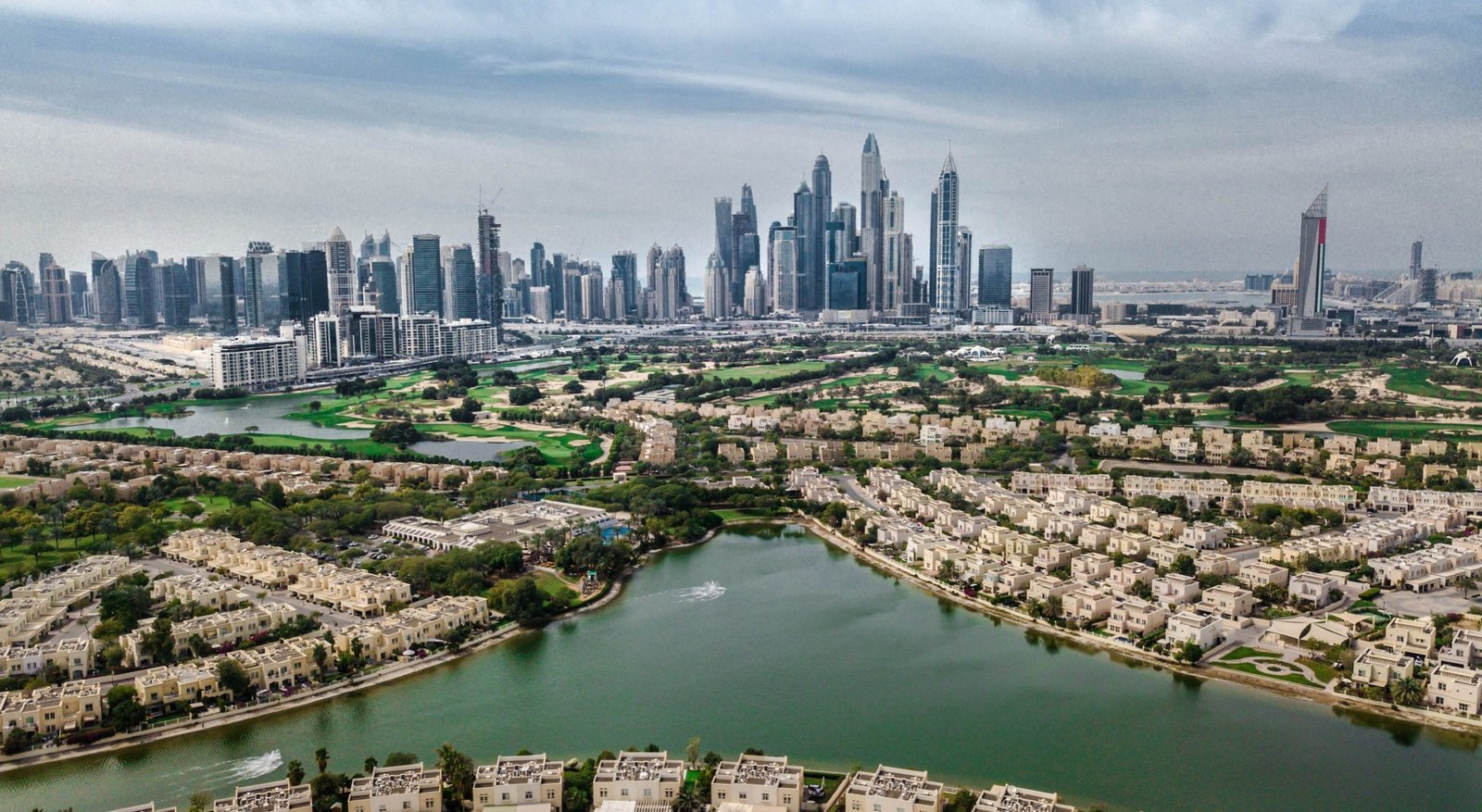
Dubai neighbourhoods – the choice is huge and the differences between areas are considerable. Dubai combines historic districts with numerous modern master communities – from luxurious waterfront locations and urban high-rise districts to quiet villa communities surrounded by greenery. For expats from Germany, Austria and Switzerland, choosing a neighbourhood is therefore not a side issue but a decision that shapes budget, commute, choice of school and quality of life alike.
This guide compares Dubai’s most important neighbourhoods by life situation, shows current rents with sources and explains the complete rental process – from viewing to Ejari registration.
Table of contents
Dubai neighbourhoods: overview
| Criterion | Overview |
| Property purchase by foreigners | Freehold ownership only on officially designated plots; regular renting is generally also possible outside these areas |
| Most affordable rental areas | International City, Al Nahda, Deira, DAMAC Hills 2 |
| Most popular family communities | Arabian Ranches, Dubai Hills Estate, Mirdif, Tilal Al Ghaf |
| Central/urban areas | Downtown Dubai, Business Bay, Dubai Marina, JLT |
| Premium/luxury areas | Palm Jumeirah, Bluewaters Island, Jumeirah Islands, Al Barari |
| Up-and-coming areas | Dubai South, The Valley, Arjan, Dubai Creek Harbour |
| Rental deposit | Usually 5% of the annual rent |
| Ejari registration | Mandatory official registration of the tenancy contract with the Dubai Land Department |
Why choosing the right neighbourhood in Dubai matters so much
Unlike many European cities, where location and standard of living often vary only gradually, Dubai’s neighbourhoods differ markedly – in prices, infrastructure and lifestyle. A working single in Dubai Marina has a completely different everyday life from a family in Arabian Ranches. When comparing Dubai neighbourhoods, you should therefore consider not only rents but also daily travel times.
Three factors should guide your choice of neighbourhood:
- Commute to work: Dubai is spread out, and distances between neighbourhoods can mean 30–60 minutes of driving. More on this in the section “Commute times and traffic” below.
- Budget: Rents range from approx. AED 45,000/year (approx. EUR 11,000) for a studio on the outskirts to over AED 300,000/year (approx. EUR 73,200) for a luxury apartment in premium areas. Our cost of living guide provides a general budget framework for different household sizes.
- Stage of life: Singles, couples, families with children and retirees have different priorities – from proximity to nightlife to proximity to schools. If you are planning to retire in Dubai, you will find specific advice in our retirement guide.
Luxury & waterfront: the premium neighbourhoods
These areas offer water views, high-end fittings and international neighbours – at a corresponding price.
- Palm Jumeirah: The artificial palm-shaped island is one of Dubai’s best-known addresses. According to the Bayut market report H1 2026, the average annual rent for apartments is around AED 284,000 (approx. EUR 69,300), an increase of 5.3% compared with the second half of 2025. Villas cost on average AED 1,738,000/year (approx. EUR 424,000), 6-bedroom villas around AED 2,331,000 (approx. EUR 569,000).
- Bluewaters Island: The small island next to JBR leads the ultra-luxury segment with an average of AED 467,000/year (approx. EUR 114,000) for apartments.
- Jumeirah Islands: A quiet villa community on artificial islands, averaging AED 1,460,000/year (approx. EUR 356,000) for villas – according to Bayut the segment with the strongest rental growth among ultra-luxury villas.
- Al Barari: A green, nature-oriented luxury villa community with a rent increase of 8.2% compared with the second half of 2025 (according to Bayut); average rent for apartments approx. AED 367,000/year (approx. EUR 89,500).
Source: Bayut Dubai Rental Market Report H1 2026 – specialist property portal, not an official source. For legally binding rent comparisons and permitted rent increases, the DLD Smart Rental Index is the official reference.
Central & urban: living in the heart of the action
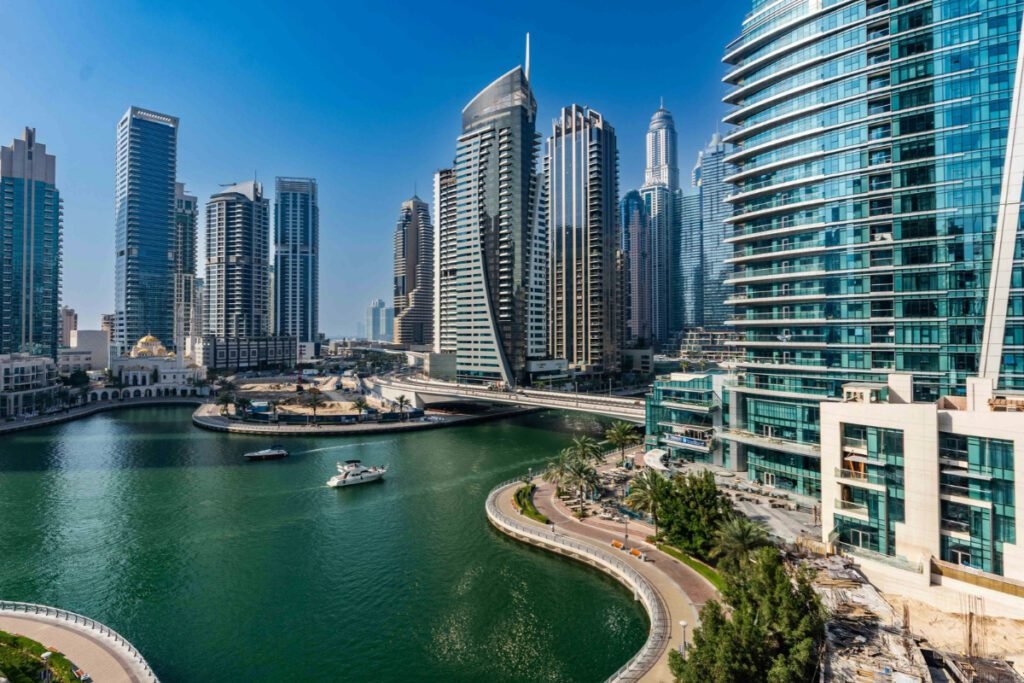
For anyone who values short distances, nightlife and an international, lively neighbourhood.
- Downtown Dubai: Located around the Burj Khalifa and Dubai Mall, with a stable average rent of approx. AED 226,000/year (approx. EUR 55,100) for apartments (Bayut H1 2026). Highest footfall; many international companies have offices here.
- Dubai Marina: The best-known waterfront area for younger professionals and couples, averaging AED 153,000/year (approx. EUR 37,300) for apartments, with a wide price range: 1 bedroom from approx. AED 103,000 (approx. EUR 25,100), 3 bedrooms approx. AED 249,000 (approx. EUR 60,800).
- Business Bay: Right next to Downtown, many new buildings, average rent approx. AED 118,000/year (approx. EUR 28,800) – often a cheaper alternative to Downtown with a similarly central location.
- Jumeirah Lake Towers (JLT): Popular with professionals on a smaller budget than in the Marina, good metro connection, mixed high-rise community with lakes.
Family-friendly villa communities
Families moving to Dubai with children usually look for quieter areas with villas, gardens and short distances to international schools. Details on curricula, KHDA ratings and school fees can be found in our children & schools guide.
- Dubai Hills Estate: One of the most sought-after newer family communities, with its own golf course, park and mall. Average rent for villas approx. AED 654,000/year (approx. EUR 160,000), with particularly high demand for larger 5-bedroom units.
- Arabian Ranches (incl. Arabian Ranches 3): An established, very family-friendly villa community with community pools and parks. The original Arabian Ranches is at approx. AED 411,000/year (approx. EUR 100,000) for villas, the more affordable Arabian Ranches 3 at approx. AED 293,000/year (approx. EUR 71,500).
- Tilal Al Ghaf: A newer community around an artificial lagoon, average rent approx. AED 319,000/year (approx. EUR 77,800), with noticeable growth for larger units (+2.2% for 5-bedroom villas).
- Mirdif: One of the most established, more affordable family areas with many mid-range villas, approx. AED 159,000/year (approx. EUR 38,800) – considerably cheaper than the newer communities while being similarly family-friendly.
- DAMAC Hills / DAMAC Hills 2: DAMAC Hills offers stable rents of around AED 263,000/year (approx. EUR 64,200); the more affordable DAMAC Hills 2 (formerly Akoya Oxygen) is at approx. AED 120,000/year (approx. EUR 29,300) and is considered an entry option for families on a smaller budget.
Budget-conscious: good areas for smaller budgets
Not every move to Dubai means a palm island or a Downtown view. If a lower budget matters to you, there are solid alternatives:
- Jumeirah Village Circle (JVC): One of the most popular mid-tier areas for professionals and young families, average rent for apartments approx. AED 81,000/year (approx. EUR 19,800); studios from approx. AED 54,000 (approx. EUR 13,200), 2 bedrooms approx. AED 113,000 (approx. EUR 27,600).
- Al Nahda: Close to the Sharjah border, one of the cheapest apartment areas at an average of approx. AED 64,000/year (approx. EUR 15,600) – popular with commuters who prioritise low rents over short journeys.
- International City: At approx. AED 60,000/year (approx. EUR 14,600) one of the cheapest residential areas in Dubai, though with much simpler infrastructure and longer commutes to the centre.
- Deira: The historic, very international part of Dubai, average rent approx. AED 91,000/year (approx. EUR 22,200), with the strongest demand in the studio segment according to Bayut.
- Arjan: An up-and-coming mid-tier area near Dubailand, approx. AED 89,000/year (approx. EUR 21,700) with steady growth (+3.4%).
Prices according to the Bayut Dubai Rental Market Report H1 2026, rounded averages per community.
Dubai neighbourhoods: up-and-coming areas at a glance
Alongside established districts, the official investment promotion agency Invest in Dubai also distinguishes in its neighbourhood guide between established “top neighbourhoods” and specifically categorised “emerging neighbourhoods” – a useful framework for anyone focusing on value growth and future infrastructure.
- Dubai South: Located around Al Maktoum International Airport and Expo City, with government-driven infrastructure development. Villas average approx. AED 172,000/year (approx. EUR 42,000), with noticeable rental growth for 3-bedroom villas (+5.3%).
- The Valley (by Emaar): A family-oriented mid-tier community with good value for money, villas averaging approx. AED 160,000/year (approx. EUR 39,000).
- Dubai Creek Harbour: A new waterfront development with direct views of the future Dubai Creek Tower skyline, regarded as the Downtown alternative of the coming years.
- Sobha Hartland: A new-build community close to the centre with strong rental growth (+6.5% according to Bayut), average rent for apartments approx. AED 142,000/year (approx. EUR 34,600).
Source for the categorisation: Invest in Dubai – neighbourhoods guide (official investment promotion agency of the Emirate of Dubai).
Note: Up-and-coming areas often offer more attractive entry prices but are frequently still under construction or have incomplete infrastructure (schools, shops). If you are moving with children or planning for the short term, you should check the current state of completion on site.
Dubai neighbourhoods compared: which area suits you?
| Profile | Recommended neighbourhoods | Why |
| Single / young professional | Dubai Marina, JLT, Business Bay, JVC | Short distances to nightlife and offices, good public transport |
| Couple without children | Downtown Dubai, Dubai Marina, Business Bay | Central, plenty of restaurants and leisure, good metro connection |
| Family (mid-range budget) | Mirdif, Arabian Ranches 3, DAMAC Hills 2, JVC | Villas/townhouses, community feel, more moderate rents |
| Family (higher budget) | Dubai Hills Estate, Arabian Ranches, Tilal Al Ghaf | Renowned schools nearby, large plots |
| Budget-conscious professionals | Al Nahda, International City, Deira | Lowest rents, but longer commutes |
| Retirees | Arabian Ranches, Dubai Hills Estate, JVC | Quiet location, good medical infrastructure (see retirement guide) |
| Entrepreneurs/freelancers (home office) | JLT, Business Bay, Dubai Silicon Oasis | Close to coworking spaces and free zone infrastructure |
Freehold zones: where foreigners may buy property
Foreigners may acquire freehold ownership in Dubai only in officially designated areas or on correspondingly approved plots. This restriction applies to buying property, not to ordinary renting: renting is generally also possible outside the freehold areas. Anyone who wants to buy should check the ownership status of the specific property with the Dubai Land Department.
If you are considering buying property beyond renting – for example as an investment or for an investor visa – you will find the legal and financial details in our property buying guide and the in-depth articles on buying a house and buying an apartment in Dubai.
The rental process in Dubai: step by step
Choosing the neighbourhood is only half the battle. The actual rental process in Dubai differs significantly from German-speaking countries in several respects.
- Viewing: Usually through a broker licensed by RERA (Real Estate Regulatory Agency). You can ask for a valid RERA card at first contact.
- Offer & negotiation: Rents in Dubai are generally negotiable, especially for longer contract terms or payment in fewer instalments.
- Agree the payment structure: Traditionally, the annual rent is paid in advance in 1–4 post-dated cheques. Since 2023/2024, digital providers that allow payment in up to 12 monthly instalments have become increasingly established – according to Khaleej Times now with a volume of several billion AED per year. This flexibility usually costs a surcharge of around 5% compared with classic cheque payment; classic tenancy contracts with cheques nevertheless remain the norm and will not disappear in the medium term either.
- Deposit: Usually 5% of the annual rent, refundable on moving out minus any damage.
- Agency fee: Approx. 5% of the annual rent plus 5% VAT is customary, payable once on signing the contract.
- Sign the tenancy contract and then have it registered via Ejari. This registration is mandatory for regular tenancies and is generally required for official procedures and for registering with DEWA as a tenant.
Ejari registration: costs and process
Ejari (“my contract”) is the Dubai Land Department’s official registration system for tenancy contracts. According to the official fee structures, the official base fee is made up as follows:
| Registration fee | Amount |
| Basic fee | AED 100 (approx. EUR 24) |
| Knowledge fee | AED 10 (approx. EUR 2.40) |
| Innovation fee | AED 10 (approx. EUR 2.40) |
| Service partner fee | AED 55 (approx. EUR 13) |
| VAT | AED 2.75 (approx. EUR 0.70) |
| Total (official fee) | AED 177.75 (approx. EUR 43) |
Registration can be done directly via the Dubai REST app or the DLD portal (by the landlord), at a trustee service centre (plus service fee, total cost then approx. AED 220, around EUR 54), or via property management companies/online platforms (then usually AED 300–500, around EUR 70–120, all-inclusive). Legally, registration is the landlord’s obligation, but in practice tenants often organise it because they need the Ejari certificate to register with DEWA.
Source: Dubai Land Department – Ejari registration (official source for the fee structure; the breakdown of service fees varies depending on the registration channel chosen and was additionally taken from a specialist portal).
DEWA registration: electricity and water
As soon as you have the Ejari number, you can apply for the electricity and water connection (DEWA – Dubai Electricity and Water Authority):
| Item | Amount |
| Deposit apartment | AED 2,000 (approx. EUR 490, refundable) |
| Deposit villa | AED 4,000 (approx. EUR 980, refundable) |
| Activation fee (residential property) | approx. AED 155 or approx. EUR 38 (connection fee + registration/knowledge/innovation fee) |
According to DEWA, activation usually takes place within 15 working hours of payment, either automatically when the Ejari is issued, via the DEWA website/app or the Dubai Now app.
Source: DEWA – Activation of Electricity/Water (official source).
Plan commute times and traffic realistically
One aspect that is regularly underestimated when choosing a neighbourhood: Dubai is one of the most spread-out major cities in the world, extending over 50 kilometres from north to south along Sheikh Zayed Road. Commutes of 45–90 minutes each way during rush hour are not uncommon between outlying areas and central business districts – details on metro, taxi and car costs can be found in the mobility section of our cost of living guide.
Practical rule of thumb: If you live in one of the more affordable outlying areas (Al Nahda, International City, Dubai South) but work in the centre (DIFC, Downtown, Business Bay), you should realistically plan for 1–2 hours of extra commuting per day and weigh this against the rent savings. For professionals with an office in the city centre, it is often worth comparing a slightly higher rent in Marina/JLT/Business Bay with the savings in time and transport costs.
Checklist: choosing your neighbourhood step by step
- Determine your place of work (or most likely place of work) and define the maximum acceptable commute.
- Set a realistic monthly budget for rent (including utilities, deposit, agency fee).
- Consider your stage of life: single, couple, family with children, retirement.
- With children: identify your preferred school(s) and check the travel time from your preferred neighbourhood.
- View at least 2–3 neighbourhoods on site, not just compare them online.
- Cross-check current rents on Bayut/Property Finder and the DLD Smart Rental Index.
- Clarify the payment method: classic cheques or monthly instalments via a platform.
- Verify the broker’s RERA licence before signing the contract.
Dubai neighbourhoods: the most common mistakes when choosing
Mistake 1: Deciding based on Instagram looks alone. Palm Jumeirah or Downtown look impressive, but are not automatically the best choice for everyday life with commute and budget.
Mistake 2: Underestimating commute times. A lower rent in an outlying area can be offset by 1–2 hours of extra driving every day.
Mistake 3: Not including the rental process (Ejari, DEWA, deposit, agency fee) in the total cost calculation – these items quickly add up to several thousand AED on top of the annual rent.
Mistake 4: For families, not clarifying the choice of school before deciding on the neighbourhood. Some top schools have long waiting lists – see our children & schools guide.
Mistake 5: Relying exclusively on one broker or one price source instead of comparing several portals and the official DLD index.
Conclusion: there is no “best” location – only the right one for you
Dubai offers a suitable place to live for practically every budget and stage of life – from the palm island to an affordable family community on the outskirts. However, anyone who decides based only on the looks or fame of a neighbourhood risks either a blown budget or underestimated commutes. The combination of a realistic budget, a clearly defined commute tolerance and – for families – an early choice of school provides the most reliable basis for choosing a neighbourhood. The official rental process (Ejari, DEWA) is standardised and well documented, but should not be forgotten in budget planning.
Matching tools
FAQ: frequently asked questions about neighbourhoods in Dubai
Which neighbourhood in Dubai is the most affordable?
The most affordable residential areas include International City, Al Nahda and DAMAC Hills 2, with average rents in some cases well below AED 100,000/year (approx. EUR 24,400) for apartments or villas (Bayut H1 2026).
Which neighbourhood is best for families with children?
Established villa communities such as Arabian Ranches, Dubai Hills Estate, Mirdif and Tilal Al Ghaf are considered particularly family-friendly, with community infrastructure and relative proximity to international schools.
How high are the additional costs when moving in?
In addition to the annual rent, there is typically a 5% deposit, an agency fee of approx. 5% (+ 5% VAT), the Ejari registration fee (from AED 177.75, around EUR 43) and the DEWA deposit (AED 2,000 or approx. EUR 490 for apartments, AED 4,000 or approx. EUR 980 for villas).
Do I have to register a tenancy contract in Dubai?
Yes. Ejari registration is generally mandatory for regular tenancies in Dubai. Without registration, tenancy matters cannot be processed normally by the authorities. Tenants usually need a valid Ejari number to register with DEWA. Exceptions apply, for example, to certain rental properties in free zones.
Can I pay the annual rent in Dubai monthly instead of by cheque?
Increasingly, yes: since 2023/2024 several digital platforms have offered monthly instalments, usually for a surcharge of around 5%. However, classic payment by post-dated cheques remains the standard.
Where can foreigners rent or buy property in Dubai?
Foreigners can generally also rent apartments and houses outside the freehold areas in Dubai. Acquiring freehold ownership, on the other hand, is limited to officially approved plots. Before buying, you should therefore check the ownership status of the property with the Dubai Land Department.
Note:
As of: November 2026. Rents are market averages and can change – for current offers, it is also worth checking Bayut, Property Finder or the official DLD Smart Rental Index. The rents mentioned in this article are based on the Bayut Dubai Rental Market Report H1 2026 (specialist property portal, not an official source) and are market averages that can vary considerably depending on fittings, location within the community and negotiation. Information on Ejari and DEWA fees is based on official sources (Dubai Land Department, DEWA), but may change. The euro amounts are rounded guide values at an exchange rate of approx. AED 1 = EUR 0.24 (as of end of October 2026) and fluctuate with the exchange rate. Before deciding to rent or buy, current offers and the official DLD Smart Rental Index should be checked.