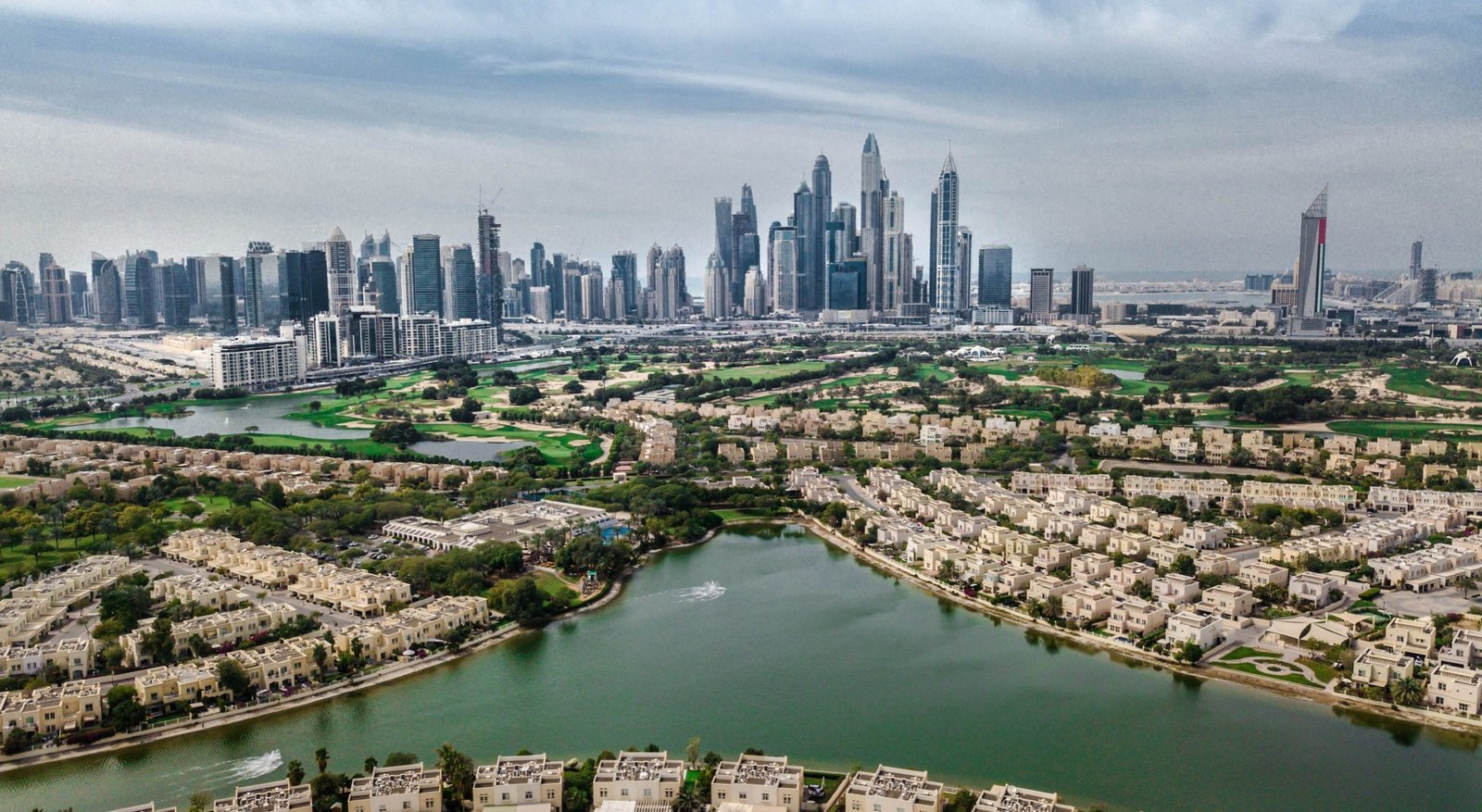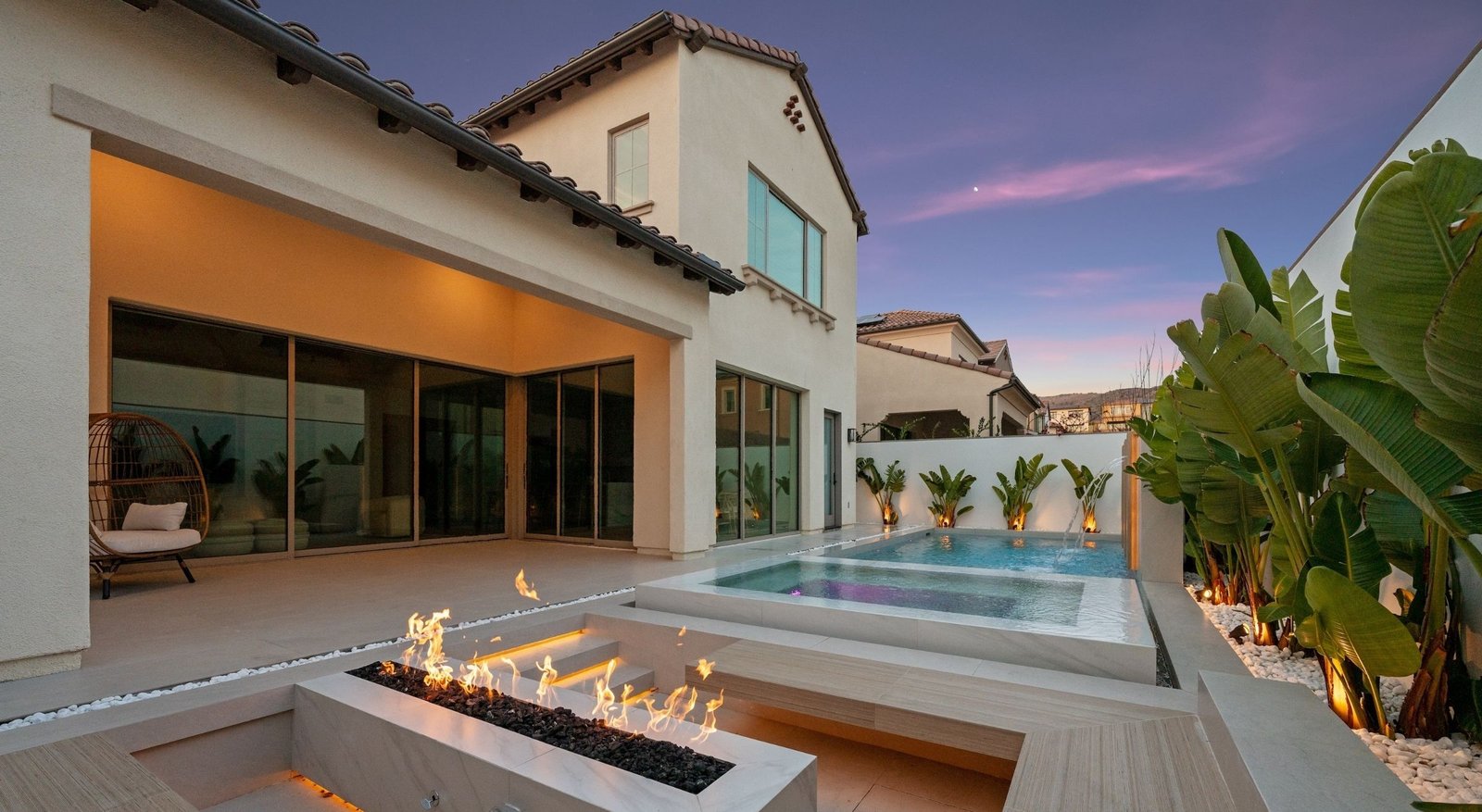
For many people from Germany, Austria and Switzerland, buying a house in Dubai is becoming increasingly important. Alongside apartments, villas and townhouses in particular are coming into focus – both as a long-term home and as a high-quality property investment.
In recent years, Dubai has become one of the most international property markets in the world – which makes buying a house in Dubai increasingly attractive for international buyers too.
Foreign owners can fully own houses in selected freehold zones, including the land and with no time limit on ownership rights. At the same time, modern master communities with villas, green spaces, international schools and their own infrastructure are being built in many areas, which are particularly attractive for families.
The market also remains interesting economically: average rental yields in Dubai are often between around 5 and 8 %, with houses typically achieving slightly lower but stable yields.
This guide explains concisely how buying a house in Dubai works, which property types and areas are particularly in demand, what costs to expect and which aspects are particularly relevant for buyers from the DACH region.
This article focuses specifically on villas and townhouses in Dubai. For a complete overview of the market, read our guide “Buying property in Dubai“. Information on apartments can be found in the article “Buying an apartment in Dubai“.
Table of contents
Buying a house in Dubai 2026 – overview
In 2026, buying a house in Dubai is one of the most sought-after options for international buyers looking for more living space, private outdoor areas and long-term property value.
The following overview shows the key facts about buying a house in Dubai:
| Factor | Overview |
| Form of ownership | Full ownership in freehold zones (including land) |
| Typical house types | Townhouses, villas, luxury villas |
| Entry price townhouse | From approx. AED 1.5 million (~ €355,500) |
| Entry price villa | From approx. AED 3 million (~ €711,000) |
| Rental yield houses | Usually around 4 – 7 % per year |
| Additional purchase costs | Around 6 – 8 % of the purchase price |
| Popular areas | Dubai Hills Estate, Arabian Ranches, DAMAC Hills |
| Use | Owner-occupation, letting or investment |
Why buy a house in Dubai? Benefits for DACH buyers
Many of the basic advantages of the property market – such as the tax framework, international demand or residence visas – apply to all types of property in Dubai. You can find a detailed overview in the guide “Buying property in Dubai“.
When buying a house in Dubai, however, additional factors come into play. Villas and townhouses in modern residential communities in particular offer advantages that differ significantly from conventional apartments and can be especially interesting for buyers from Germany, Austria and Switzerland.
More space and privacy
A key advantage of buying a house in Dubai is the much larger living space compared with apartments. Villas and townhouses often have several bedrooms, private gardens, terraces or pools.
For families or buyers who want to use Dubai as a second home, this type of housing is closer to the classic European detached-house concept.
Living in modern villa communities
Many houses are built in so-called master communities. These residential areas are planned for the long term and often have their own infrastructure.
Typical features of such communities are:
- Parks and green spaces
- Sports facilities and fitness areas
- Restaurants and shops
- Playgrounds and leisure facilities
This creates structured residential neighbourhoods that differ significantly from the urban apartment areas in the city centre.
International schools as an important location factor
For families, proximity to international schools plays a central role when buying a house in Dubai. Many villa communities are located near renowned schools with British, IB or American curricula.
For buyers from Germany, Austria and Switzerland in particular, good school options can be an important reason for choosing a particular community. Well-known areas such as Dubai Hills Estate, Arabian Ranches or Jumeirah Golf Estates combine high-quality living with good access to international schools.
Security through gated communities
A large proportion of houses in Dubai are located in so-called gated communities. These developments often have controlled entrances, security services and in some cases video surveillance.
For many buyers from the DACH region, this security concept is an important factor when buying a house in Dubai, especially for families or long-term residents.
Quiet living outside the city centre
While many apartments are located in the city centre, villa communities are often in quieter residential areas with more space and green spaces.
These locations combine quiet living, modern infrastructure and good access to the city’s key business and leisure districts.
More stable demand in the family segment
The market for houses is geared more towards long-term tenants and families. This creates stable demand in many villa communities, especially in areas with good infrastructure and schools.
For buyers, this can contribute to stable tenancies and good lettability in the long term.
Limited supply of villas
Compared with apartments, the supply of houses in Dubai is much more limited. Villas need larger plots and are usually only built in specially planned residential projects.
In established communities, this limited availability can contribute to the long-term value stability of houses.
Property types when buying a house in Dubai
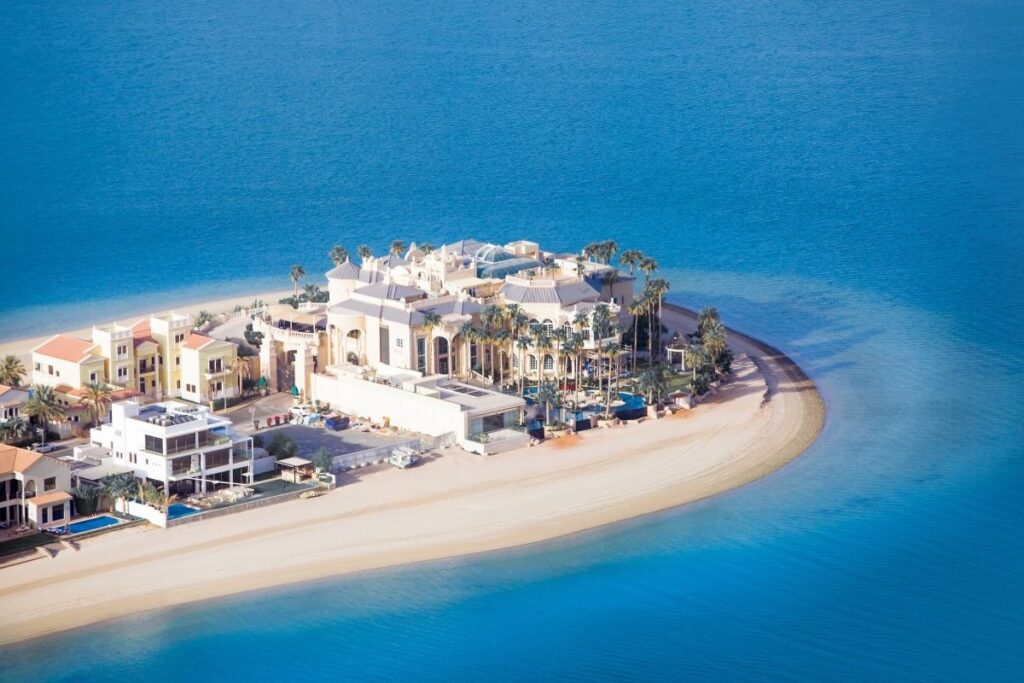
When buying a house in Dubai, buyers can choose from several property types. These differ mainly in living space, plot size, privacy and price level. Most houses in Dubai fall into two main categories: townhouses and detached villas. There are also some special forms that are named differently depending on the project or developer.
For buyers from the DACH region, it makes sense to know these differences, as they can affect budget, use and long-term property value.
Townhouses
Townhouses are among the most common types of house in Dubai. They are usually terraced houses or houses sharing a side wall within a development.
Typical features:
- Usually 2 – 4 bedrooms
- Living space often 150 – 300 m²
- Small private garden or terrace
- Several floors
- Shared facilities within the community
Townhouses are considered an entry point into the house market, as they offer more living space than apartments but are usually cheaper than detached villas.
Detached villas
Detached villas offer a high degree of privacy and usually have much larger plots. They are among the most sought-after property types for buyers who want to live in Dubai long term or need more space.
Typical characteristics:
- Usually 3 – 7 bedrooms
- Living space often 300 – 800 m² or more
- Private garden and often a private pool
- Several parking spaces or a garage
- Larger plots
Many villas are located in established areas such as Dubai Hills Estate, Arabian Ranches or DAMAC Hills.
Luxury villas
In the upper market segment, there are luxury villas with particularly large plots and exclusive locations. These properties are often individually designed and belong to the premium segment of the property market.
Typical features:
- Very large living spaces and plots
- High-quality architecture and design
- Private pools, spa areas or beach access
- Prices often in the tens of millions (AED)
Well-known locations for luxury villas include Palm Jumeirah and Emirates Hills.
Other house and villa types in Dubai
In addition to the classic categories, there are several special types of house that are named differently depending on the project.
| Property type | Short description | Classification |
| End-unit townhouse | End house of a terrace with a larger plot | More privacy than a standard townhouse |
| Semi-detached / twin villa | Two houses share one wall | Intermediate form between townhouse and villa |
| Cluster / row villa | Villas in smaller groups of houses | Denser villa development |
| Bungalow / single-storey villa | Single-storey house | Rare, mostly in older communities |
| Compound villa | Villa within an enclosed villa complex | Family-friendly developments |
| Waterfront / beachfront villa | Villa with direct access to the water or beach | Premium and luxury segment |
The best areas for houses in Dubai
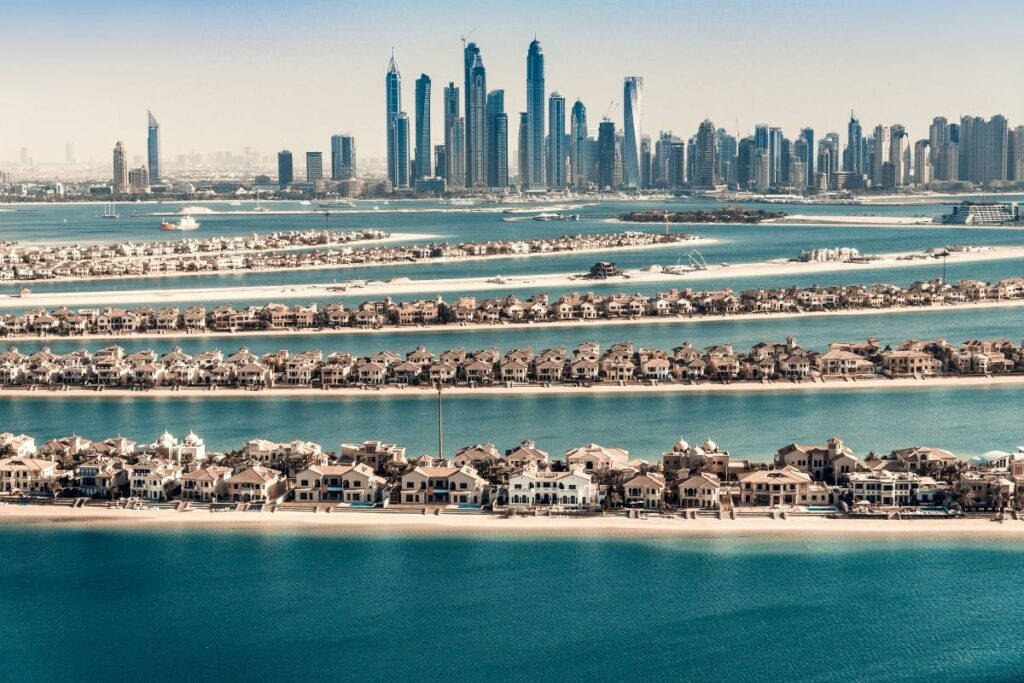
When buying a house in Dubai, choosing the right area is one of the most important decisions. Different communities differ significantly in price level, plot sizes, infrastructure and long-term development potential. Some residential areas have become particularly well established as locations for villas and townhouses in Dubai.
| Community | Property type | Features |
| The Valley | Townhouses, villas | Modern master community with a comparatively affordable entry point |
| Dubai Hills Estate | Villas, townhouses | Central location, golf course, large parks, Dubai Hills Mall |
| Arabian Ranches | Villas, townhouses | Established gated family community, golf course, Ranches Souk |
| DAMAC Hills | Villas, townhouses | Trump International Golf Club, leisure and sports facilities |
| Tilal Al Ghaf | Villas, townhouses | Lagoon with beach, modern architecture, family-oriented planning |
| Jumeirah Golf Estates | Luxury villas, villas, townhouses | Exclusive golf community with two championship courses |
| Palm Jumeirah | Luxury villas | Waterfront location, beach access, premium segment |
The Valley
The Valley is one of the newer villa communities in Dubai and was planned by the developer Emaar as a modern, family-oriented residential area. Its location along the Dubai–Al Ain Road combines good access to key districts with a quieter living environment outside the densely built-up city centre.
The community consists mainly of townhouses and detached villas in several architecturally distinct clusters. Generous green spaces, parks, leisure areas and planned community facilities are at the heart of the development.
Thanks to comparatively accessible entry prices, modern architecture and the continuous expansion of infrastructure, The Valley has quickly become a growing location in Dubai’s villa market.
Dubai Hills Estate
Dubai Hills Estate is one of the most popular areas for villas and townhouses in Dubai. The community, developed by Emaar, is located between Downtown Dubai and Dubai Marina and combines a relatively central location with generous green spaces.
At the heart of the neighbourhood is a large park and the Dubai Hills Golf Club, while Dubai Hills Mall offers additional shopping and leisure options. Thanks to its proximity to international schools and major roads, the community is particularly popular with families and expats buying a house in Dubai.
Arabian Ranches
Arabian Ranches is one of the most established villa communities in Dubai. The area is known for its quiet atmosphere, generous plots and strong focus on families.
The community has its own leisure and sports facilities and international schools nearby. Many buyers deliberately choose a house here because Arabian Ranches offers a classic suburban feel with plenty of space and privacy.
DAMAC Hills
DAMAC Hills is a large master community around the Trump International Golf Club Dubai. In addition to villas and townhouses, there are also apartments, creating a mixed residential concept.
The community offers numerous leisure options, including parks, sports facilities and restaurants. Thanks to its combination of infrastructure and modern architecture, DAMAC Hills is one of the most popular locations for buying a house in Dubai.
Tilal Al Ghaf
Tilal Al Ghaf is one of the newer residential projects in Dubai and is being developed by Majid Al Futtaim. The community is particularly characterised by its large lagoon with a beach area, which serves as the central element of the residential concept.
Its modern architecture and numerous leisure and green spaces make Tilal Al Ghaf one of the most interesting new villa communities in the city.
Jumeirah Golf Estates
Jumeirah Golf Estates is one of the more exclusive areas for buying a house in Dubai. The community is built around two international golf courses and offers generous plots and high-quality architecture.
Many international buyers choose a house here because the area offers a combination of quiet surroundings, nature and good access to key districts.
Palm Jumeirah
Palm Jumeirah is one of the best-known luxury locations in Dubai and is famous worldwide for its waterfront properties. The artificial island is home to numerous villas with direct access to the beach or sea.
In addition to exclusive homes, the island offers a wide range of restaurants, hotels and leisure options. Thanks to its unique location and international reputation, Palm Jumeirah is one of the most prestigious locations for luxury villas in Dubai.
House prices in Dubai 2026: overview
When buying a house in Dubai, prices vary significantly depending on the property type, location within the community, plot size and build quality. While townhouses are often the entry point into the house market, detached villas and luxury villas reach much higher price levels.
Compared with apartments, the total price of houses is usually higher, as the land, private outdoor areas and sometimes pools or gardens contribute to the property value in addition to the living space. At the same time, villas and townhouses are among the property segments with the strongest demand in Dubai.
The following overview shows typical price ranges when buying a house in Dubai in 2026:
| Property type | Typical price in AED (approx.) | Price in euros (approx.) |
| Townhouse (entry level) | From AED 1.5 – 2 million | From €355,500 – 474,000 |
| Townhouse (average) | AED 2 – 4 million | €474,000 – 948,000 |
| Detached villa | AED 3 – 10 million | €711,000 – 2,370,000 |
| Luxury villa | AED 10 – 20 million | €2,370,000 – 4,740,000 |
| Ultra-luxury villa | From AED 20 million | From €4,740,000 |
What house prices in Dubai depend on
In addition to the property type, several factors influence the price of a house in Dubai. They explain why properties can reach significantly different prices even within the same community.
- Location within the community (e.g. golf course or waterfront)
- Plot size and living space
- Build quality and developer
- Age of the property or new-build project
- Features such as a private pool or larger garden
Villas in established communities such as Dubai Hills Estate, Arabian Ranches or Jumeirah Golf Estates in particular often reach higher prices than comparable houses in newer areas.
Price per square metre as an important benchmark
In addition to the total price, the price per square foot (sq ft) is commonly used in Dubai’s property market. For buyers from Europe, however, a comparison per square metre is also helpful.
Typical averages when buying a house in Dubai:
| Property type | Price per sq ft | Price per m² (approx.) |
| Townhouses | AED 1,300 – 1,600 | AED 14,000 – 17,000 (~ €3,320 – 4,030) |
| Villas | AED 1,800 – 2,800 | AED 19,000 – 30,000 (~ €4,500 – 7,110) |
| Premium villas | From AED 3,000 | AED 32,000 (~ €7,585) + |
In premium locations such as Palm Jumeirah, Emirates Hills or Dubai Hills Estate, prices per square metre can be well above these averages.
Development of house prices in Dubai
The market for villas and townhouses in Dubai has shown particularly strong development in recent years. According to market analyses, house prices rose by up to 80 % between 2022 and 2025.
This development has been driven mainly by several factors:
- Rising international demand for property in Dubai
- Growing population and influx of international professionals
- Limited supply of villas in established communities
- Rising demand for larger living spaces since the pandemic
Houses with larger plots or in high-quality communities in particular are among the property segments with the strongest value growth – an important factor when buying a house in Dubai.
Off-plan houses vs. ready properties
When buying a house in Dubai, the difference between off-plan projects and completed ready properties also plays an important role.
Off-plan houses are sold directly by the developer and are usually still under construction or in the planning phase.
| Property type | Price structure |
| Off-plan houses | Often 10 – 30 % cheaper to buy into, payment plan during construction |
| Completed houses (secondary market) | Higher price, ready to move in |
Many buyers choose off-plan properties because developers often offer flexible payment plans over several years.
Price differences between communities
House prices can vary considerably depending on the area. While some communities offer a comparatively affordable entry into the house market, other locations belong to the upscale or luxury villa segment.
| Community | Price level |
| The Valley | Comparatively affordable entry into the house market |
| DAMAC Hills / Tilal Al Ghaf | Mid-price segment |
| Dubai Hills Estate | Upscale villa segment |
| Palm Jumeirah / Jumeirah Golf Estates | Luxury segment |
These differences show how strongly location can influence the property price when buying a house in Dubai.
Ongoing costs of owning a house in Dubai
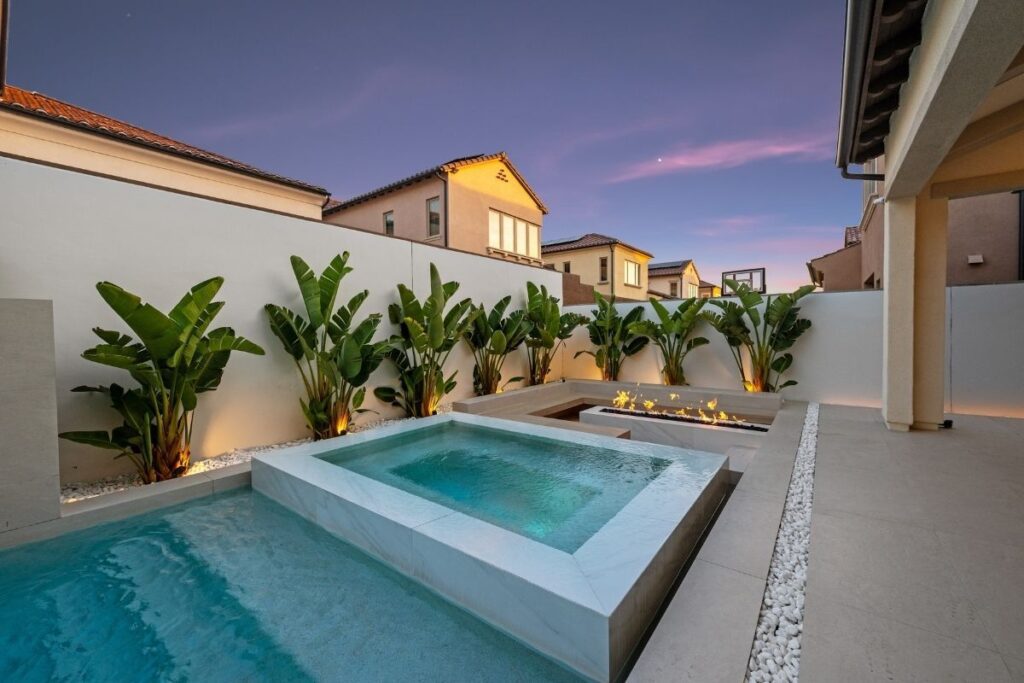
Anyone who decides to buy a house in Dubai should consider not only the purchase price but also the ongoing running costs. These can vary considerably depending on the property type, living space, features and community.
While Dubai does not levy a conventional annual property tax, there are still regular costs for infrastructure, energy consumption, maintenance and in some cases additional services within the community. Villas with a larger plot, garden or pool in particular can have higher annual running costs than smaller townhouses.
The following overview shows the main ongoing costs of owning a house in Dubai:
| Type of cost | Typical for a house in Dubai | Example costs (approx.) |
| Community fees / service charges | Annually per living area | AED 32 – 75 / m² (~ €8 – 18 / m²) |
| Electricity and water (DEWA) | Monthly, depending on consumption | AED 600 – 2,000 (~ €140 – 475) |
| Cooling / district cooling | Additional, depending on the community | AED 300 – 1,500 (~ €70 – 355) |
| Pool and garden maintenance | Mainly relevant for villas | AED 500 – 2,000 (~ €120 – 475) |
| Maintenance / repairs | Upkeep and renovation | Approx. 1 – 2 % of the property value per year |
| Building insurance | Optional | Approx. 0.1 – 0.5 % of the property value per year |
These figures are averages and may vary depending on the size, location and features of the property.
Community fees and service charges
So-called community fees are among the most important ongoing costs of owning a house in Dubai. These fees are charged by the respective development and fund the upkeep of shared infrastructure.
These include, for example:
- Maintenance of roads and footpaths
- Upkeep of parks and green spaces
- Security services and lighting
- Cleaning of public areas
- Maintenance of shared facilities
For villas and townhouses, the fees are usually calculated per square foot of living space (sq ft) and charged annually.
Typical service charges are between AED 3 and 7 per sq ft per year, which corresponds to around AED 32 – 75 per m² (~ €8 – 18 per m²).
Example calculation
A townhouse with around 2,500 sq ft of living space costs roughly the following per year:
- AED 7,500 – 17,500 (~ €1,780 – 4,150)
In premium communities, fees can sometimes be higher.
Electricity and water costs
Electricity and water in Dubai are billed by the government-owned Dubai Electricity and Water Authority (DEWA). Monthly costs depend heavily on the living space, use of air conditioning and additional consumers such as pool pumps or garden irrigation.
For many townhouses and smaller villas, monthly costs are often between around AED 600 and 2,000, which is roughly €140 – 475. Larger villas with intensive use of air conditioning can incur much higher energy costs, especially during the hot summer months.
To activate electricity and water, DEWA also requires a one-off security deposit of AED 4,000 (~ €950), which is refunded when you move out.
Cooling and air conditioning
Because of the high temperatures, cooling homes plays a central role in ongoing costs in Dubai.
Many houses use conventional air conditioning, while some communities use so-called district cooling systems.
Typical monthly costs are often between:
- AED 300 – 1,500 (~ €70 – 355)
Actual consumption depends heavily on factors such as house size, insulation, outside temperature and usage.
Pool and garden maintenance
Many villas in Dubai have private pools or larger gardens. This creates additional costs for owners for regular cleaning, maintenance and irrigation.
These services are often outsourced to external providers. Typical costs are often between around AED 500 and 2,000 per month, which is roughly €120 – 475.
Actual spending depends mainly on the size of the plot and the features of the property.
Maintenance and upkeep
In addition to community fees, the owner of a house is also responsible for maintaining the building. This includes, for example, servicing air conditioning, repairs to plumbing or minor renovations.
As a rough rule of thumb, it is often recommended to budget around 1 – 2 % of the property value per year for maintenance and repairs.
For a villa worth AED 4 million (~ €948,000), this corresponds to roughly:
- AED 40,000 – 80,000 per year (~ €9,480 – 18,960)
Building and contents insurance
Building or contents insurance is not always mandatory when owning a house in Dubai, but it is often recommended – especially for high-value villas or rented properties.
Typical costs are often around 0.1 – 0.5 % of the property value per year.
For a house worth AED 3 million (~ €711,000), this corresponds to roughly:
- AED 3,000 – 15,000 per year (~ €710 – 3,555)
Estimating total ongoing costs realistically
For many houses in Dubai, the total annual budget for ongoing costs – depending on size, location and features – is often around 2 – 4 % of the property value per year.
Realistic planning of these running costs helps buyers better estimate the actual total cost of a house in Dubai and make well-founded long-term investment decisions.
In addition to ongoing running costs, buyers should also take into account the one-off additional costs of acquiring a property. These include fees for the Dubai Land Department, agent’s commissions, trustee fees and administrative costs of the transfer of ownership.
A detailed overview of all additional costs when buying property in Dubai, including typical fees, can be found in the guide “Buying property in Dubai”.
What buyers should look out for when buying a house in Dubai

Anyone who wants to buy a house in Dubai should check several important factors carefully. Compared with buying an apartment, additional aspects such as plot size, community structure, build quality and long-term maintenance costs play a bigger role with villas and townhouses. A careful analysis of these points helps buyers find the right property and avoid long-term risks.
Location within the community
When buying a house in Dubai, not only the community itself is decisive, but also the exact location within the development. Plots on main roads or near shared facilities such as parks, schools or clubhouses may be busier than houses in quieter areas.
Factors such as the orientation of the plot, distance to neighbouring houses or proximity to green spaces also affect living comfort and resale value. In many villa communities, houses with more distance to neighbouring plots or with park views are particularly sought after.
Plot size and plot layout
Unlike apartments, many houses in Dubai also come with a plot of land. The size and shape of the plot can vary considerably and have a direct impact on the property value.
Larger plots offer more space for a garden, pool or extensions, while smaller plots often have lower purchase prices and lower maintenance costs. The position within the row – for example end units for townhouses – can also offer additional privacy and larger plots.
Build quality and developer
The quality of the developer plays an important role when buying a house in Dubai. Large developers such as Emaar, DAMAC or Nakheel have built many well-known villa communities.
Nevertheless, build quality can vary depending on the project and construction phase. Buyers should therefore consider not only the developer but also the condition of the property, year of construction and possible renovations. A technical inspection can be useful, especially for older villas.
Community rules and service charges
Many houses in Dubai are located in so-called master communities with their own management and defined community rules. These may include, for example, rules on garden design, structural changes to the house or use of shared facilities.
The community’s service charges should also be taken into account before buying, as they are among the most important ongoing costs of owning a house. A detailed explanation of service charges and typical costs can be found in the section “Ongoing costs of owning a house in Dubai” above.
Infrastructure and demand
The long-term appeal of a property depends heavily on the infrastructure of the surrounding area. Villa communities with good connections to business districts, international schools, shopping centres and leisure facilities are particularly sought after.
Well-developed infrastructure can have a positive effect on the lettability and long-term value growth of a property.
Condition and maintenance needs
When buying an existing house, the technical condition of the property should be checked carefully. This includes, for example, air conditioning, plumbing, roof, pool technology or irrigation systems.
A thorough inspection helps buyers better estimate possible future maintenance or renovation costs. A professional property inspection can be useful, especially for older villas.
Financing and long-term planning
In addition to the purchase price, buyers should also consider their long-term financial planning. This includes ongoing costs, possible renovations and future developments in the property market.
Realistic planning helps to choose a property that fits both the buyer’s current financial means and long-term goals.
The 7 most common mistakes when buying a house in Dubai
Dubai’s property market works differently from many European markets in some respects. International buyers from Germany, Austria or Switzerland in particular often underestimate certain features of the market. Anyone looking into buying a house in Dubai should therefore know the typical mistakes that can affect yield, lettability or resale value in the long term.
1. Misjudging payment plans for off-plan houses
Many villas and townhouses in Dubai are sold off-plan, i.e. during construction. Buyers often focus only on the monthly instalments without analysing the entire payment plan. What matters, however, is how high the payments are until completion and when the largest part of the purchase price is due.
2. Comparing villa prices only by living space
For houses in Dubai, it is not only the living space that determines the price. Factors such as plot size, plot location, privacy and community quality can cause large price differences, even for houses of identical size.
3. Reacting too strongly to short-term market trends
Dubai’s property market is dynamic. Some buyers make decisions solely on the basis of current price movements or market reports. In the long term, however, location quality, demand and infrastructure development are more important.
4. Misjudging the rental potential of houses
Many investors compare villas with apartments. In fact, a large proportion of houses in Dubai are rented long term by families and expats. This creates different rental structures and often longer tenancies.
5. Not comparing enough communities
Dubai has numerous villa communities with very different price levels and quality of life. Buyers who compare only a few projects will find it hard to judge which community offers better demand and value growth in the long term.
6. Making the purchase decision too emotionally
Many villas in Dubai impress with their architecture, design or spectacular location. Nevertheless, a purchase decision should not be based solely on personal preferences. Aspects such as resale value, demand and the community’s market position remain decisive in the long term.
7. Relying too much on marketing images
For new-build projects, renderings often show idealised images of the property. Buyers should therefore also check floor plans, construction plans and the actual project layout in order to realistically assess size, location and room layout.
Conclusion: is buying a house in Dubai worth it in 2026?
In 2026, buying a house in Dubai can be an attractive decision for both owner-occupiers and investors. The market for villas and townhouses has developed significantly in recent years and is now one of the most sought-after property segments in the city. International buyers from Europe, Asia and North America in particular contribute to the high demand for houses in modern master communities.
Several structural factors continue to speak in favour of Dubai’s property market. These include full ownership for foreigners in freehold areas, a tax-friendly environment, a growing population and continuous urban development. At the same time, developers are increasingly investing in large-scale residential communities with parks, schools, leisure facilities and modern infrastructure.
Villas and townhouses in particular benefit from long-term demand from families, expats and international professionals, who often prefer larger living spaces and quiet areas outside the city centre. This creates stable rental markets and comparatively constant demand in many communities.
For investors, buying a house can be particularly interesting if long-term value growth is a focus alongside rental yield. In recent years, many villa communities in Dubai have seen strong price development, as the supply of houses is much more limited than that of apartments.
Choosing the right property, however, remains decisive for a successful investment. Factors such as community quality, infrastructure, plot size, developer and future urban development have a considerable influence on value growth and lettability.
Those who look closely into buying a house in Dubai, analyse the market carefully and choose a property in an established or fast-growing community can acquire both a high-quality home and a long-term investment.
If you are also interested in moving to Dubai, company setup, taxes, cost of living or life in Dubai, you will find all the key information in our comprehensive Dubai Premium Guide.
Matching tools
FAQ: frequently asked questions about buying a house in Dubai
What counts as a “house” in Dubai?
When buying a house in Dubai, the term house usually refers to townhouses and villas. A villa does not automatically mean luxury – many villas are normal family homes within modern residential communities.
What is the difference between a townhouse and a villa in Dubai?
A townhouse is usually a terraced house with shared side walls. A villa is a detached house with its own plot.
Can foreigners buy a house in Dubai?
Yes. When buying a house in Dubai, foreigners can fully own property in designated freehold zones, including the land. Ownership there is unlimited in time and can be freely sold or inherited.
How much does a house in Dubai cost on average?
Townhouses in Dubai usually start at around AED 1.5 – 2 million (~ €355,500 – 474,000). Detached villas often start at around AED 3 million (~ €711,000). In sought-after villa communities, prices can be significantly higher depending on location, plot size and features.
What does “community” mean when buying a house in Dubai?
In Dubai, a community is a planned residential area with its own infrastructure. Many villas and townhouses are located in such master communities with parks, security services, schools, sports facilities and shops.
Can you buy houses outside communities?
Yes, in principle this is possible. However, most houses in Dubai are located in planned residential communities. Detached houses outside such developments are rarer and are mostly found in older districts.
Which communities are particularly popular for houses?
Popular communities for villas and townhouses in Dubai include Dubai Hills Estate, Arabian Ranches, DAMAC Hills and Tilal Al Ghaf. These areas offer modern infrastructure, green spaces and schools and are considered particularly family-friendly.
Can you get a visa by buying a house in Dubai?
Yes. Property buyers in Dubai can obtain a residence visa under certain conditions. Since 2026, there has been no minimum value for the two-year investor visa if you are the sole owner. For joint ownership, your share must be at least AED 400,000 (~ €94,800). From AED 2 million (~ €474,000), a 10-year Golden Visa can be applied for.
Data basis & timeliness
The information in this article is based on publicly available market data, current listings for villas and townhouses in Dubai, industry analyses and the official fee and ownership structures of the responsible authorities in Dubai (as of 2026).
All figures and assessments are for general guidance only. Actual purchase prices, ongoing costs, rental yields and value growth when buying a house in Dubai may vary depending on community, property type, plot size, developer, build quality, financing, exchange rate and current market conditions.
In the villa and townhouse segment in particular, properties often differ significantly by location within the community, plot size, standard of features and construction phase. Before making an investment decision, current project documents, payment plans, community rules and the contractual, legal and tax framework should therefore always be checked individually.