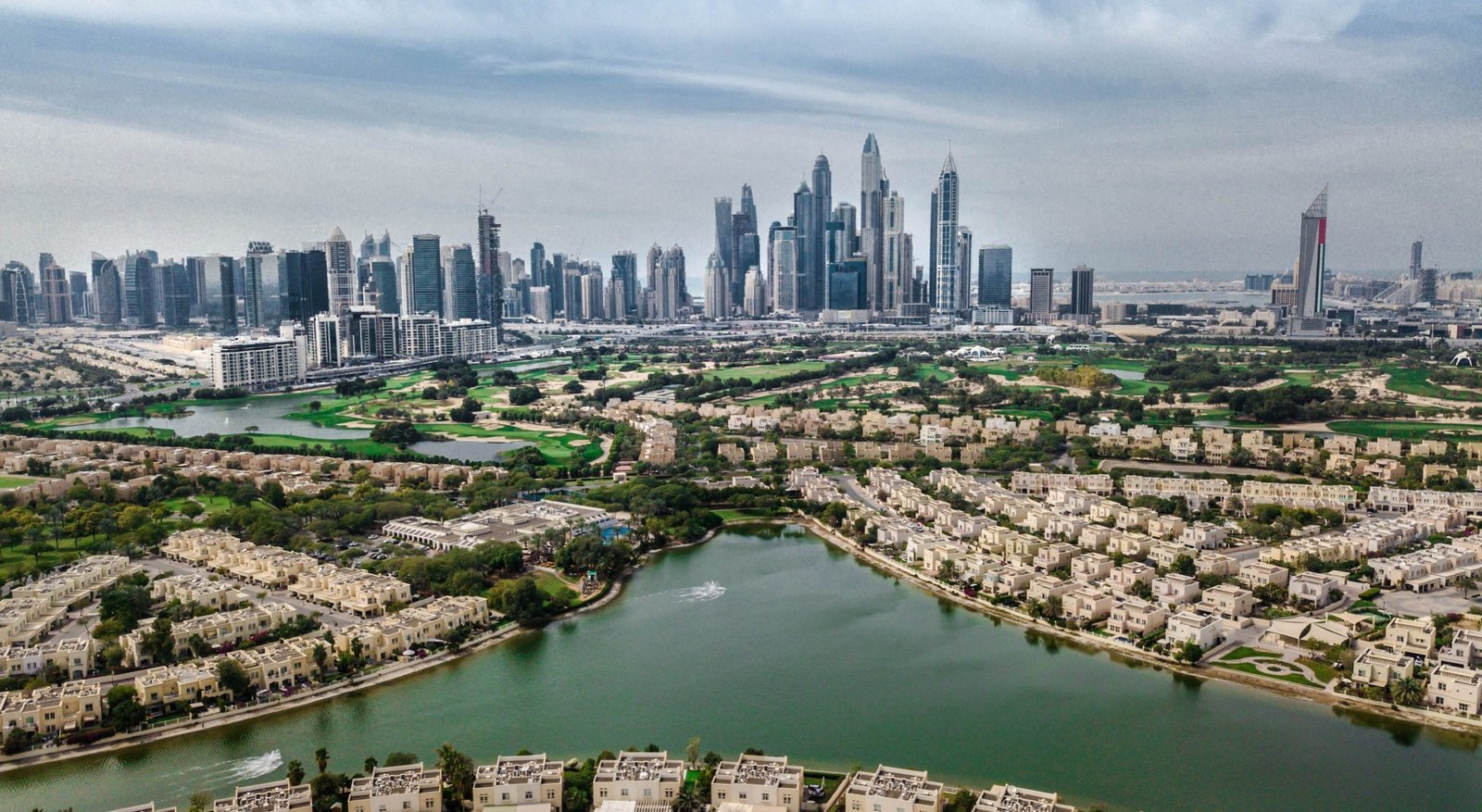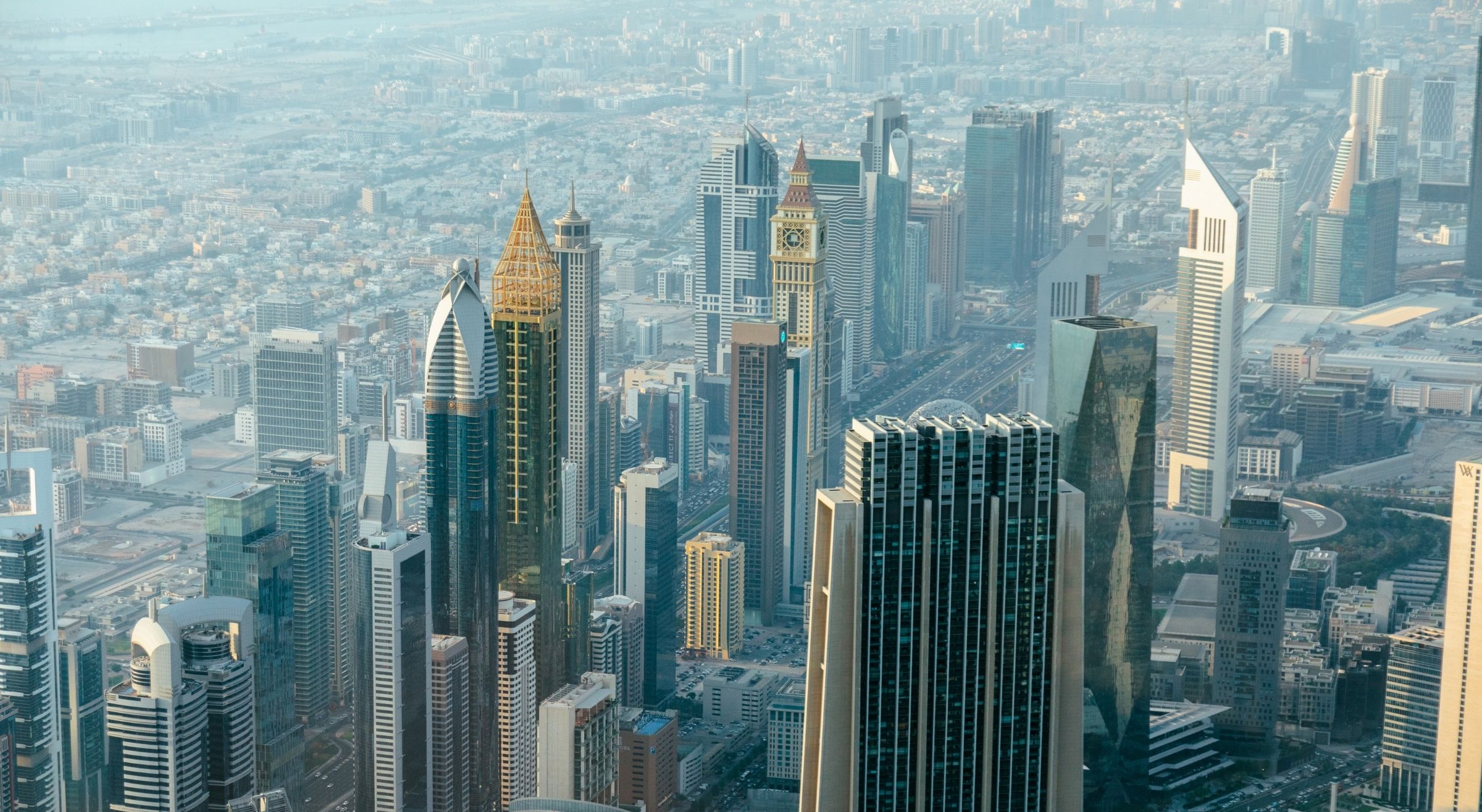
Buying property in Dubai is becoming increasingly important for international buyers. More and more people from Germany, Austria and Switzerland are interested in property in the emirate – whether as an investment, a second home or a long-term residence in one of the most dynamic cities in the world.
In recent years, Dubai has become one of the most international property markets. Foreigners can fully own property in so-called freehold zones, while modern residential projects, international infrastructure and a steadily growing population ensure continued high demand for housing.
At the same time, property in many locations achieves rental yields of around 5 – 8 % per year, which also makes Dubai’s property market attractive for investors.
This guide explains step by step how buying property in Dubai works – from ownership rights and purchase costs to financing options, the buying process and important legal aspects. The aim is to give buyers from the DACH region clear guidance so they can make well-founded decisions when buying property in Dubai.
For specific information on houses and villas, read our article “Buying a house in Dubai“. For flats and apartments, read “Buying an apartment in Dubai“.
For every step from your decision to everyday life in Dubai, see our guide Moving to Dubai.
Table of contents
Buying property in Dubai 2026: overview
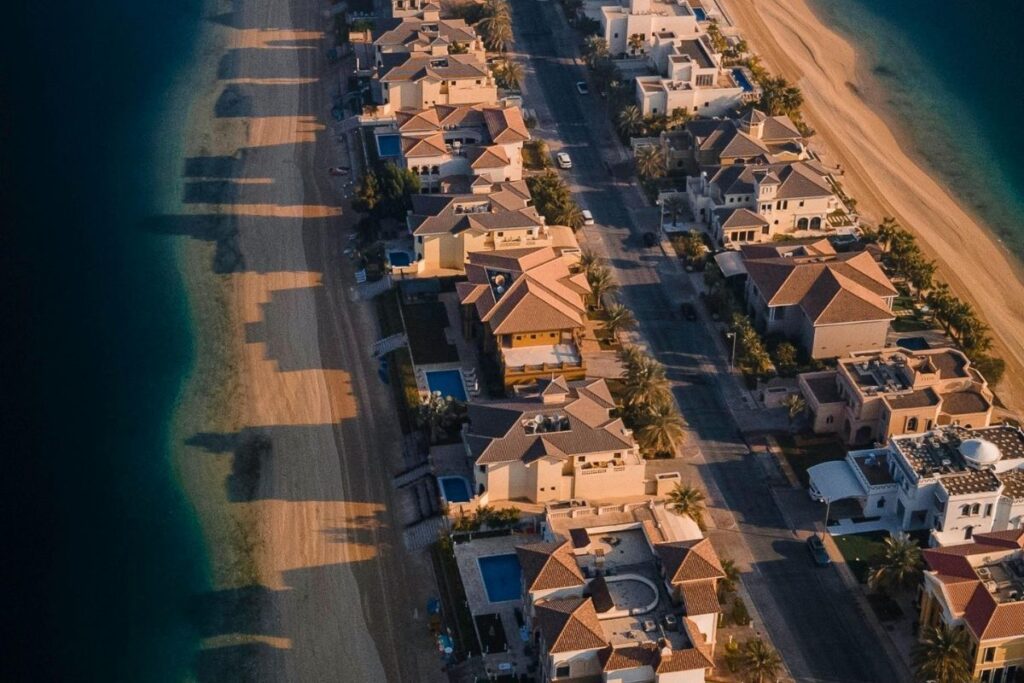
In 2026, buying property in Dubai is one of the most interesting international property investments for buyers from Germany, Austria and Switzerland. The market offers clear ownership rights for foreigners, attractive rental yields and high demand for housing.
The following overview shows the key facts about buying property in Dubai:
| Factor | Buying property in Dubai 2026 |
| Ownership | 100 % ownership for foreigners in freehold zones |
| Property types | Apartments, townhouses, villas and penthouses |
| Entry prices | Apartments from approx. €200,000, villas from approx. €500,000 |
| Additional purchase costs | Around 6 – 8 % of the purchase price |
| Taxes | No property tax, no income tax on rent |
| Rental yields | Often 5 – 8 % per year |
| Visa options | Investor visa (2 years) with no minimum value for sole owners, Golden Visa from AED 2,000,000 (~ €474,000) |
| Financing | Mortgages also available for non-residents |
| Duration of purchase | Usually 4 – 8 weeks |
This overview is for guidance. The rest of the article explains all aspects of buying property in Dubai in detail – from costs and financing to the buying process.
Why buying property in Dubai is attractive: benefits for DACH buyers
Buying property in Dubai offers several structural advantages that make the market particularly interesting for buyers from Germany, Austria and Switzerland.
Tax advantages of buying property in Dubai
A key advantage of buying property in Dubai is the tax environment of the United Arab Emirates. Dubai currently has no conventional property taxes of the kind common in many European countries.
Currently, this means:
- No property tax
- No income tax on rental income
- No capital gains tax on property sales
For buyers from the DACH region, this can lead to a significantly higher net yield than many European property investments. However, the tax treatment always depends on your personal tax residence.
Rental yields in Dubai in international comparison
Buying property in Dubai often offers higher rental yields than many established property markets in Europe. While property in cities such as Munich, Vienna or Zurich often achieves gross yields of around 2 – 3 %, yields in Dubai are often between 5 and 8 % per year, depending on location.
For investors from Germany, Austria and Switzerland in particular, the market can therefore be an interesting way to expand their property portfolio internationally.
Residence visa through buying property in Dubai
A property investment in Dubai can also be the basis for a residence visa.
| Property value | Visa |
| No minimum value (sole ownership); for joint ownership, a share of at least AED 400,000 (~ €94,800) | Investor visa (2 years) |
| From AED 2,000,000 (~ €474,000) | Golden Visa (10 years) |
The UAE Golden Visa allows long-term residence in the country and is not tied to an employer. For buyers from the DACH region, this can be an interesting option for spending extended time in Dubai or establishing a second home.
International demand for property in Dubai
Dubai is one of the most international property markets in the world. Buyers, investors and tenants come from numerous countries, creating a dynamic, internationally shaped market.
For buyers from the DACH region, this means access to a global property location with a broad international base of buyers and tenants.
Infrastructure and quality of life in Dubai
Dubai offers modern infrastructure with international schools, high-quality medical care, global transport links and a high quality of life.
These factors make the city particularly attractive for international professionals, entrepreneurs and families and help ensure that buying property in Dubai remains interesting for buyers from the DACH region in the long term.
Can I buy property in Dubai as a foreigner?
Yes. International buyers can also buy property in Dubai. Foreigners can fully own property as long as it is located in a so-called freehold zone. In these officially defined areas, international buyers are legally permitted to buy property.
This makes buying property in Dubai particularly attractive for buyers from Germany, Austria and Switzerland, as ownership can be registered with legal certainty and held for the long term.
Freehold vs. leasehold
There are two basic ownership models when buying property in Dubai:
| Model | Meaning |
| Freehold | Full ownership without time limit |
| Leasehold | Right of use for a limited period |
With freehold ownership, buyers acquire both the property and the land outright and permanently. The property can be freely sold, rented out or inherited.
With the leasehold model, on the other hand, buyers only receive a right of use, usually for up to 99 years. After this period, ownership reverts to the original owner.
For international buyers, freehold ownership is therefore usually recommended when buying property in Dubai, as it offers full ownership rights and long-term planning security.
Freehold zones in Dubai: where foreigners can buy property
For international buyers, buying property in Dubai is limited to officially defined freehold areas. These zones were designated by the Emirate of Dubai and allow foreign buyers full ownership.
The best-known freehold zones include:
- Dubai Marina
- Palm Jumeirah
- Downtown Dubai
- Jumeirah Village Circle (JVC)
- Business Bay
- Dubai Hills Estate
- Arabian Ranches
- Jumeirah Lake Towers (JLT)
These communities differ mainly in price level, infrastructure and target group. While central locations are often popular with international investors and expats, other residential areas are considered attractive options for families or long-term owner-occupation.
There are now more than 60 freehold zones in which international buyers can buy property in Dubai. Which location makes sense depends mainly on your individual goals – such as investment, owner-occupation or long-term value growth.
Ownership rights and legal protection
The ownership system for property in Dubai is considered transparent and clearly regulated internationally. Property purchases are registered and supervised by government institutions, so ownership rights are clearly documented.
Key legal elements when buying property in Dubai:
| Legal aspect | Meaning |
| Title deed | Official ownership document of the Dubai Land Department |
| No Objection Certificate (NOC) | Developer’s confirmation before transfer of ownership |
| Oqood registration | Mandatory registration for off-plan projects |
| RERA | Government real estate regulator |
| Inheritance law | Without a will, Islamic inheritance law may apply |
For buyers from the DACH region in particular, it makes sense to consider inheritance law when buying property in Dubai. Many international owners therefore register a will, for example with the DIFC Courts, to clearly regulate succession.
Practical tip: legal due diligence should be carried out before buying. An independent property lawyer can help check ownership status, possible encumbrances or outstanding fees.
Buying property in Dubai: costs 2026 – purchase price, additional costs and fees
Anyone planning to buy property in Dubai should not only consider the purchase price. For a realistic calculation, several cost factors must be taken into account – from the actual purchase price to statutory additional costs and ongoing costs after the transfer of ownership.
Dubai’s property market is considered transparent and clearly regulated by international standards. The main fees are handled by the Dubai Land Department (DLD) and are structured in a way buyers can easily follow.
Purchase prices by location and type
Purchase prices for property in Dubai are determined mainly by two factors:
- Location / community
- Property type
While premium locations such as Downtown Dubai or Palm Jumeirah have significantly higher prices, communities such as Jumeirah Village Circle or Dubai South often offer lower entry prices.
Typical purchase prices in 2026:
| Property type | Entry price | Realistic market range |
| Apartment | From approx. €200,000 | Approx. €250,000 – 500,000 |
| Townhouse | From approx. €500,000 | Approx. €550,000 – 900,000 |
| Villa | From approx. €700,000 | Approx. €900,000 – 2,500,000 |
| Luxury villa | From approx. €3,000,000 | Approx. €3 – 20+ million |
Actual prices depend heavily on factors such as community, build quality, infrastructure and demand.
You can find detailed analyses of individual property types in our guides:
- Buying an apartment in Dubai – apartments and penthouses
- Buying a house in Dubai – villas and townhouses
Additional purchase costs when buying property in Dubai
In addition to the purchase price, several additional costs apply when buying property in Dubai. These are largely standardised and moderate by international standards. Overall, buyers should budget around 6 – 8 % of the purchase price for additional costs.
Main additional costs at a glance:
| Cost item | Amount |
| Dubai Land Department transfer fee | 4 % of the purchase price |
| Agent’s commission | Approx. 2 % + 5 % VAT |
| Trustee / registration | Approx. AED 2,000 – 4,000 (~ €475 – 950) |
| Title deed | AED 580 (~ €137) |
| No Objection Certificate (NOC) | Approx. AED 500 – 5,000 (~ €120 – 1,185) |
These fees are usually paid during the transfer of ownership at the Dubai Land Department.
An example calculation shows how the total costs are made up:
Purchase price of the property: €750,000
| Item | Amount |
| Purchase price | €750,000 |
| DLD transfer fee (4 %) | €30,000 |
| Agent’s commission (2.1 %) | €15,750 |
| Trustee + title deed | Approx. €1,200 |
| NOC | Approx. €800 |
Total additional costs: approx. €47,750
Total investment: approx. €797,750
Effective additional cost ratio: approx. 6.4 %
Financing costs when buying property in Dubai
Anyone financing a property purchase in Dubai through a bank should budget for additional costs.
| Cost item | Typical amount |
| Mortgage registration | 0.25 % of the loan + AED 290 (~ €69) |
| Bank processing fee | Depends on the bank |
| Property valuation | Depends on the bank |
Important: additional purchase costs usually cannot be financed and must be paid from your own funds.
Ongoing costs after buying property in Dubai
One advantage of buying property in Dubai is that no annual property tax is levied.
Nevertheless, there are ongoing costs, in particular so-called service charges for maintenance, security and communal facilities.
Other possible costs:
- Electricity and water (DEWA)
- Internet and telecommunications
- District cooling (in some communities)
- Maintenance and reserves
Actual costs depend heavily on the community, building standard and infrastructure.
Realistic total budgets when buying property in Dubai
When buying property in Dubai, buyers should always consider the total investment volume.
Example total budgets in 2026:
| Buyer profile | Purchase price | Realistic total budget |
| Entry level (apartment) | €200,000 | approx. €214,000 |
| Family (townhouse) | €750,000 | approx. €800,000 |
| Premium villa | €5,000,000 | approx. €5,350,000 |
This calculation is based on a conservative additional cost ratio of around 7 %.
Locations and property types in Dubai at a glance
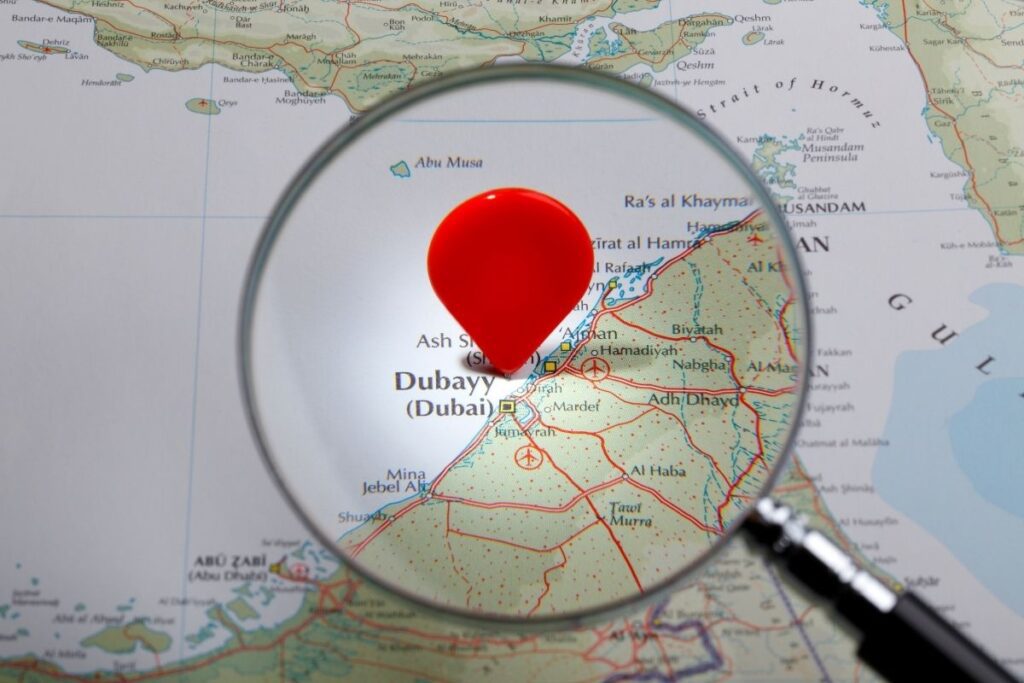
Two factors play a particularly important role when buying property in Dubai: the location of the property and the type of property chosen. Both have a major influence on the purchase price, the possible rental yield and the long-term potential for value growth.
Dubai is divided into numerous so-called master communities. Each of these residential areas has its own infrastructure, a different price level and appeals to different groups of buyers. At the same time, the property market offers a wide range of property types – from compact apartments for investors to spacious villas in family-friendly developments.
The following overview shows some of the most important combinations of location and property type when buying property in Dubai.
Key residential areas at a glance
| Location | Typical property types | Features |
| Dubai Marina | Apartments, penthouses | International lifestyle location |
| Palm Jumeirah | Villas, luxury apartments | Exclusive luxury segment |
| Downtown Dubai | Apartments | Central premium location |
| Jumeirah Village Circle (JVC) | Apartments, townhouses | Comparatively high rental yields |
| Business Bay | Apartments | Urban business district |
| Dubai Hills Estate | Villas, townhouses | Modern family community |
Property types when buying property in Dubai
The property type also decisively influences which group of buyers a property is suitable for and what kind of use is the main focus.
| Property type | Typical use | Typical buyers |
| Apartment | Investment, letting | Investors, expats |
| Townhouse | Family living | Families, owner-occupiers |
| Villa | Spacious living | Families, long-term residents |
| Penthouse | Luxury property | Wealthy investors |
While apartments are often used as investments, townhouses and villas are mostly bought for owner-occupation or long-term living.
Choosing location and property type strategically
Which combination of location and property type makes sense depends heavily on your personal strategy when buying property in Dubai. Some buyers prioritise a high rental yield, others value long-term appreciation or plan to live in the property themselves.
You can find detailed analyses of individual property types in our guides:
- Buying an apartment in Dubai – apartments and penthouses
- Buying a house in Dubai – villas and townhouses
Buying property in Dubai: step by step to ownership

Buying property in Dubai follows a clearly structured and internationally established process. Compared with many European property markets, the process is considered efficient and transparent. In practice, buying a ready property often takes only four to eight weeks.
All transfers of ownership are registered with the Dubai Land Department (DLD). This means the purchase is documented with legal certainty and is easy for international buyers to follow.
The following steps show the typical process when buying property in Dubai:
1. Set your budget and financing
The first step when buying property in Dubai is realistic budget planning. In addition to the purchase price, buyers should also take into account additional costs, possible financing costs and ongoing costs.
International buyers can buy property either entirely with their own funds or finance it with a mortgage. For non-residents, banks usually require 20 – 25 % equity as well as proof of income and a credit check.
Clear budget planning helps you identify suitable properties more quickly and makes the search process more efficient.
2. Choose the property and location
Important factors include location, infrastructure, demand on the rental market and the long-term development of the area. While investors often focus on rental yield and lettability, owner-occupiers usually place more value on the neighbourhood, schools and leisure options.
In this phase, properties are viewed, offers compared and prices negotiated.
3. Sign a Memorandum of Understanding (MOU)
As soon as the buyer and seller have agreed on a price, a Memorandum of Understanding (MOU) is signed. This document forms the contractual basis for the purchase.
The MOU sets out, among other things, the purchase price, payment terms and handover date. The buyer usually pays a deposit of around 10 % of the purchase price as security.
4. Legal check of the property
After signing the MOU, due diligence is carried out. This checks whether the property can be transferred without legal issues.
Typical checkpoints are the ownership status in the Dubai Land Department register, possible mortgages or outstanding community fees. Many international buyers also have an independent property lawyer support this check.
5. Obtain the No Objection Certificate (NOC)
Before the transfer of ownership, the developer of the property must issue a No Objection Certificate (NOC). This document confirms that there are no outstanding obligations and that the developer agrees to the transfer.
Without a valid NOC, the property cannot be officially transferred.
6. Transfer of ownership at the Dubai Land Department
The actual change of ownership takes place at a trustee office or directly at the Dubai Land Department.
The balance of the purchase price is paid, the statutory 4 % transfer fee is settled and the new owner is registered in the land registry system. This appointment usually takes less than an hour.
7. Receive the title deed
After successful registration, the Dubai Land Department issues the so-called title deed. This document is the official proof of ownership of the property.
With the title deed, the new owner can rent out, sell or use the property themselves or – depending on the property value – apply for a residence visa in the UAE.
This completes the purchase of property in Dubai.
Financing property in Dubai: mortgages for foreigners
Many international buyers assume that property financing in the United Arab Emirates is only available to residents. In fact, foreigners without residence can also take out a mortgage if certain requirements are met.
For buyers from Germany, Austria and Switzerland, financing a property purchase in Dubai is much easier today than a few years ago. Several local and international banks offer special mortgage programmes for expats and international investors.
Financing is subject to the guidelines of the Central Bank of the United Arab Emirates and the lending policies of the respective bank.
Typical key figures for property financing in Dubai
| Factor | Typical value |
| Equity (non-resident) | Approx. 25 – 40 % |
| Maximum financing | Approx. 60 – 75 % |
| Term | Usually 15 – 25 years |
| Currency | AED (UAE dirham) |
Important: additional purchase costs of around 6 – 8 % usually have to be paid from your own funds and generally cannot be financed through the mortgage.
Requirements for a mortgage when buying property in Dubai
Before financing, banks check several factors to ensure that buyers can service the loan in the long term.
The main requirements include:
| Requirement | Explanation |
| Minimum age | Usually 21 years |
| Maximum age at end of loan | Usually 65 – 70 years |
| Proof of income | Payslips or business documents |
| Bank statements | Usually 3 – 6 months |
| Passport | Valid international passport |
| Credit check | Credit assessment by the bank |
Employees usually have to present an employment contract and proof of salary. Self-employed applicants also submit company documents or financial statements.
Many banks also require a minimum income of around AED 15,000 – 25,000 (~ €3,555 – 5,925) per month.
Equity requirements for international buyers
When buying property in Dubai, stricter financing conditions apply to international buyers without residence status than to residents.
| Buyer status | Maximum financing | Equity |
| Resident | Up to approx. 80 % | From approx. 20 % |
| Non-resident | Approx. 60 – 75 % | Approx. 25 – 40 % |
Example calculation:
Property price: €750,000
| Item | Amount |
| Equity (25 %) | €187,500 |
| Mortgage | €562,500 |
| Additional costs (approx. 7 %) | approx. €52,500 |
Total own funds: approx. €240,000
This structure corresponds to typical financing models for international buyers of property in Dubai.
Banks offering property financing in Dubai
Several banks offer mortgage programmes specifically for international buyers. The best-known lenders include:
Interest rates can be variable or fixed for a certain period – usually 1 to 5 years.
In addition, registering the mortgage incurs a fee of 0.25 % of the loan amount plus AED 290 (~ €69).
Mortgage or cash purchase when buying property in Dubai
When buying property in Dubai, buyers often choose between financing and paying entirely in cash.
A mortgage reduces the capital required and allows investors to spread their assets across several investments. A cash purchase, on the other hand, simplifies the buying process and often improves your negotiating position with sellers.
Many investors therefore choose a mixed strategy and finance around 50 – 70 % of the purchase price to retain liquidity for further investments.
Taxes and legal aspects of buying property in Dubai for DACH buyers

Buying property in Dubai is considered attractive from a tax perspective internationally. At the same time, buyers from Germany, Austria and Switzerland should check their personal tax situation carefully. Above all, tax residence is decisive.
Even though property income is not taxed in the United Arab Emirates itself, income from letting or selling may under certain circumstances be taxable in your home country. Anyone who wants to buy property in Dubai should therefore understand not only the buying process but also the tax and legal framework.
The following points show the most important aspects for buyers from the DACH region.
Tax situation for property owners in Dubai
The United Arab Emirates is one of the few major property markets in the world where no conventional property taxes are levied.
| Type of tax | Situation in Dubai |
| Property tax | None |
| Capital gains tax on property sales | None |
| Income tax on rental income | None |
| Wealth tax | None |
For property investors, this means that rental income and capital gains generally remain tax-free within the UAE.
This tax structure is one of the reasons why buying property in Dubai is particularly interesting for international investors.
Tax residence and possible tax liability in your home country
For buyers from Germany, Austria and Switzerland, tax residence is the decisive factor when buying property in Dubai. It determines in which country income from a property must be taxed.
| Situation | Possible tax consequence |
| Residence still in Germany, Austria or Switzerland | Rental income may be taxed in your home country |
| Tax residence in the UAE | Often no taxation of property income |
Even though no income tax is levied on rental income in Dubai, income from a property abroad may be taxable in your home country as long as you remain tax resident there.
If you move away permanently, exit taxation may also become relevant. However, this usually concerns company shareholdings or business assets – not the purchase of a private property abroad.
A pure property investment therefore does not normally trigger exit taxation. Nevertheless, it is advisable to clarify your individual tax situation with a tax adviser before buying property in Dubai.
Inheritance law and transfer of ownership
An important and often underestimated point when buying property in Dubai is inheritance law. Without appropriate arrangements, the Islamic inheritance law of the UAE (Sharia inheritance law) may be applied in the event of death.
This means that assets – including property – may be distributed among several family members according to legally defined shares. This distribution can differ significantly from the usual rules in Germany, Austria or Switzerland.
International property owners can, however, avoid this. In Dubai, it is possible to make a registered will – often via the DIFC Courts Wills Service. This makes it possible to specify that assets are distributed according to the inheritance law of your home country.
For buyers from the DACH region, it therefore makes sense to also consider estate planning when buying property in Dubai. A clearly drafted will ensures that property and assets are transferred according to your wishes in the event of death.
Off-plan vs. ready property in Dubai
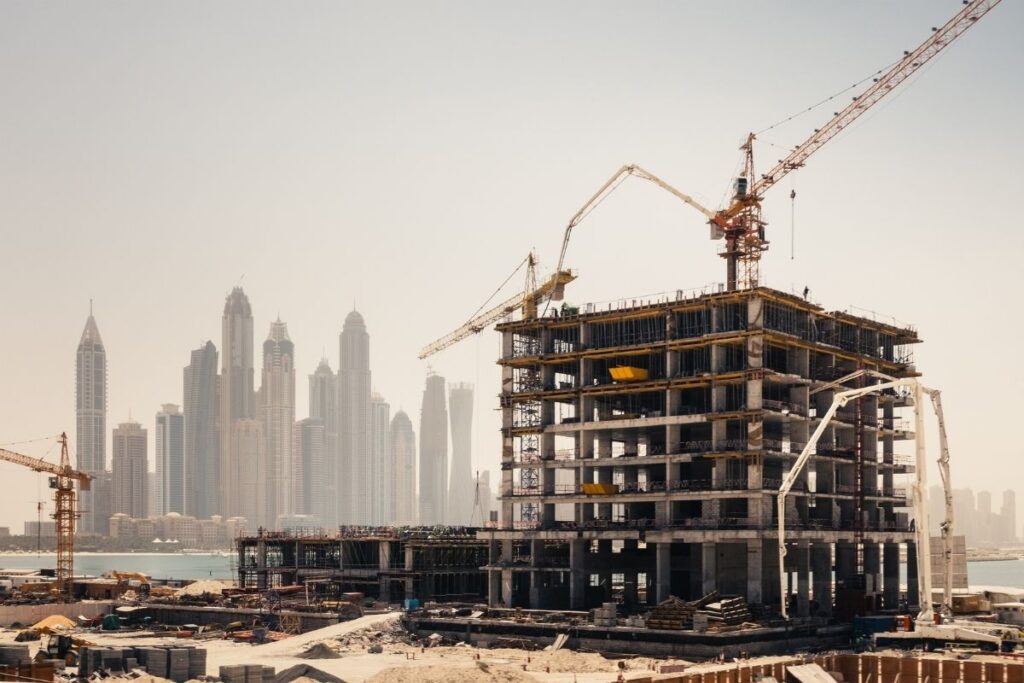
When buying property in Dubai, buyers often face a fundamental decision: should the property be bought off-plan (during construction) or as a ready property?
Both models are widespread in Dubai’s property market and differ mainly in terms of purchase price, payment structure, risk and timing of returns.
While off-plan properties often appeal with lower entry prices and flexible payment plans, ready properties can be used or rented out immediately. Which option makes sense therefore depends heavily on your individual investment strategy.
Off-plan property in Dubai
With an off-plan purchase, buyers acquire a property directly from the developer before the building is completed. This model is widely used in Dubai to develop new residential complexes and entire communities.
Many developers offer flexible payment plans in which the purchase price is paid in stages during construction.
Typical advantages of off-plan property:
| Advantage | Meaning |
| Low entry price | Projects are often offered below the later market price |
| Flexible payment plans | Payments are made across several construction phases |
| Potential for value growth | Prices may rise until completion |
| Modern build quality | New buildings and infrastructure |
Payments are usually made into an escrow account supervised by the Dubai Land Department. This ensures that the funds are used exclusively for the respective construction project.
Possible risks:
| Risk | Explanation |
| Construction delays | Completion may be postponed |
| Market changes | Prices may change during construction |
| Dependence on the developer | Quality depends heavily on the developer |
When buying off-plan property in Dubai, it is therefore important to check the developer’s reputation and previous projects carefully.
Ready property in Dubai
Ready properties are completed properties bought directly from the current owner. This model offers buyers greater planning security, as location, build quality and market price are already visible.
A major advantage is that the property can be used or rented out immediately.
Typical advantages of ready property:
| Advantage | Explanation |
| Immediate letting | Rental income can start right away |
| No construction period | Property is available immediately |
| Realistic market price | Based on existing sales |
| Lower development risk | Build quality is already visible |
The buying process for ready property often takes only 4 – 8 weeks, as the property is already entered in the Dubai Land Department register.
Off-plan vs. ready property compared
| Factor | Off-plan | Ready property |
| Time of purchase | During construction | After completion |
| Entry price | Usually lower | Usually higher |
| Payment structure | Flexible instalments | Often a single payment |
| Rental yield | Only after completion | Immediately possible |
| Risk | Construction and development risk | Low |
Which option makes sense when buying property in Dubai?
When buying property in Dubai, there is no option that is better in principle. What matters is your investment strategy.
- Off-plan is particularly suitable for investors who are betting on value growth during construction.
- Ready properties are ideal for buyers who want immediate rental income or to move in quickly.
Many experienced investors combine both strategies to achieve both capital growth and ongoing returns.
The 7 most common mistakes when buying property in Dubai
Buying property in Dubai is considered transparent and well regulated internationally. Nevertheless, first-time buyers from Germany, Austria and Switzerland in particular keep making typical mistakes. Knowing these risks helps you make better decisions and make your investment more successful in the long term.
1. Underestimating the location
When buying property in Dubai, the location often determines yield and value growth more than the property type. Good infrastructure, demand and transport links are decisive in the long term.
2. Only looking at the purchase price
Many buyers only consider the property price. In fact, there are additional costs of around 6 – 8 %, ongoing service charges and possible financing costs.
3. Not checking the developer
The developer is decisive, especially for off-plan projects. Buyers should therefore check the developer’s reputation, previous projects and build quality.
4. Believing unrealistic yield promises
Dubai offers attractive yields, but extremely high promises should be questioned critically. Realistic gross yields are usually:
| Property type | Typical gross yield |
| Apartments | Approx. 5 – 8 % |
| Villas | Approx. 4 – 6 % |
5. Skipping the legal check
Before buying, important points should be checked, such as ownership status, possible mortgages or outstanding service charges. Due diligence increases security.
6. Ignoring tax consequences in your home country
Even though Dubai does not levy property taxes, rental income may be taxable in your home country if you remain tax resident there.
7. Investing without a clear strategy
When buying property in Dubai, you should always define a clear goal, such as investment, owner-occupation or long-term value growth. A clear strategy helps avoid wrong decisions.
Conclusion: is buying property in Dubai worth it in 2026?
In 2026, buying property in Dubai is one of the most attractive international property investments for buyers from Germany, Austria and Switzerland. The market combines several structural advantages: a tax framework without conventional property taxes, legally secure ownership rights for foreigners and continued growth in international demand for housing.
A decisive factor is the tax environment of the United Arab Emirates. When buying property in Dubai, there is currently no property tax, no income tax on rental income and no capital gains tax on property sales. As a result, property investments can often achieve a significantly higher net yield than in many European markets.
Structurally, too, Dubai’s property market has become much more professional in recent years. The Dubai Land Department (DLD) ensures transparent registration of ownership, while regulated developers, digital land registry systems and modern master communities make the buying process comparatively clear and easy to follow for international investors.
Added to this is the city’s economic momentum: a growing population, international professionals, rising tourism and continuous investment in infrastructure ensure long-term demand for housing. In many locations, gross rental yields remain at around 5 – 8 % per year, which is an attractive level by international standards.
Whether buying property in Dubai is actually worthwhile, however, always depends on your individual strategy – such as investment, owner-occupation, long-term value growth or a combination of these goals.
Those who choose location, property type and budget carefully, check the developer and take the tax and legal framework into account can build an attractive long-term investment with a property in Dubai – while benefiting from the economic prospects of one of the most dynamic cities in the world.
If you are also interested in moving to Dubai, company setup, taxes, cost of living or life in Dubai, you will find all the key information in our comprehensive Dubai Premium Guide.
Matching tools
Before buying, most people need to settle on the right neighbourhood first – location drives rental yield, daily life and resale value.
FAQ: frequently asked questions about buying property in Dubai
Can I buy property in Dubai as a foreigner?
Yes. International buyers can also buy property in Dubai. In so-called freehold zones, foreigners can fully own property. The property can be freely sold, rented out or inherited and is officially registered with the Dubai Land Department.
How much equity do I need to buy property in Dubai?
When financing in Dubai, international buyers usually need around 20 – 25 % equity. In addition, buyers should budget around 6 – 8 % of the purchase price for the additional costs of buying property in Dubai.
What additional costs arise when buying property in Dubai?
The most important additional cost is the Dubai Land Department transfer fee, which is usually 4 % of the purchase price. This is usually joined by an agent’s commission of around 2 % and smaller registration and administration fees. Overall, additional costs when buying property in Dubai are often between 6 and 8 % of the purchase price.
How high are rental yields on property in Dubai?
Gross rental yields in many areas of Dubai are often between 5 and 8 % per year. Apartments in central locations or fast-growing communities in particular can generate stable rental income.
Can I get a visa by buying property in Dubai?
Yes. Property buyers can obtain a residence visa under certain conditions. Since 2026, there has been no minimum value for the two-year investor visa if you are the sole owner. For joint ownership, your share must be at least AED 400,000 (~ €94,800). From around AED 2 million (~ €474,000), it is possible under certain conditions to apply for a ten-year Golden Visa.
How long does buying property in Dubai take?
The buying process is relatively fast by international standards. For a ready property, buying property in Dubai often takes around 4 – 8 weeks until the transfer of ownership is officially registered with the Dubai Land Department.
Is buying property in Dubai tax-free?
The United Arab Emirates currently has no annual property tax, no income tax on rental income and no capital gains tax on property sales. For buyers from Germany, Austria or Switzerland, however, there may be a tax liability in their home country, depending on their individual tax residence.
Data basis & timeliness
The information in this article is based on publicly available market data, current property listings in Dubai, industry analyses and the official fee structures of the Dubai Land Department (DLD) (as of 2026).
All figures are for general guidance only. Actual purchase prices, additional costs and yields when buying property in Dubai may vary depending on location, property type, developer, financing, exchange rate and current market conditions.
Before making an investment decision, current project and contract details and, where appropriate, the legal and tax framework should always be checked individually.