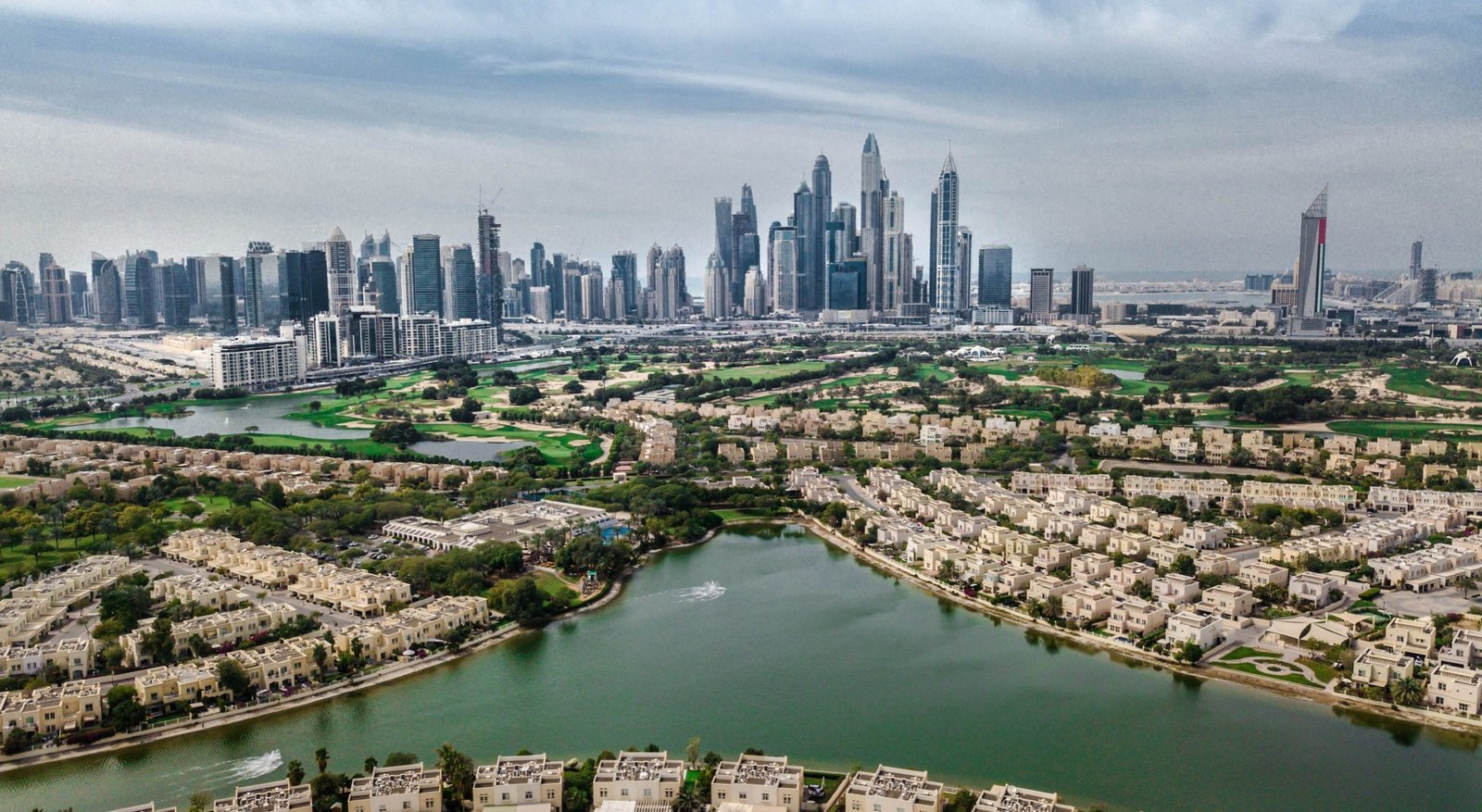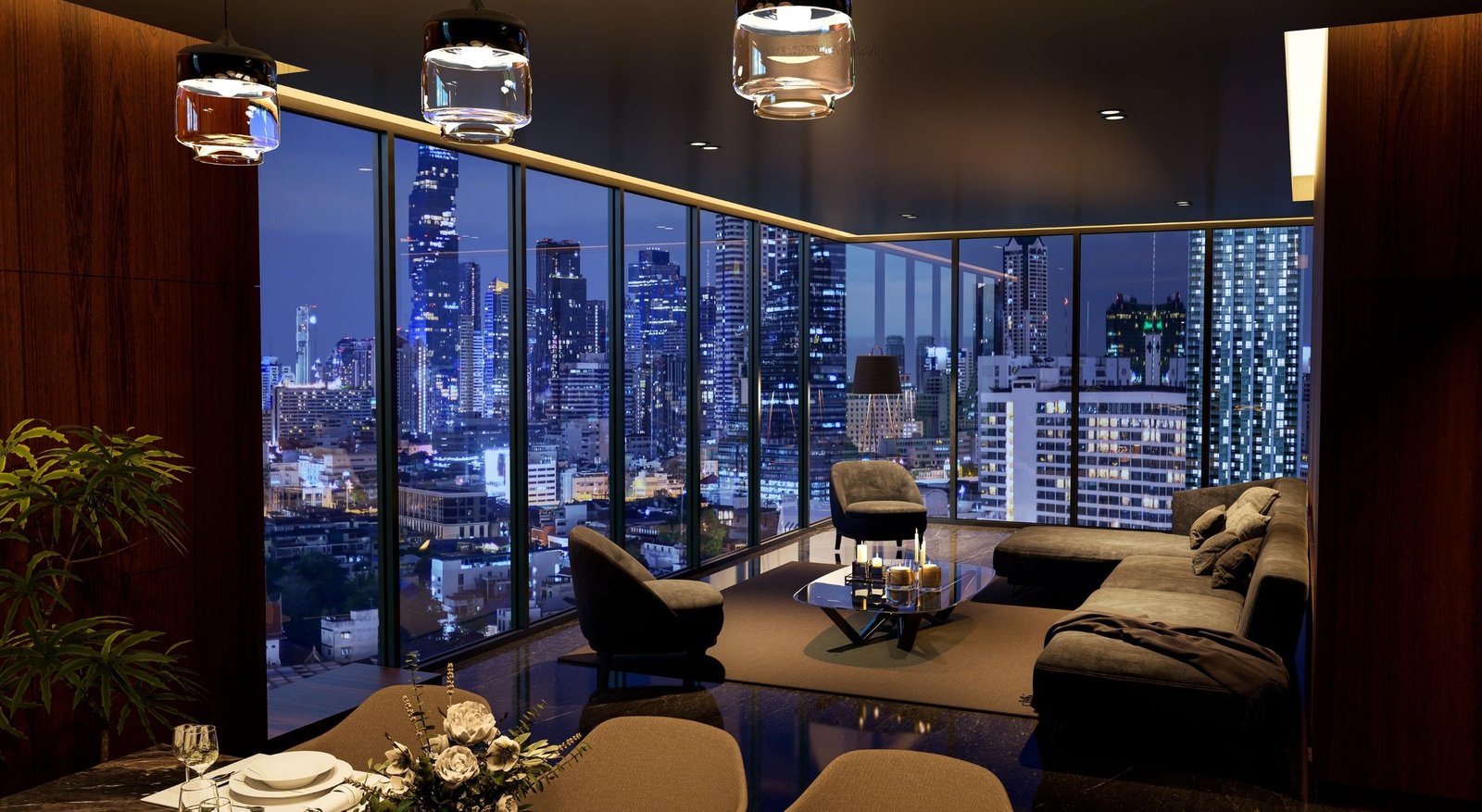
For many buyers from Germany, Austria and Switzerland, buying an apartment in Dubai is increasingly coming into focus. Modern apartments and penthouses in central city locations in particular are considered an attractive option – both for owner-occupiers and for investors who want to benefit from the city’s dynamic property market.
Today, Dubai is one of the most important international centres for urban residential property. In numerous districts, high-quality apartment towers are being built with modern architecture, extensive shared facilities and spectacular views of the skyline, water or golf courses. Projects in areas such as Downtown Dubai, Dubai Marina or Business Bay in particular attract international buyers who value a central location, infrastructure and lifestyle.
From an economic perspective, too, apartments play an important role in the city’s property market. Thanks to high demand from international professionals, entrepreneurs and expats, apartments are often among the properties with stable lettability and attractive yield potential.
This guide shows how the process of buying an apartment in Dubai works, which types of apartment are particularly in demand, which districts are suitable for buyers and what prices and ongoing costs to expect. Buyers from the DACH region will also learn which special features to consider when buying an apartment in Dubai.
This article focuses specifically on apartments and penthouses in Dubai. For a general overview of the property market, read our guide “Buying property in Dubai”. Information on villas and townhouses can be found in the article “Buying a house in Dubai”.
Table of contents
Buying an apartment in Dubai 2026 – overview
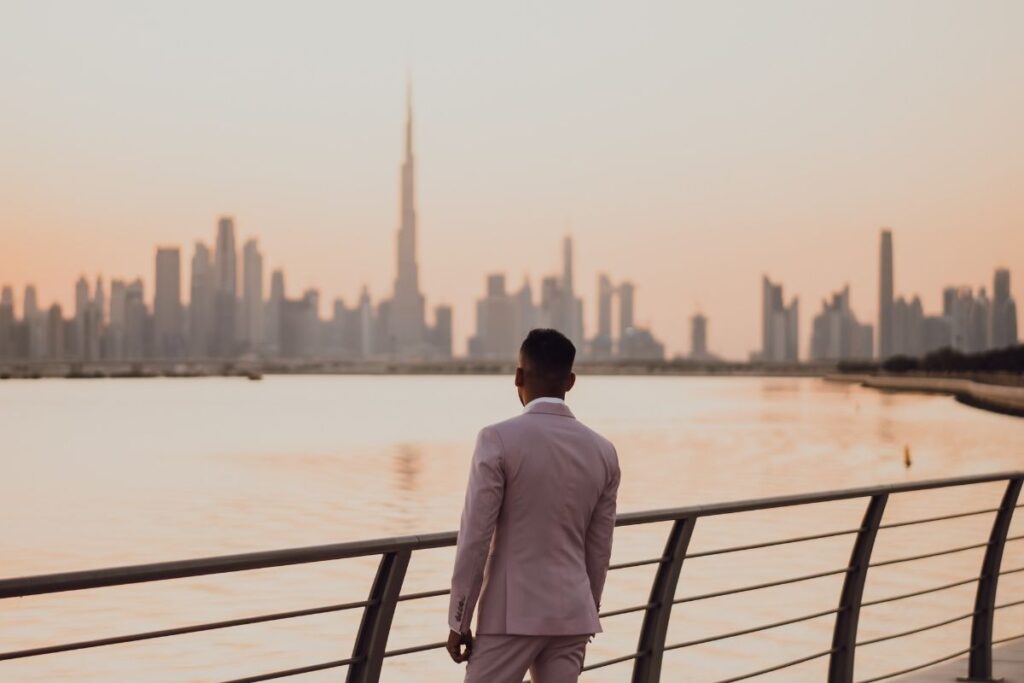
In 2026, buying an apartment in Dubai is one of the most popular options for international buyers looking for a modern city property with good lettability or their own living comfort.
The following overview shows the key facts about buying an apartment in Dubai:
| Factor | Overview |
| Form of ownership | Full ownership in freehold zones |
| Typical apartment types | Studios, apartments, penthouses, serviced apartments |
| Entry price studio | From approx. AED 500,000 (~ €118,500) |
| Entry price apartment | From approx. AED 800,000 (~ €189,600) |
| Rental yield apartments | Often around 5 – 8 % per year |
| Additional purchase costs | Around 6 – 8 % of the purchase price |
| Popular areas | Downtown Dubai, Dubai Marina, Business Bay, JVC |
| Use | Owner-occupation, short-term letting or investment |
Why buy an apartment in Dubai? Benefits for DACH buyers
Many of the basic conditions of the property market – such as tax advantages, international demand or residence programmes – apply regardless of property type. You can find a comprehensive overview of these aspects in the guide “Buying property in Dubai”.
When buying an apartment in Dubai, however, different factors come to the fore than when buying a house. Apartments and penthouses are usually located in central city areas, offer access to an urban lifestyle and often provide a comparatively easy entry into the city’s property market.
For buyers from Germany, Austria and Switzerland in particular, apartments can therefore be a particularly flexible and internationally oriented form of property.
Central locations and urban living
An important advantage of buying an apartment in Dubai is that many apartment projects are located in the city’s central business and lifestyle districts.
Apartments are often located in districts such as Downtown Dubai, Dubai Marina or Business Bay. These areas combine modern residential buildings with restaurants, shops, promenades and very good connections to key business districts.
For many buyers, this means short distances to workplaces, leisure facilities and international infrastructure.
Lower entry price than for houses
Compared with villas or townhouses, the entry point into the property market with an apartment is often much lower.
Many apartments start in the mid six-figure AED range, while houses usually require much higher investments. This makes it easier for buyers with a smaller budget or investors who want to build up several properties to enter the market.
Attractive lettability to international tenants
Dubai is one of the cities with a very international population. Many expats, professionals and entrepreneurs prefer apartments in central locations.
This creates constant demand for rental apartments in many areas. Studios and smaller apartments in particular are often in high demand with long-term tenants and for short-term lets.
For investors, this can be a good basis for stable rental income.
Modern buildings with extensive amenities
Many apartment projects in Dubai offer a wide range of shared facilities that are often not available in conventional residential buildings.
Typical features of modern residential complexes include:
- Gyms and wellness areas
- Roof terraces and pools
- Concierge services
- Co-working areas
- Communal lounges
This infrastructure makes apartments particularly attractive for international residents and often increases the quality of living within the buildings.
Lower maintenance effort than houses
Another advantage of apartments is the comparatively low administration and maintenance effort.
While houses often require gardens, outdoor areas or pools to be maintained, building management usually takes on many organisational tasks in apartment buildings. For owners, this can significantly reduce ongoing effort.
For buyers from abroad who do not use their property permanently themselves, this can be an important practical advantage.
Good liquidity in the apartment market
The apartment market is one of the largest and most active segments of Dubai’s property sector.
Apartments are in demand from both owner-occupiers and international investors. This broad buyer base can help apartments in many locations be resold more easily than specialised property types.
For investors, this often means higher market liquidity.
Wide choice of new projects
Dubai continuously develops new residential projects with modern apartment towers and mixed-use urban districts.
This gives buyers a wide choice of:
- New-build projects
- Off-plan apartments
- Existing apartments in established buildings
This variety allows buyers to find a property that fits both their budget and their long-term goals.
Property types when buying an apartment in Dubai
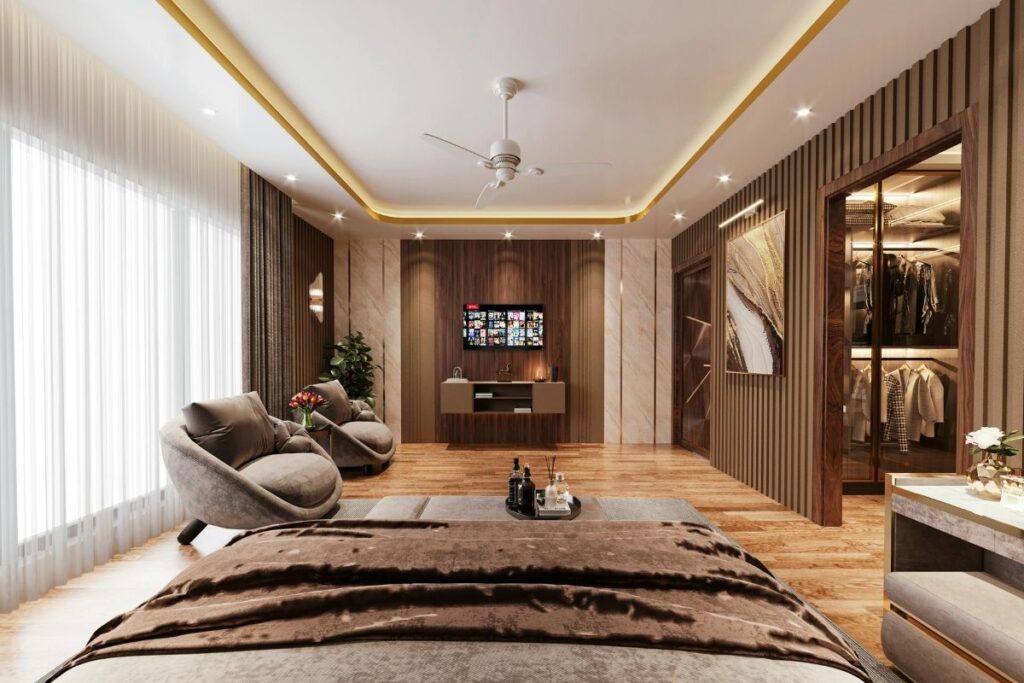
When buying an apartment in Dubai, buyers can choose from different types of apartment. These differ mainly in living space, features, type of building and price level. Unlike houses, apartments are usually located in multi-storey residential buildings or high-rises with shared facilities.
The apartment market in Dubai is very diverse, ranging from compact studios to exclusive penthouses with spectacular views of the skyline or the sea.
For buyers from Germany, Austria and Switzerland, it can be useful to know these property types, as they appeal to different target groups, uses and investment strategies.
Studios
Studios are among the smallest and most common types of apartment in Dubai. They usually consist of an open living and sleeping area with an integrated kitchen and a separate bathroom.
Typical features:
- Living space often around 30 – 60 m²
- Open living and sleeping area
- Compact floor plans
- Often in central apartment towers
- Particularly in demand for letting to single tenants
Studios are often considered an entry point into the apartment market and are valued by investors for their good lettability.
Apartments with one or more bedrooms
Apartments with separate bedrooms make up the largest part of the apartment supply in Dubai. They are suitable both for owner-occupiers and for long-term letting.
Typical characteristics:
- Usually 1 – 3 bedrooms
- Living space often around 60 – 200 m²
- Separate living room and kitchen
- Balcony or terrace
- Access to shared facilities such as a pool or gym
This type of apartment is particularly common in districts such as Dubai Marina, Business Bay or Downtown Dubai.
Serviced apartments
Serviced apartments combine conventional living with hotel-like services. They are often managed by hotel chains or specialised operators.
Typical features:
- Furnished apartments
- Hotel services such as cleaning or concierge
- Access to hotel infrastructure (pool, spa, restaurants)
- Often in tourist or central locations
- Suitable for short-term letting
For investors, serviced apartments can be interesting, as operation and letting are partly organised by the operator.
Penthouses
Penthouses belong to the premium segment of buying an apartment in Dubai. They are usually located on the top floors of a building and offer particularly generous living space and far-reaching views.
Typical characteristics:
- Very large living spaces
- Large roof terraces or private pools
- Panoramic views of the skyline, sea or marina
- High-quality features and architecture
- Significantly higher price level than standard apartments
Many penthouses are located in exclusive residential projects in areas such as Downtown Dubai, Palm Jumeirah or Dubai Marina.
Other apartment types in Dubai
In addition to the classic categories, there are other special types of apartment that are named differently depending on the project or developer.
| Property type | Short description | Classification |
| Loft apartment | Apartment with high ceilings and an open floor plan | Urban design segment |
| Duplex apartment | Two-storey apartment within a building | Larger living spaces |
| Branded residence | Apartment in cooperation with luxury brands or hotels | Premium segment |
| Sky apartment | Apartment on upper floors with skyline views | High-price segment |
| Waterfront apartment | Apartment with direct views of the water or marina | Popular investment location |
| Garden apartment | Ground-floor apartment with a private garden area | Rarer type of apartment |
The best areas for apartments in Dubai
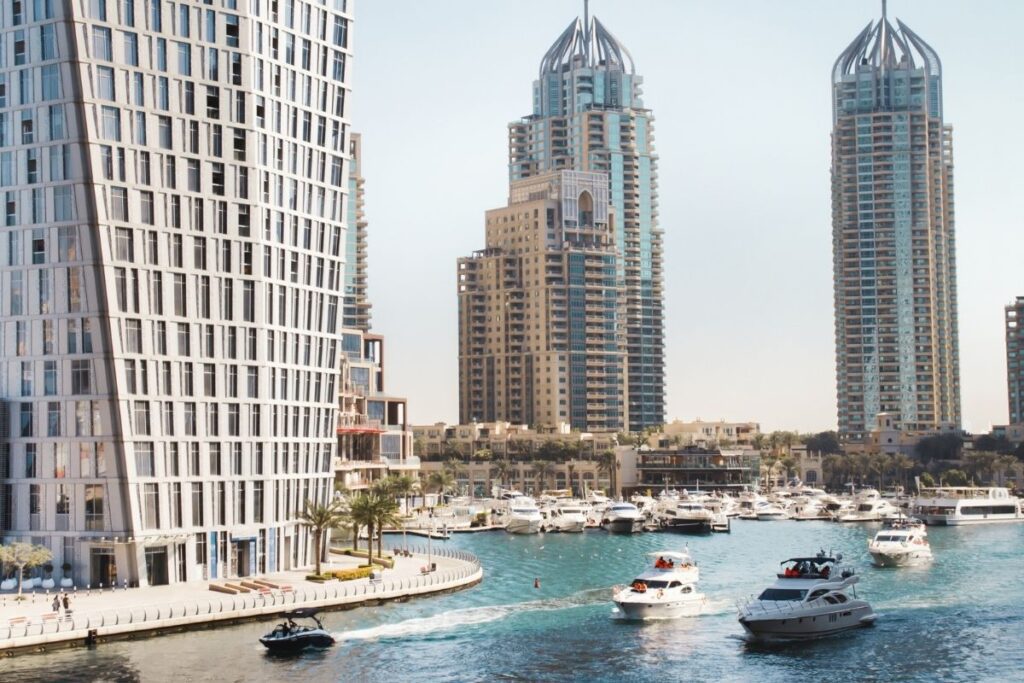
Location plays a particularly important role when buying an apartment in Dubai. Apartments are often located in central districts with high demand, good infrastructure and attractive leisure facilities. Many of these areas are close to business districts, waterfronts or tourist hotspots.
Different districts appeal to different groups of buyers – from investors and expats to owner-occupiers. Some districts have become particularly well established as locations for apartments and penthouses.
| Community | Property type | Features |
| Downtown Dubai | Apartments, penthouses | Close to Burj Khalifa, Dubai Mall and business districts |
| Dubai Marina | Apartments, penthouses | Waterfront location, marina promenade, very international neighbourhood |
| Business Bay | Apartments | Central location on Dubai Canal, many new residential projects |
| Jumeirah Beach Residence (JBR) | Apartments, penthouses | Beachfront location with restaurants, hotels and promenade |
| Dubai Creek Harbour | Apartments, penthouses | New waterfront community with skyline views |
| Jumeirah Village Circle (JVC) | Apartments | Popular area with comparatively moderate entry prices |
Downtown Dubai
Downtown Dubai is one of the best-known areas for apartments in the city. The district around the Burj Khalifa is internationally famous and combines luxurious residential buildings with numerous shopping, dining and leisure options.
Many apartment towers offer direct views of the skyline or the Burj Khalifa. Thanks to its central location and proximity to Dubai Mall and key business districts, Downtown Dubai is one of the most sought-after locations for buying an apartment in Dubai.
Dubai Marina
Dubai Marina is one of the liveliest areas for apartments in Dubai. The district is built around an artificial marina and is characterised by numerous high-rises with apartments and penthouses.
The Marina Promenade with restaurants, cafés and shops creates a very urban atmosphere. At the same time, its proximity to the beach and Palm Jumeirah offers additional leisure options.
For many international buyers, Dubai Marina is one of the most attractive locations for apartments with good lettability.
Business Bay
Business Bay is one of the most important business and residential districts in the city. It lies directly south of Downtown Dubai and continues to develop.
In addition to numerous office buildings, modern apartment towers are being built here along Dubai Canal. The combination of central location, modern architecture and good transport links makes Business Bay a sought-after area for buying an apartment in Dubai.
Jumeirah Beach Residence (JBR)
Jumeirah Beach Residence is one of the best-known beachfront areas for apartments in Dubai. The residential buildings are located directly on the coast along the well-known promenade “The Walk”.
Restaurants, cafés, hotels and leisure facilities characterise the district and create a lively atmosphere. For buyers looking for an apartment right next to the beach, JBR is one of the most interesting locations.
Dubai Creek Harbour
Dubai Creek Harbour is one of the newer urban developments in Dubai and is being developed by Emaar. The waterfront community lies on Dubai Creek and offers spectacular views of the city’s skyline.
Modern apartment buildings, generous promenades and green spaces characterise the district’s concept. Thanks to its long-term development, Dubai Creek Harbour is considered one of the most interesting future locations for apartments in Dubai.
Jumeirah Village Circle (JVC)
In recent years, Jumeirah Village Circle has become one of the most popular areas for apartments. The district lies somewhat outside the city centre but offers good connections to major roads.
Many residential buildings in JVC consist of mid-sized apartment complexes with shared facilities and green spaces. Thanks to comparatively lower entry prices, JVC is a sought-after location for buying an apartment in Dubai, particularly among investors and first-time buyers.
Apartment prices in Dubai 2026: overview
When buying an apartment in Dubai, prices vary greatly depending on location, building quality, view, living space and features of the building. While studios and smaller apartments are often the entry point into the property market, larger apartments and penthouses in premium locations reach much higher price levels.
Compared with houses, the total price of apartments is usually lower, as no private plot of land is part of the property value. At the same time, apartments are among the property types with the highest market liquidity in Dubai, as they are in strong demand from both owner-occupiers and international investors.
The following overview shows market-based guide values for buying an apartment in Dubai in 2026:
| Property type | Typical price in AED (approx.) | Price in euros (approx.) |
| Studio (entry level) | From AED 500,000 – 800,000 | €118,500 – 189,600 |
| 1-bedroom apartment | AED 800,000 – 1.5 million | €189,600 – 355,500 |
| 2-bedroom apartment | AED 1.4 – 2.5 million | €331,800 – 592,500 |
| 3-bedroom apartment | AED 2.5 – 5 million | €592,500 – 1,185,000 |
| Penthouse | From AED 6 million | From €1,422,000 |
What apartment prices in Dubai depend on
In addition to living space, several factors influence the price of an apartment in Dubai. These include above all the location within the district, the floor, the view, the quality of the developer and the building’s amenities such as pool, gym, concierge or hotel service.
Apartments with sea views, a marina location or a direct view of the Burj Khalifa in particular are often well above average.
Price per square metre as an important benchmark
In the Dubai market, prices are usually quoted per square foot. For buyers from Europe, however, a comparison per square metre is often easier to understand.
| Property type | Price per sq ft in AED (approx.) | Price per m² (approx.) |
| Standard apartments | AED 1,800 – 2,400 | AED 19,400 – 25,800 (~ €4,600 – 6,115) |
| Waterfront apartments | AED 2,400 – 3,400 | AED 25,800 – 36,600 (~ €6,115 – 8,670) |
| Premium / penthouse | From AED 4,000 | From AED 43,000 (~ €10,190) |
In premium locations such as Downtown Dubai, Palm Jumeirah or Dubai Marina, prices per square metre can be well above these averages.
Development of apartment prices in Dubai
Current market analyses by Engel & Völkers show that apartment prices remain at a high level. At the beginning of 2026, average sale prices were still around 15 % above the previous year’s level, according to the market report. At the same time, growth is slowing compared with the particularly dynamic previous years.
International market observers also point out that the property market is increasingly developing in segments. According to analyses cited by Reuters, among others, more moderate price developments could occur in the future, particularly in segments driven by strong supply.
For buyers, this means that factors such as location, build quality, developer, view and building concept are becoming increasingly important when buying an apartment in Dubai. While premium locations and high-quality projects continue to see stable demand, price development in other segments may differ considerably.
Off-plan apartments vs. existing apartments
When buying an apartment in Dubai, the difference between off-plan projects and existing apartments also plays an important role.
Off-plan apartments are sold directly by the developer and are usually still under construction or in the planning phase.
| Property type | Price structure |
| Off-plan apartments | Often cheaper to buy into, frequently with flexible payment plans |
| Existing apartments (secondary market) | Usually a higher purchase price, but ready to move in |
Many investors deliberately choose off-plan projects because developers often offer long-term payment plans over several years.
Price differences between apartment areas
Apartment prices can vary considerably depending on the district. Some areas offer a comparatively affordable entry point, while others are among Dubai’s premium residential areas.
| Location | Price level |
| Jumeirah Village Circle (JVC) | Affordable to mid-range entry |
| Business Bay | Mid-range to upscale segment |
| Dubai Marina | Upscale to luxury segment |
| Downtown Dubai | Premium segment |
| Palm Jumeirah | Luxury segment |
These differences show how strongly location can influence the property price when buying an apartment in Dubai.
Ongoing costs of owning an apartment in Dubai

Anyone who decides to buy an apartment in Dubai should consider not only the purchase price but also the ongoing running costs. These arise regardless of whether the apartment is used by the owner or rented out.
Compared with houses, apartments usually do not involve costs for private outdoor areas such as gardens, pools or grounds maintenance. Instead, there are ongoing fees for operating and maintaining the building as well as for electricity, water, cooling and, where applicable, management.
While Dubai does not levy a conventional annual property tax, buyers should still plan realistically for regular running costs. These depend heavily on factors such as building quality, location, features and apartment size.
The following overview shows typical ongoing costs of owning an apartment in Dubai:
| Type of cost | Typical for apartments in Dubai | Example costs (approx.) |
| Service charges / building fees | Annually per living area | AED 3 – 30 per sq ft (~ AED 32 – 323 per m²) (~ €8 – 76 / m²) |
| Electricity and water (DEWA) | Monthly, depending on consumption | AED 300 – 900 (~ €70 – 215) |
| District cooling | Separate, depending on the building | Depends on consumption and provider |
| Maintenance within the apartment | Upkeep and minor repairs | 0.5 – 1 % of the property value per year |
| Property management (when letting) | Management of the property | 5 – 15 % of the annual rent |
| Contents insurance | Optional | AED 500 – 2,000 per year (~ €120 – 475) |
These figures are averages. Depending on the building, location and features, actual costs may vary considerably.
Service charges in apartment buildings
The most important ongoing costs of owning an apartment in Dubai are the so-called service charges. These fees are charged by the building management and fund the operation and maintenance of shared infrastructure.
Typical services funded by these fees include:
- Maintenance of lifts and building systems
- Cleaning of the lobby and shared areas
- Security staff and access systems
- Pool, fitness and wellness areas
- Building management and lighting
In Dubai, service charges are usually calculated per square foot (sq ft) of living space and charged annually.
Typical values are often between around:
- AED 3 – 30 per sq ft per year
This corresponds roughly to:
- AED 32 – 323 per m² per year (~ €8 – 76 per m²)
Example calculation
Depending on the building, an apartment with 1,000 sq ft of living space costs roughly:
- AED 3,000 – 30,000 per year (~ €710 – 7,110)
Luxury towers with extensive amenities can sometimes have significantly higher fees.
Electricity and water costs
Electricity and water in Dubai are billed by the government-owned Dubai Electricity and Water Authority (DEWA).
As apartments are usually smaller than houses, monthly energy costs are often more moderate. For many apartments, monthly costs are typically between:
- AED 300 – 900 per month (~ €70 – 215)
Actual costs depend mainly on:
- Size of the apartment
- Use of air conditioning
- Number of occupants
- Outside temperature and season
To activate electricity and water for apartments, DEWA requires a security deposit of AED 2,000 (~ €475), which is refunded when you move out.
Cooling and district cooling
In many modern apartment buildings, cooling is provided by so-called district cooling systems. These are central cooling plants that supply several buildings at the same time.
These costs are often billed separately and depend heavily on several factors:
- Size of the apartment
- Building insulation
- Usage
- Provider (e.g. Empower or Emicool)
Depending on consumption, monthly cooling costs may be charged in addition to DEWA costs.
Maintenance within the apartment
In addition to shared costs, the owner remains responsible for maintenance and minor repairs within their own apartment.
These include, for example:
- Servicing the air conditioning
- Repairs to plumbing
- Replacing appliances
- Minor renovations or modernisation
Many property experts recommend budgeting around 0.5 – 1 % of the property value per year for maintenance and minor repairs. For an apartment worth AED 1 million, this corresponds to roughly:
- AED 5,000 – 10,000 per year (~ €1,185 – 2,370)
Property management when letting
Many international buyers rent out their apartment in Dubai long term or as an investment. In such cases, a property management company is often hired.
These service providers take care of, for example:
- Finding tenants
- Contract management
- Communication with tenants
- Organising repairs
- Handovers and inspections
For conventional long-term letting, fees are often between:
- 5 – 15 % of annual rental income
For short-term letting, costs may be higher.
Insurance for apartments
Insurance for the interior of the apartment – for example for furniture, fittings and interior finishes – is not always mandatory, but it is often recommended.
Typical costs are often in the range of:
- AED 500 – 2,000 per year (~ €120 – 475)
The exact price depends on the scope of cover and the value of the furnishings.
Estimating total ongoing costs realistically
For many apartments in Dubai, the total annual budget for ongoing costs – depending on location, building quality and features – is often around:
- 1 – 2.5 % of the property value per year
For premium buildings with extensive amenities or particularly large apartments, actual costs may be higher.
Realistic planning of these running costs helps buyers better estimate the actual total expenditure when buying an apartment in Dubai and make well-founded long-term investment decisions.
In addition to ongoing running costs, buyers should also consider the one-off additional purchase costs. These include fees for the Dubai Land Department, agent’s commissions, trustee fees and administrative costs of the transfer of ownership.
A detailed overview of all additional costs when buying property in Dubai can be found in the guide “Buying property in Dubai”.
What buyers should look out for when buying an apartment in Dubai

Anyone who wants to buy an apartment in Dubai should check several key factors carefully before deciding. In addition to location and price, aspects such as floor plan, building organisation, lettability and legal details play an important role for apartments.
As apartments are usually part of larger buildings or complexes, the property value is influenced not only by the characteristics of the individual unit but also by factors such as building management, demand in the rental market and long-term development of the surrounding area.
A careful analysis of these points helps buyers find an apartment that fits both their own housing needs and their long-term investment goals.
Floor plan and layout
When buying an apartment in Dubai, the floor plan plays a decisive role for living comfort and lettability. Two apartments with identical floor space can differ significantly in practical use.
Important points include:
- Open or closed kitchens
- Number and size of bedrooms
- Balcony or terrace
- Storage space and built-in wardrobes
- Natural daylight
Well-planned floor plans are particularly sought after and are often easier to rent out or resell later.
Building occupancy and number of units
An often underestimated factor when buying an apartment in Dubai is the structure of the building itself. High-rises vary greatly in the number of apartments per floor and the overall size of the complex.
Buildings with a very large number of units may, for example:
- Have busier shared areas
- Cause longer waiting times for lifts
- Have higher tenant turnover
Buildings with fewer units or better management often offer a quieter living environment.
Parking
In many apartment buildings, a parking space comes with the apartment. However, the exact parking situation should be checked before buying.
Important questions include:
- Is a parking space included in the ownership?
- Is the parking space in the same building?
- Are there additional visitor parking spaces?
In highly urban districts, an additional parking space can add considerable value.
Ownership structure in the building
The ownership structure within a building can also influence living quality and long-term development.
Buildings with a high proportion of long-term owners are often more stably organised than complexes with very high short-term letting or frequent changes of ownership.
A balanced mix of owner-occupiers and investors can contribute to the stability of the building in the long term.
Demand in the rental market
Many buyers acquire apartments in Dubai as an investment. It therefore makes sense to analyse rental demand in the respective building or district before buying.
Important factors include:
- Proximity to business districts
- Transport links and metro stations
- Infrastructure such as restaurants or shopping centres
- Demand for certain apartment sizes
Studios and one-bedroom apartments are often particularly in demand, while larger apartments depend more on the respective district.
Developer and project history
When buying an apartment in Dubai, it is also worth looking at the developer’s previous projects. Large developers often build several projects within a city.
A comparison can show:
- How well previous buildings are maintained
- How stable prices have been
- How strong demand is for apartments from this developer
This information can help better assess the long-term appeal of a project.
Future development of the surrounding area
Another important factor is the future development of the surrounding area. New infrastructure, transport projects or additional residential and commercial buildings can influence the value of a property in the long term.
Buyers should therefore check:
- Planned construction projects nearby
- New transport links or metro stations
- Future urban development projects
Such developments can represent both opportunities and risks for the property value in the long term.
The 7 most common mistakes when buying an apartment in Dubai

Dubai’s property market works differently from many European housing markets in several respects. International buyers from Germany, Austria or Switzerland often underestimate certain features of the market.
Anyone looking into buying an apartment in Dubai should know the typical mistakes that can affect lettability, resale value and investment strategy in the long term.
1. Not comparing the market enough before deciding
A common mistake is comparing only a few projects or buildings. As Dubai has a large number of new apartment projects, prices, demand and build quality can differ significantly even within the same area.
Buyers benefit from analysing several projects to get a better feel for price levels, market position and supply structure.
2. Focusing only on new-build projects
Many international buyers focus exclusively on new projects. While modern buildings often offer attractive features and flexible payment plans, the existing property market can also offer interesting opportunities.
In established buildings, it is often possible to find properties whose market prices have already stabilised and whose rental demand is easier to assess.
3. Not understanding the difference between off-plan and the secondary market
A common mistake is not fully taking into account the differences between off-plan projects (new builds during construction) and the secondary market (completed properties).
While off-plan properties often offer lower entry prices and payment plans, completed apartments can be used or rented out immediately. Both options have different opportunities and risks.
4. Misjudging the handover standard of the apartment
For new-build projects, standards of fittings sometimes differ considerably. Buyers often assume that furniture, built-in units or certain appliances are part of the property.
In many cases, however, apartments are handed over with only basic fittings. A careful check of the construction and specification description helps avoid misunderstandings.
5. Not fully accounting for additional purchase costs
Another common mistake is focusing only on the purchase price of the apartment. When buying property in Dubai, several additional costs apply, such as Dubai Land Department fees or administrative costs of the transfer of ownership.
Realistic planning of the total costs helps buyers better estimate the actual capital required.
6. Underestimating differences between buildings by the same developer
Many buyers rely heavily on the name of a well-known developer. However, projects by the same developer can differ considerably – for example in terms of build quality, features or building concept.
A comparison of different projects helps to better assess the actual market position of a building.
7. Not clearly defining the long-term role of the property
A common mistake is buying an apartment without clearly defining the long-term role of the property.
Important questions may include:
- Should the apartment primarily serve as an investment?
- Is owner-occupation planned later?
- Is a long-term resale the goal?
A clear strategy helps buyers choose properties that better fit their financial and personal goals.
Conclusion: is buying an apartment in Dubai worth it in 2026?
In 2026, buying an apartment in Dubai can be an attractive option for both owner-occupiers and investors. Apartments make up the largest part of the city’s property market and offer a wide choice of projects, locations and price ranges.
For international buyers, apartments are often seen as an easy entry into Dubai’s property market, as they usually have lower entry prices than houses and at the same time high demand in the rental market. In central districts with good infrastructure in particular, demand from expats, professionals and international companies remains stable.
Apartments are also interesting for investors, as they are often more liquid in the resale market than larger properties. At the same time, many projects benefit from Dubai’s growing population, international demand and continuous urban development.
Choosing the right property, however, remains decisive. Factors such as location within the city, building quality, developer and long-term demand play an important role for lettability and value growth.
Those who analyse the market carefully and compare different projects can acquire both a flexible investment and an international home with an apartment in Dubai.
If you want to learn more about living, working or investing in Dubai, you will find further information in our Dubai Premium Guide.
Matching tools
FAQ: frequently asked questions about buying an apartment in Dubai
Are there taxes on apartments in Dubai?
When buying an apartment in Dubai, there is no annual property tax and no income tax on rental income. Buyers should, however, take into account one-off additional purchase costs, including the 4 % Dubai Land Department (DLD) fee, as well as ongoing service charges for the building.
Which apartments are particularly in demand among investors in Dubai?
When buying an apartment in Dubai, many investors focus on properties with high lettability. Particularly in demand are often:
– Studios and 1-bedroom apartments
– Apartments in central districts
– Properties near metro stations or business centres
These units can usually be let more quickly and often have stable rental demand.
Can you rent out an apartment in Dubai completely?
Yes. Owners can rent out their apartment in Dubai long term or short term. In addition to conventional annual leases, short-term letting (holiday home) is also possible, provided the appropriate licence from Dubai’s Department of Economy and Tourism (DTCM) has been obtained.
How high are typical rental yields for apartments in Dubai?
Rental yields for apartments in Dubai are often between 5 and 8 % gross per year, depending on location, building and demand. Smaller apartments in high-demand districts can sometimes achieve higher yields.
How long does buying an apartment in Dubai take?
When buying an existing apartment on the so-called secondary market, the transfer of ownership can often be completed within a few weeks. For off-plan properties, ownership is usually registered only after the building is completed.
Can you buy an apartment in Dubai entirely online?
Partly, yes. Many steps when buying an apartment in Dubai, such as reservation, document checks or contract signing, can be handled digitally. The final transfer of ownership, however, usually takes place through an official Dubai Land Department trustee office.
Can several people buy an apartment together?
Yes. An apartment in Dubai can also be bought jointly by several owners, for example spouses, family members or investors. The respective ownership shares are officially registered on the title deed.
How safe is the property market in Dubai?
Dubai’s property market is one of the more strongly regulated property markets in the region. The responsible authorities include:
– Dubai Land Department (DLD)
– Real Estate Regulatory Agency (RERA)
For off-plan projects, for example, developers must manage buyers’ funds through government-supervised escrow accounts.
Data basis & timeliness
The information in this article is based on publicly available market data, current listings for apartments and penthouses in Dubai, industry analyses and the official fee and ownership structures of the responsible authorities in Dubai (as of 2026).
All figures and assessments are for general guidance only. Actual purchase prices, ongoing costs, rental yields and value growth when buying an apartment in Dubai may vary depending on location, building, apartment size, developer, build quality, features, financing, exchange rate and current market conditions.
In the apartment segment in particular, properties often differ significantly by building quality, floor, orientation, view, shared facilities and age of the building. Before making an investment decision, current project documents, service charge structures, building management and the contractual, legal and tax framework should therefore always be checked individually.